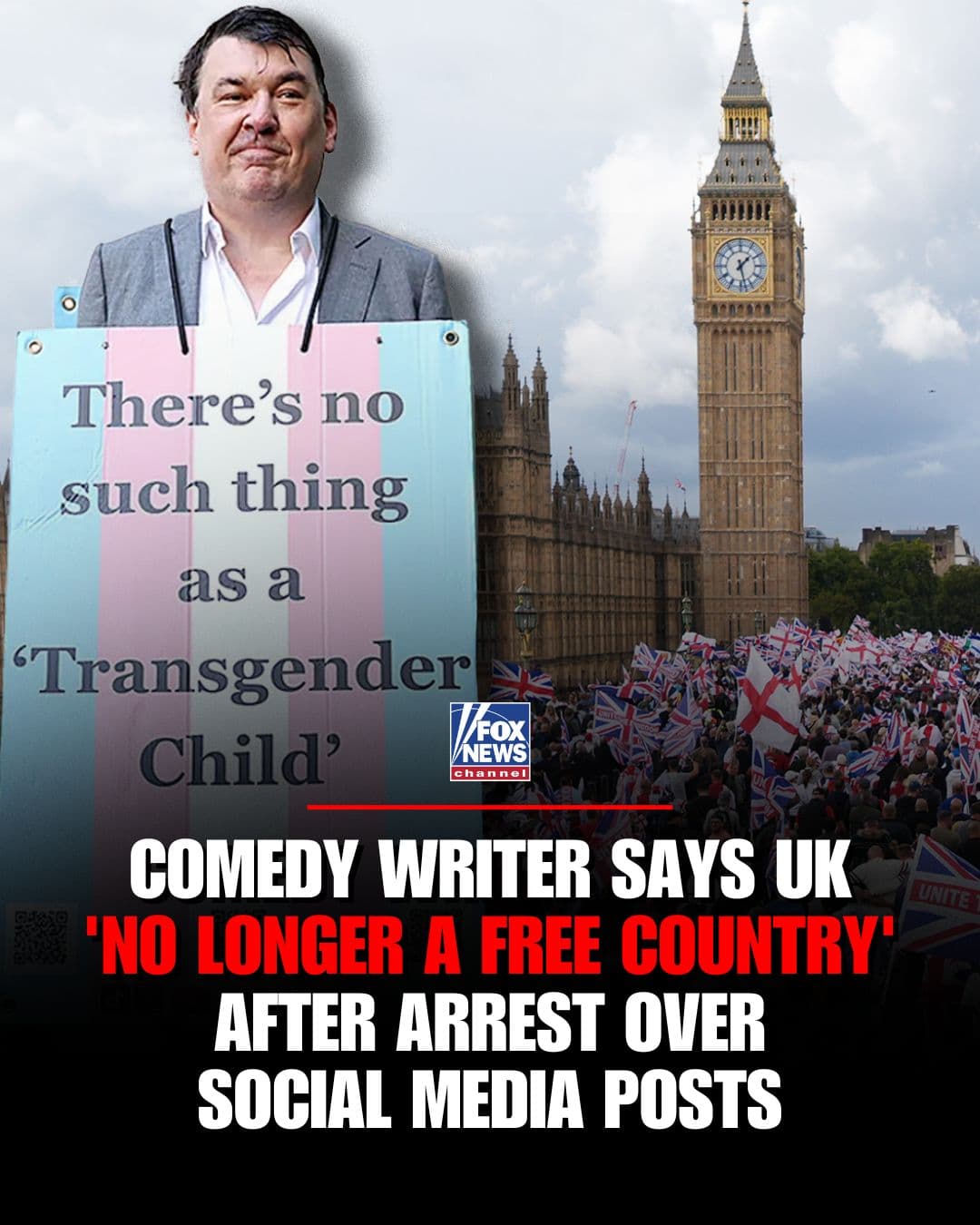
A heated debate over the limits of free speech has reignited after Irish comedy writer Graham Linehan claimed his arrest in the United Kingdom proves that the country is “no longer free.” Linehan, who rose to prominence for his work on hit sitcoms, found himself at the center of a storm after making an anti-trans joke online. According to him, this led to his detention by authorities—an event he describes as a chilling example of political activism eroding fundamental rights.
Linehan argues that his experience highlights a “terrible free speech problem” in Britain. “I think my case proves that there is a terrible free speech problem in the UK, but sadly, I've seen that happen now for eight years. They just want to put you in a cell and scare you into not talking about certain issues,” he stated in an interview.
The comedian insists that such actions are not about justice but rather about silencing voices that go against far-left ideology. To him, his arrest demonstrates how deeply cancel culture and political policing have entrenched themselves within public discourse. “They just want to intimidate you into silence,” he emphasized, suggesting that dissent against certain viewpoints is being criminalized.
The controversy erupted after Linehan posted an image online featuring the phrase: “There’s no such thing as a transgender child.” Critics called the statement offensive and harmful, while supporters defended it as a matter of personal belief and free speech.
The case has polarized public opinion. Advocates for trans rights argue that Linehan’s comments perpetuate discrimination and put vulnerable communities at risk. On the other hand, free speech campaigners view his arrest as alarming evidence of shrinking liberties in the UK, warning that the government is crossing dangerous lines by policing opinions.
This incident is not an isolated one. In recent years, several high-profile cases have sparked similar debates, raising questions about whether Britain is drifting towards authoritarian-style control over what people can and cannot say online. Linehan warns that if this trend continues, individuals will live in constant fear of prosecution for expressing unpopular views.
As tensions rise, the case has become more than just about one comedian’s remarks—it is now a battleground for the future of freedom of expression in the UK. Whether viewed as protection against hate or suppression of speech, the arrest has thrust Britain into a global spotlight on the balance between rights, responsibilities, and personal freedoms.
Published by Banx Network. This article is part of the Banx decentralized media programme, powered by the BXE token on the XRP Ledger.

.jpg&w=3840&q=75 "Zelensky Warns China Is Helping Russia Develop a Starlink Rival")