Opening: In the intricate dance of international diplomacy, local politics often finds itself stepping onto a global stage, sometimes with unexpected consequences. New York City Mayor Zohran Mamdani’s recent remarks regarding the potential arrest of Israeli Prime Minister Benjamin Netanyahu have ignited a fierce debate within the Democratic Party. The comments, made in the context of the upcoming United Nations General Assembly, highlight the deepening fissures over foreign policy and the complex balance between moral conviction and diplomatic protocol. It is a moment that invites reflection on how local leaders navigate issues that resonate far beyond their city limits.
Body: Mayor Mamdani stated that his administration was reviewing whether it could enforce an arrest warrant for Netanyahu if he were to visit New York, citing allegations of war crimes. This assertion, while framed as a legal exploration, was interpreted by many as a direct political challenge to a key U.S. ally. The reaction from within his own party was swift and sharp, with several prominent Democrats condemning the remarks as divisive and potentially damaging to broader diplomatic efforts. Senator John Fetterman, for instance, urged the mayor to "sit down" and focus on local issues, reflecting a desire to keep national and international matters distinct from municipal governance.
The condemnation underscores a significant split among Democrats regarding Israel and its leadership. While some progressives align with Mamdani’s critical stance, viewing it as a necessary moral stand, others argue that such rhetoric undermines the unity required for effective foreign policy. For many in the party’s mainstream, the relationship with Israel remains a cornerstone of American strategic interests, and actions that threaten this bond are seen as counterproductive. The debate is not merely about one leader but about the direction of the party’s approach to global conflicts.
Netanyahu’s office responded with equal vigor, dismissing Mamdani’s comments as politically motivated and comparing them to the rhetoric of extremist groups. This exchange has elevated the tension, turning a local policy review into an international incident. The Israeli government’s sharp rebuke highlights the sensitivity of the issue and the potential for diplomatic fallout. For New York, a city that prides itself on being a global hub, balancing free speech with diplomatic decorum is a delicate task.
Legal experts note that the actual likelihood of such an arrest is slim, given the complexities of international law and the protections afforded to visiting heads of state. However, the symbolic weight of the mayor’s words carries significant power. It signals to constituents and critics alike where his priorities lie, even if the practical implementation remains uncertain. The conversation has shifted from legal feasibility to political intent, raising questions about the role of local officials in shaping foreign policy narratives.
For voters in New York, the controversy adds another layer to Mamdani’s tenure, which has already been marked by bold and often polarizing decisions. Supporters applaud his willingness to challenge established norms, while critics worry about the stability and reputation of the city. The divide reflects a broader national conversation about accountability, justice, and the limits of political authority. As the UN General Assembly approaches, all eyes will be on how this situation unfolds.
The Democratic Party now faces the challenge of managing internal dissent while presenting a unified front on critical international issues. The Mamdani episode serves as a case study in the difficulties of maintaining cohesion in an era of heightened political polarization. Whether this leads to a reevaluation of party platforms or further fragmentation remains to be seen.
Closing: As the debate continues, the focus remains on the implications for both New York City and the Democratic Party. Mayor Mamdani’s comments have sparked a necessary but difficult conversation about the intersection of local politics and global justice. The outcome will depend on how both sides choose to engage with the complexities of the issue.
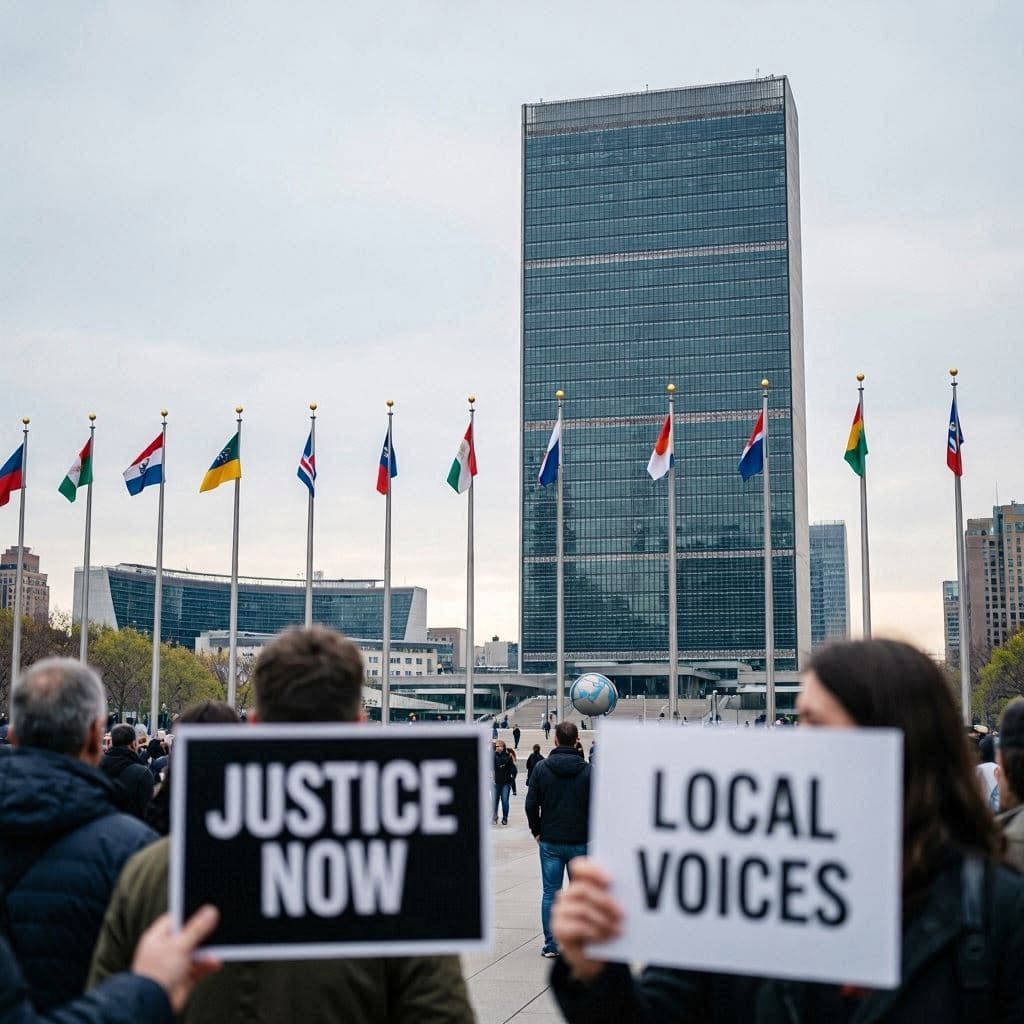
AI Image Disclaimer: Please note that any accompanying visuals for this article are AI-generated representations intended for illustrative purposes only.
Sources: The Hill The Guardian Times of Israel Fox News
Published by Banx Network. This article is part of the Banx decentralized media programme, powered by the BXE token on the XRP Ledger.