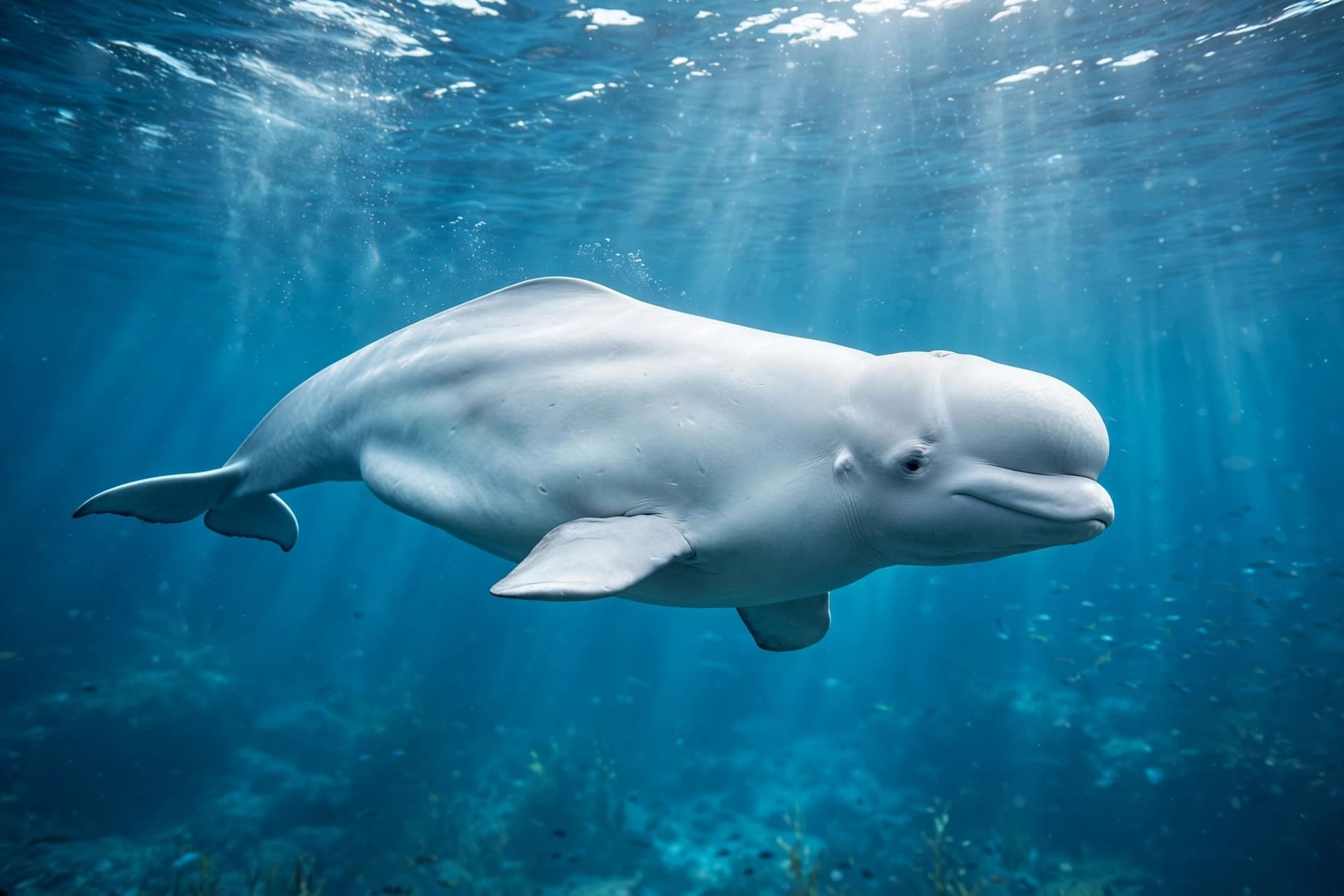
In the quiet, blue-lit depths of the Shedd Aquarium in Chicago, a somber silence has fallen once again. Osiris, a 26-year-old female beluga whale, has passed away, marking the fourth death among the whales rescued from the now-closed Marineland in Niagara Falls, Canada. Her passing comes just weeks after she and her companions were transported across the border in a high-profile humanitarian mission intended to save them from neglect. It is a heartbreaking reminder that even with the best intentions and resources, the toll of years of inadequate care can be irreversible.
The rescue operation, which garnered international attention, was hailed as a victory for animal welfare. Dozens of volunteers and experts worked tirelessly to move the whales to safer, more spacious environments in the United States and Mexico. For many, it was a beacon of hope, demonstrating what collective action could achieve. Yet, the fragility of these animals, weakened by years of confinement and poor conditions at Marineland, has cast a shadow over the success of the mission. Hope is often accompanied by grief.
Osiris had shown signs of struggle since her arrival in Chicago. Despite the dedicated care of veterinary teams and the state-of-the-art facilities at the Shedd, her health continued to decline. The aquarium stated that she died peacefully under sedation, surrounded by caregivers who had grown attached to her. This personal connection between humans and animals highlights the deep empathy that drives conservation efforts. Care is a form of love.
The deaths of the other three whales—Peekachu, Rain, and Jelly Bean—have raised questions about the long-term viability of rescuing animals that have suffered chronic stress. While the new environments are vastly superior, the physiological damage inflicted during their time at Marineland may have been too severe to repair. This tragedy underscores the importance of prevention over intervention. Prevention is the best cure.
Public reaction has been one of sadness and reflection. Many who followed the rescue story feel a sense of loss, having invested emotionally in the whales’ journey to freedom. Social media has filled with tributes and messages of support for the caretakers. The community’s engagement shows how deeply people care about wildlife. Compassion connects us all.
The Shedd Aquarium has reaffirmed its commitment to the remaining rescued belugas, ensuring they receive the highest standard of care. Staff members are monitoring the health of the survivors closely, learning from each loss to improve their practices. Resilience is built through adaptation. The mission continues, driven by a duty to those still alive.
Critics of Marineland have pointed to this outcome as further evidence of the need for stricter regulations on captive marine mammals. The closure of the park was a significant step, but the aftermath reveals the complexities of rehabilitation. Policy changes must be accompanied by robust support systems for rescued animals. Justice requires follow-through.
In the end, Osiris’s death is a poignant chapter in the story of the Marineland rescues. It reminds us that while we can offer second chances, we cannot always undo the past. As the remaining whales settle into their new homes, the hope is that they will thrive. Their lives honor the memory of those who did not survive. Peace be with them.
AI Image Disclaimer: The visual representations included here are AI-generated illustrations designed to depict beluga whales and aquatic environments, not actual photographs of Osiris or the specific tanks at the Shedd Aquarium.
Sources: Chicago Sun-Times CBC News News10
Published by Banx Network. This article is part of the Banx decentralized media programme, powered by the BXE token on the XRP Ledger.