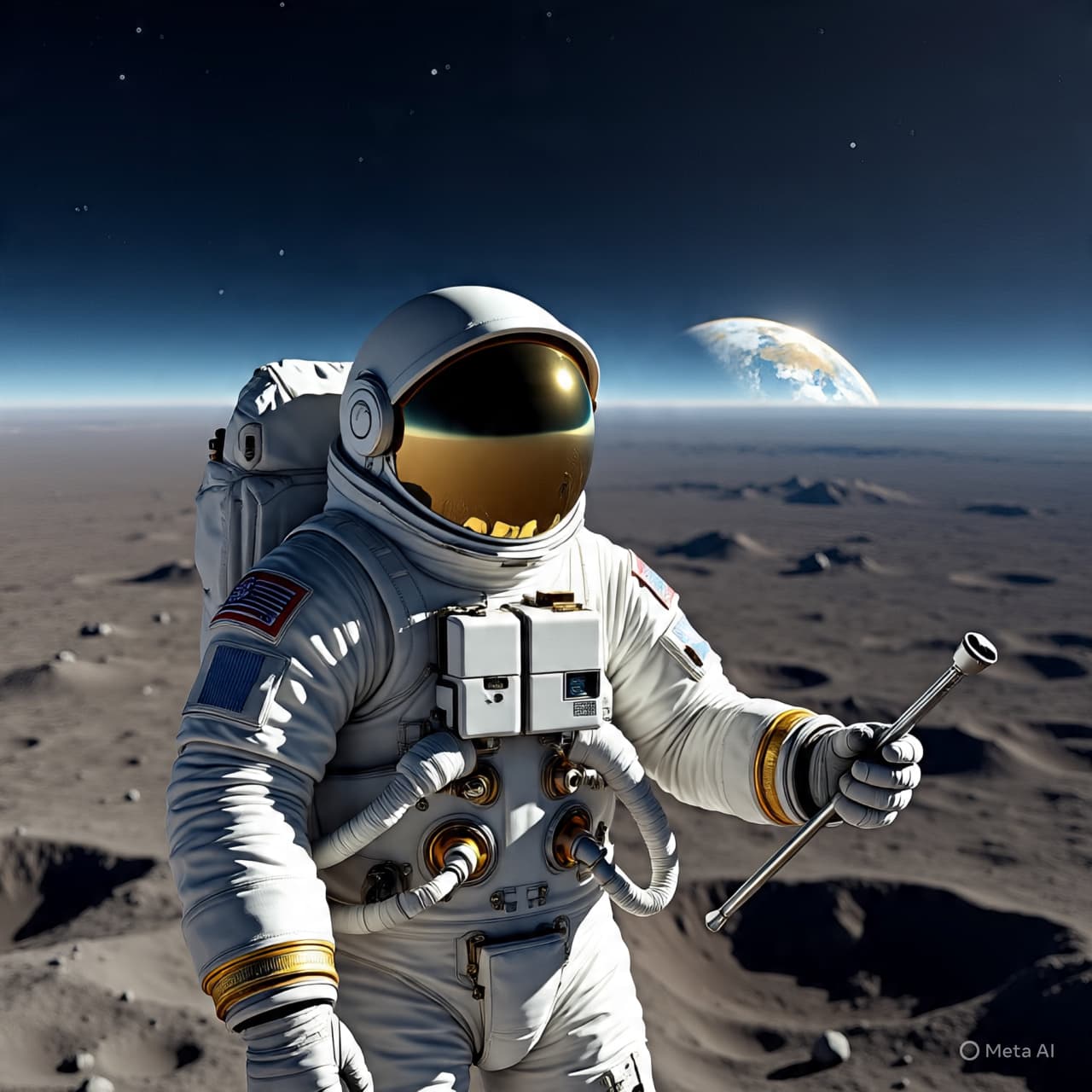
There is a certain stillness to the Moon—a presence that has watched humanity long before we ever reached for it. It hangs in the night sky not as a distant stranger, but as something quietly familiar, a constant companion whose surface has already felt the imprint of human footsteps. And yet, for all that familiarity, it remains deeply, persistently unknown.
In recent years, renewed interest in lunar exploration has begun to take shape, led in part by efforts from and its international partners. The intention is not merely to return, but to look again—with new tools, new questions, and a deeper understanding of what we hope to find.
One of the most compelling mysteries lies in the Moon’s history itself. Scientists believe that studying lunar rocks and soil could help clarify how the Earth-Moon system formed, possibly through a massive collision early in the solar system’s history. The Moon, largely unchanged by atmosphere or weather, acts as a kind of archive—preserving records that Earth has long since erased.
Another question rests in the shadows of the lunar poles. There, in craters that never see sunlight, researchers suspect the presence of water ice. Confirming and understanding these deposits could reshape not only our scientific knowledge, but also the practical future of space exploration. Water, after all, is not just a resource for life—it can also be broken down into hydrogen and oxygen, key components for fuel.
There is also a broader curiosity about the Moon’s role as a stepping stone. Missions designed to return humans to its surface are often framed as preparation for journeys further into space, particularly toward Mars. In this sense, the Moon becomes both destination and rehearsal—a place where technologies, strategies, and endurance can be tested under conditions that are challenging, yet still within reach.
Yet, beyond these tangible goals, there is something more reflective at play. Returning to the Moon invites a reconsideration of what exploration means in a modern context. The first journeys were driven by urgency and competition; the next may be shaped more by collaboration and long-term vision.
Each mission, each sample collected, each observation made contributes to a larger narrative—one that is still unfolding. The Moon, despite its proximity, continues to offer questions that resist easy answers, encouraging a slower, more deliberate kind of discovery.
As preparations move forward, the return to the Moon is less about repeating history and more about deepening it. What once was a singular achievement may now become an ongoing relationship, one defined not by arrival alone, but by the willingness to keep asking what remains just beyond understanding.
AI Image Disclaimer (Rotated): Visuals are created with AI tools and are not real photographs.
Source Check (Credible Media Identified):
NASA Nature Science BBC The New York Times
Published by Banx Network. This article is part of the Banx decentralized media programme, powered by the BXE token on the XRP Ledger.