Opening: In the rigid world of manufacturing, where shifts are fixed and routines are predictable, a quiet revolution is taking place. Faced with a severe labor shortage, one factory took a unconventional step: it offered flexible work schedules. The result was not just a fill in the roster, but a transformation in employee satisfaction and productivity. This story invites us to reflect on the evolving nature of work, where autonomy and balance are becoming as valuable as wages. It suggests that the solution to labor crises may lie not in demanding more, but in offering more freedom.
Body: The factory, struggling to attract and retain staff in a tight labor market, decided to experiment with flexible hours. Instead of traditional eight-hour shifts, workers were allowed to choose their start and end times within a broader window. Some opted for four ten-hour days, while others preferred shorter daily shifts. This flexibility addressed a key pain point for many workers: the need to balance job responsibilities with family care, education, or personal well-being.
The impact was immediate. Applications surged, and retention rates improved significantly. Employees reported higher job satisfaction, citing the ability to manage their own time as a major benefit. For the factory, this translated into reduced turnover costs and a more engaged workforce. Productivity did not suffer; in fact, it often improved, as workers were more focused and less stressed during their chosen hours.
This approach challenges the long-held belief that manufacturing requires strict, uniform scheduling for efficiency. Modern technology and automated systems allow for greater adaptability in production lines. By trusting employees to manage their time, the factory fostered a culture of responsibility and mutual respect. It demonstrated that flexibility is not incompatible with industrial precision.
The success of this initiative has drawn attention from other manufacturers facing similar challenges. Labor shortages are a nationwide issue, driven by demographic shifts and changing worker expectations. Traditional incentives like sign-on bonuses have had limited long-term effect. Flexibility, however, addresses the root cause of dissatisfaction: the rigidity of work life. It offers a sustainable solution that benefits both employer and employee.
Critics might argue that flexible schedules complicate coordination and supervision. However, the factory implemented clear communication protocols and digital tools to ensure smooth operations. Team overlaps were maintained to handle handovers, and performance metrics were used to monitor output. These structures provided the necessary framework to make flexibility work without sacrificing operational integrity.
For workers, especially those with caregiving responsibilities or pursuing further education, this model is liberating. It allows them to participate in the workforce without sacrificing other important aspects of their lives. This inclusivity expands the talent pool, bringing in diverse skills and perspectives that enrich the workplace. It is a win-win scenario that promotes equity and opportunity.
As the labor market continues to evolve, flexibility is likely to become a standard expectation rather than a perk. Companies that adapt early will gain a competitive advantage in attracting top talent. This factory’s experience serves as a case study for others, showing that innovation in human resources can be as impactful as innovation in machinery.
Looking ahead, the broader adoption of flexible work in manufacturing could reshape the industry’s image. It moves away from the stereotype of grueling, inflexible labor toward a model that values human needs. This shift is essential for building a resilient and satisfied workforce capable of meeting the demands of the future.
Closing: A factory successfully addressed its labor shortage by implementing flexible work schedules, leading to improved retention and productivity. This approach highlights the growing importance of work-life balance in attracting employees. It offers a viable model for other industries facing similar staffing challenges.
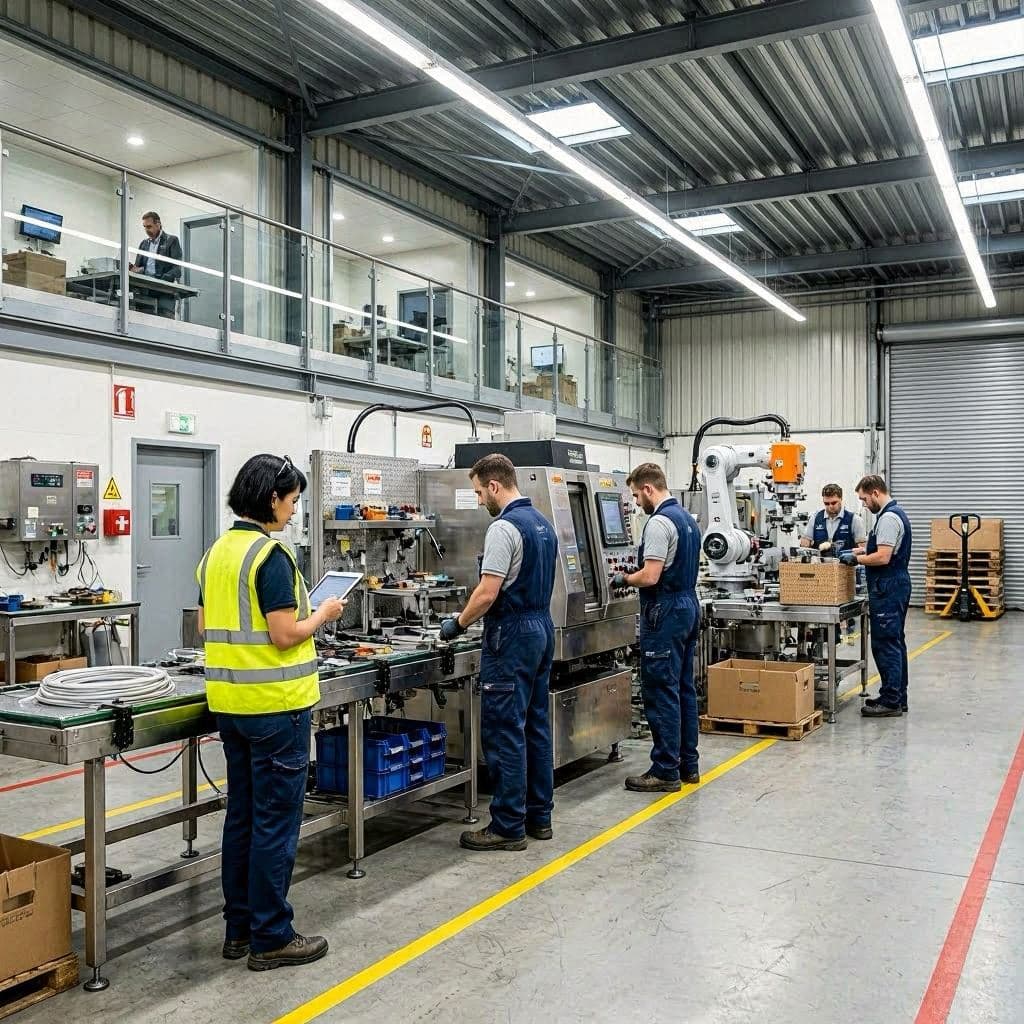
AI Image Disclaimer: The images associated with this article are AI-generated interpretations designed to visualize the context of modern manufacturing and flexible work environments.
Sources: Harvard Business Review MIT Sloan Management Review Local Manufacturing News Outlets
Published by Banx Network. This article is part of the Banx decentralized media programme, powered by the BXE token on the XRP Ledger.