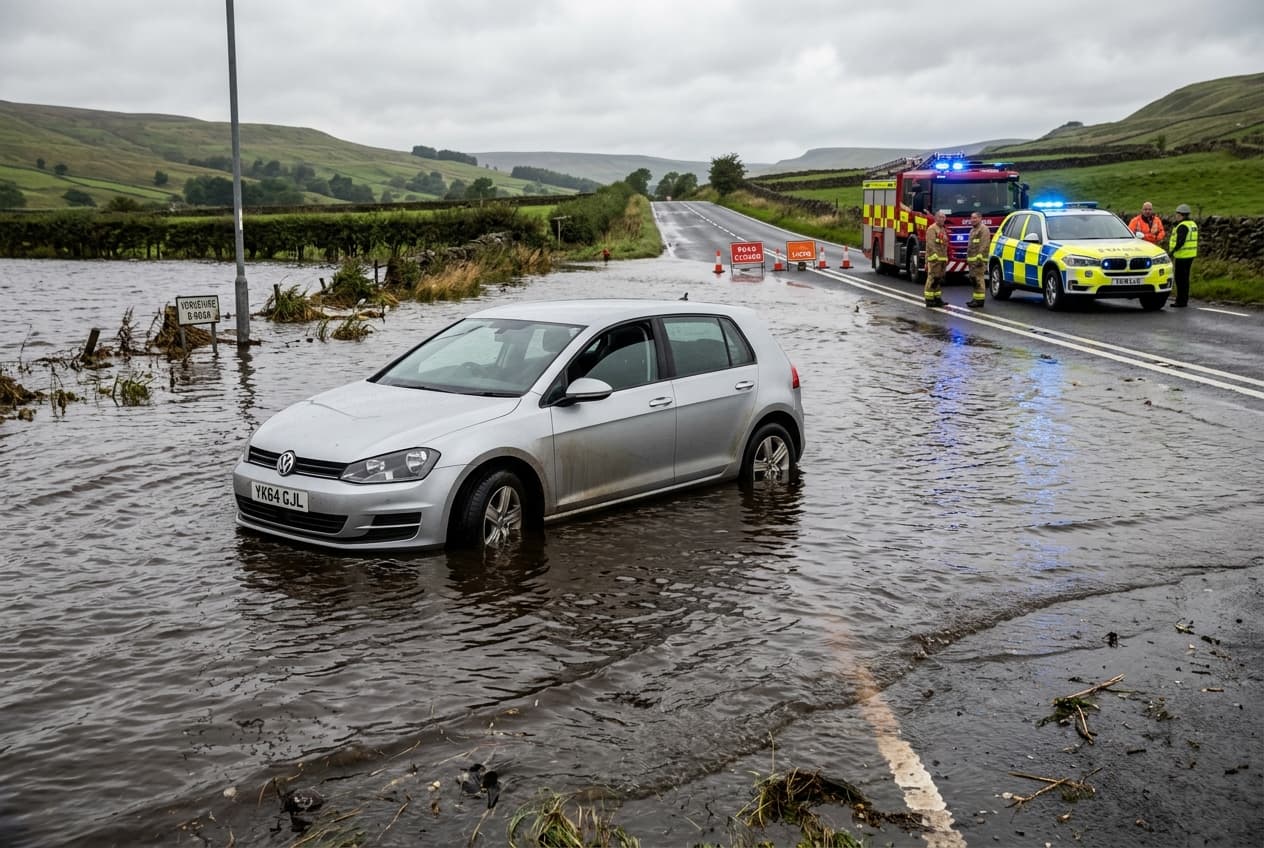
Leeds, United Kingdom—Emergency crews deployed boat teams and high-clearance rescue vehicles across North and West Yorkshire early Friday morning after sudden, torrential rainfall inundated primary road networks, submerging several vehicles and leaving five drivers trapped inside their cars.
Rainfall rates exceeding thirty millimeters per hour hit the region before dawn, overwhelming municipal drainage systems and turning major arterial routes into fast-moving rivers. Local highways, including sections of the A61 and A64, were rendered completely impassable within forty-five minutes of the initial downpour.
Fire and rescue services received more than one hundred distress calls in a three-hour window. The most critical interventions occurred near low-lying bridge underpasses where runoff accumulated rapidly, catching early-morning commuters off guard before road closure barriers could be deployed by highway authorities.
"We responded to multiple life-safety incidents where water levels reached the windows of stranded vehicles within minutes," said a spokesperson for the North Yorkshire Fire and Rescue Service during an early morning operational brief. "Crews used wading gear and inflatable sleds to extract five individuals who were unable to open their doors against the water pressure."
Met Office forecasters had issued an amber weather warning for rain late Thursday evening, but local infrastructure failed to handle the volume of water discharge. Drainage runoff mixed with silt from nearby agricultural land, blocking culverts and accelerating surface accumulation across low-altitude transit routes.
Local transit operators suspended dozens of bus services across Leeds, York, and Harrogate as standing water breached engine compartments and blocked depot access lanes. Network Rail also issued speed restrictions along northern lines, citing flooded track beds and debris washed onto the rails.
Council maintenance teams worked through the morning to clear clogged drainage grates using heavy machinery, though high water levels continued to impede recovery efforts in rural pockets across the valley floors. Environment Agency sensors recorded peak river levels not seen since the severe winter storms of the previous decade.
Municipal authorities established temporary shelter centers in community halls to accommodate displaced drivers and residents from low-lying properties facing surface water runoff. Emergency teams maintained active patrols along primary commuter routes through the afternoon, warning that water depths remained deceptively dangerous despite declining rainfall.
Road closures remain in place across twelve key intersections, with highways officials assessing structural pavement damage before authorizing any reopening. Recovery crews are currently working to winch stranded vehicles from drainage ditches as water levels begin a slow, uneven retreat across the county.
Published by Banx Network. This article is part of the Banx decentralized media programme, powered by the BXE token on the XRP Ledger.