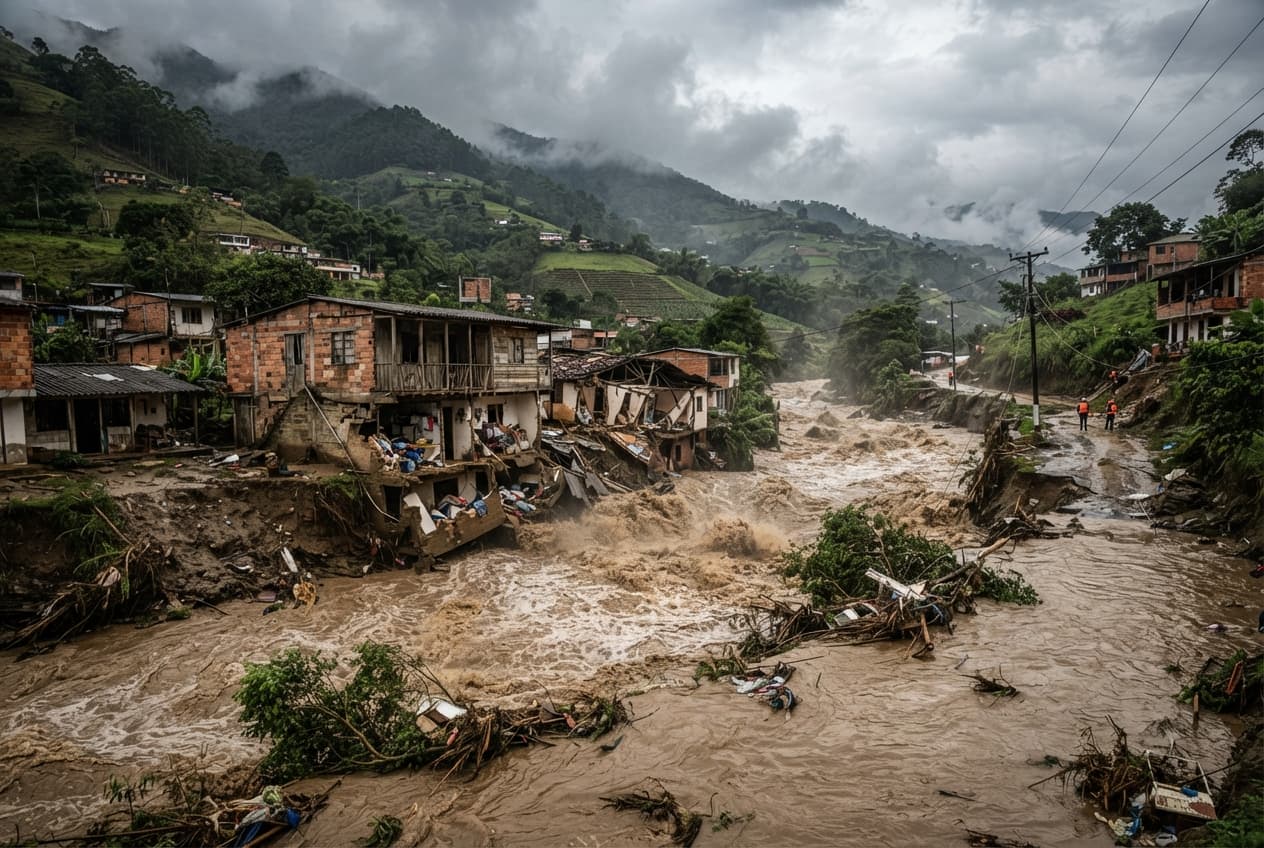
Medellín, Colombia—Heavy downpours triggered a sudden and violent river overflow across rural Antioquia on September 28, 2026, sweeping away residential structures and claiming at least two lives as muddy torrents tore through mountain valleys. The sudden surge hit without warning late in the morning, overwhelming natural riverbanks and transforming quiet rural tracks into raging watercourses. Local disaster management officials confirmed that search units are operating heavy extraction equipment to locate individuals reported missing.
Raging waters smashed through riverside housing blocks in the municipality of Barbosa, reducing cinder-block walls and timber frames to splintered debris. Surviving residents scrambled up steep embankment slopes, watching as their properties disappeared beneath churning brown foam. Municipal rescue coordinator Carlos Gomez stated that the velocity of the floodwaters made immediate evacuation attempts virtually impossible for families living closest to the channel.
Transportation infrastructure suffered critical damage as approach slabs on regional highway bridges washed out under intense hydraulic pounding. Intercity commercial freight transport ground to a complete halt, stranding cargo trucks and passenger buses along mountain transit corridors. Highway maintenance crews mobilized tracked excavators to clear massive piles of driftwood and boulders blocking local tunnels.
Agricultural sectors experienced severe devastation as floodwaters inundated commercial crop fields and destroyed extensive aquaculture fish ponds. Local farming syndicates report that livestock herds grazing near the river flats were swept downstream during the initial surge. Agrarian authorities warned that regional food production networks will experience prolonged delays.
Emergency shelters established inside municipal sports coliseums received hundreds of displaced citizens fleeing the rising inundation zones. Civil defense workers distributed thermal blankets, dry clothing, and hot rations to families waiting anxiously for news of missing relatives. Public health officials established triage stations to treat minor injuries, lacerations, and shock among survivors.
Hydrological monitoring stations recorded unprecedented water volume spikes along several secondary tributaries feeding the primary regional river basin. Meteorological forecasters predict that moist air masses stalled over the Andes will bring additional precipitation through the evening hours. Local authorities maintained high-level alert statuses for all towns situated along the downstream valley floor.
Electrical utility grids across three municipalities failed completely after river erosion undermined high-tension transmission towers. Regional hospital facilities switched to emergency diesel generators to keep vital surgical suites and life-support wards operational. Fuel supplies for these backup units are running critically low due to blocked road links.
Search and recovery teams continue sweeping downstream debris zones under difficult weather conditions as night settles over the valley. Command headquarters coordinate aerial drone flights to scan inaccessible river bends for trapped survivors. Response commanders emphasize that stabilization efforts will require extensive engineering intervention over the coming days.
Published by Banx Network. This article is part of the Banx decentralized media programme, powered by the BXE token on the XRP Ledger.