Key Highlights
- Location:South Australia, where wildfires have engulfed residential areas.
- Injuries:Two firefighters injured while battling the flames.
- Evacuations:Authorities issued emergency evacuation orders for affected neighborhoods.
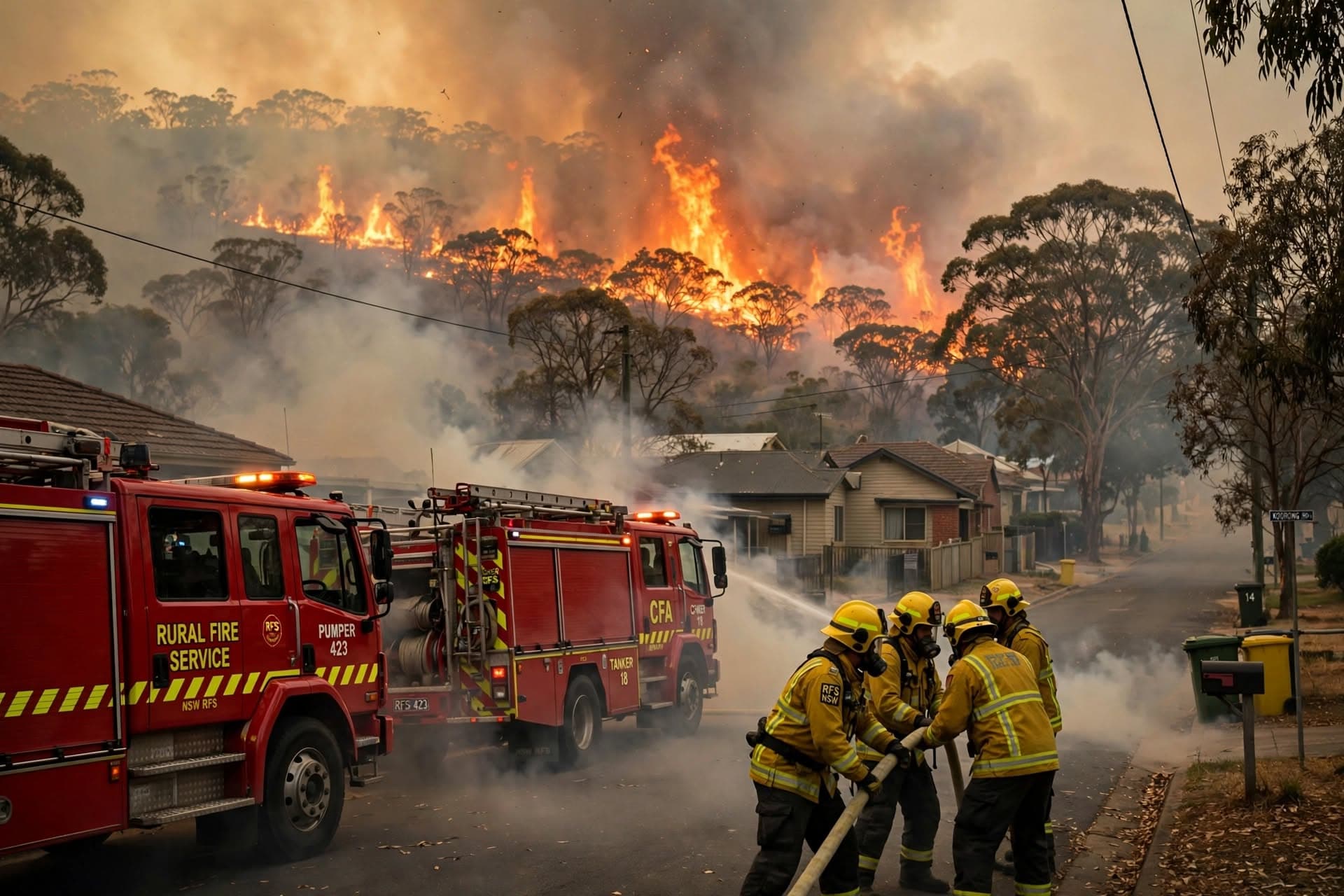
Adelaide, Australia—Wildfires tore through South Australian residential zones late this afternoon, devouring multiple homes and injuring two firefighters as sudden wind shifts overwhelmed primary containment lines. Fire crews faced extreme fire weather conditions as localized wind gusts drove flames rapidly toward populated streets, forcing authorities to issue immediate shelter-in-place and emergency evacuation orders.
Emergency medical services treated two responding firefighters on site before transporting them to regional medical facilities for burn treatment and smoke inhalation. Command posts reported that crew members were caught in a localized fire flashover while operating defensive hose lines near residential property boundaries. The situation escalated quickly, highlighting the unpredictable nature of wildfires exacerbated by changing weather patterns.
Thick plumes of dark smoke reduced visibility to near-zero along main regional corridors, forcing police to close key transport routes to non-emergency traffic. Local power companies cut electricity feeds across affected townships as fallen timber and burning debris severed overhead lines. The combination of high winds and dry conditions has created a perfect storm for fire spread, complicating firefighting efforts.
Over a hundred ground personnel supported by aerial water bombers fought to construct emergency mineral earth breaks ahead of the advancing fire front. Water bombing aircraft dropped repeatedly along structural perimeters, but intense radiant heat prevented crews from securing the western flank of the blaze. The aerial support is crucial in slowing the fire's progression and protecting homes, but the conditions remain challenging.
Displaced residents gathered at designated community relief centers as local authorities began cataloging destroyed properties and assessing structural damage. Evacuees described witnessing rapid embers leaping across highway barriers minutes before structural roofs ignited throughout their neighborhoods. The emotional toll on residents is significant, as many have lost their homes and are now seeking shelter and support.
State fire agency coordinators confirmed that severe atmospheric instability and hot winds created ideal conditions for aggressive fire behavior. Incident commanders stated that localized fire embers were launching hundreds of meters ahead of the main fire front, triggering secondary spot fires across dry vegetation reserves. This phenomenon underscores the need for continuous monitoring and rapid response to emerging threats.
Heavy plant machinery and bulldozers worked continuously along rural access roads to dig wide containment trenches before overnight humidity drops. Civil defense officials directed secondary strike teams to reinforce perimeter defense lines around remaining residential developments threatening nearby hillsides. As night fell across the scorched landscape, crews continued battling stubborn spot fires beneath heavy smoke cover. Fire agencies maintain active emergency warnings across the region as uncontained flanks continue to pose direct risks to neighboring communities.
The situation remains fluid, with fire officials urging residents to stay informed and heed evacuation orders. The community's resilience will be tested as they face the aftermath of these devastating wildfires.
Published by Banx Network. This article is part of the Banx decentralized media programme, powered by the BXE token on the XRP Ledger.