There are technological moments that feel like sudden leaps, even when they arrive slowly in the background of years of innovation. Such is the promise of solid-state batteries — a long-sought successor to traditional lithium-ion cells that has hovered on the horizon of electric transport for more than a decade. But this week, at a confluence of design, scale, and deployment, the future hinted at its arrival.
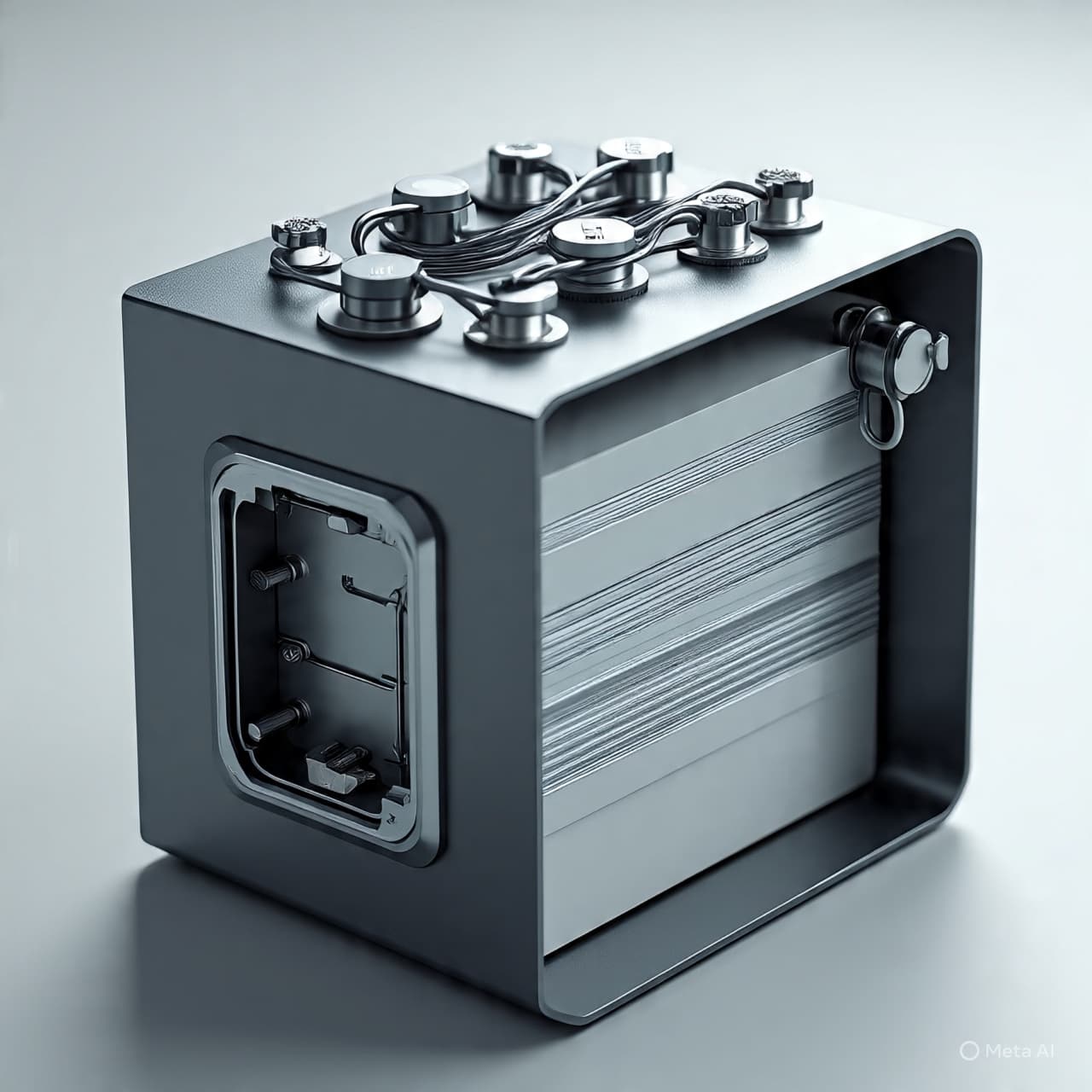
Donut Lab, a company not yet a household name, has unveiled what it calls the first all-solid-state battery ready for production vehicles. Solid-state cells, which replace the liquid electrolyte of conventional batteries with a solid material, have been touted for years as safer, more energy-dense, and capable of charging faster — but mostly on whiteboards, in labs, or projected onto the distant roadmap of the next decade. Now, with these batteries slated to power electric motorcycles rolling off showrooms as early as this quarter, the dream feels closer to the present than the future.
The appeal is easy to visualize. A battery that reaches full charge in roughly five minutes, with performance that remains robust across tens of thousands of cycles — that sounds like the answer to two of electric vehicle (EV) culture’s persistent hesitations: range anxiety and slow charging. With an energy density significantly higher than many current cells, these solid-state batteries promise not just convenience but a dramatic rethinking of vehicle design and user experience.
Yet, beneath these heady claims lie questions as old as the technology itself. Solid-state chemistry has repeatedly faced practical challenges: manufacturing at scale, managing microscopic defects, and ensuring that solid electrolytes perform reliably over thousands of real-world cycles without forming short-circuiting pathways known as dendrites. In other words, what looks like breakthrough on paper can become a gauntlet in production.
Donut Lab’s announcement, centered on motorcycles now entering drivers’ hands, may in part reflect this strategic choice. Smaller battery packs and lighter vehicles offer a lower barrier to commercialization than full-size cars, providing a testing ground that might pave the way for broader adoption. And in that, there is a certain poetic symmetry: the technology that once felt perpetually "just around the corner" may find its first real home not in giant EVs, but on lean, agile bikes that carry riders into a rapidly electrifying world.
Still, industry watchers will measure the moment with a mixture of excitement and caution. If solid-state batteries begin to prove their worth in everyday use — with safety, durability, and cost that justify widespread adoption — they could help reshape electrified transport far beyond motorcycles. If the challenges of scaling and real-world reliability reassert themselves, the narrative will shift again, as it has so many times before.
the unveiling feels less like a conclusion and more like a threshold — one where possibility grows denser, faster, and just a little bit closer to reality. And that, in an industry conditioned by decades of promise, may be the most meaningful charge of all.
AI Image Disclaimer Visuals are created with AI tools and are not real photographs.
Sources InsideEVs Battery Tech Online The EV Report AutoEvolution Tech Yahoo
Published by Banx Network. This article is part of the Banx decentralized media programme, powered by the BXE token on the XRP Ledger.