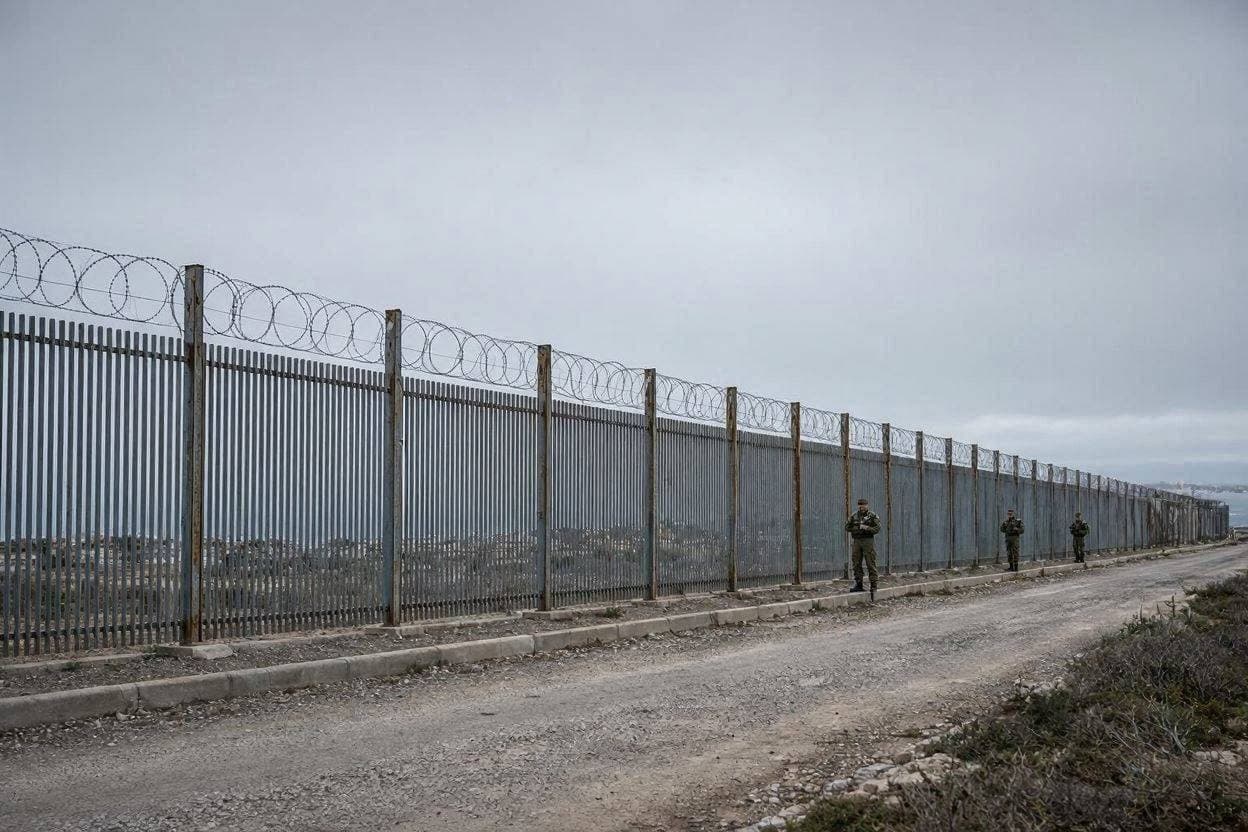
In the complex tapestry of European politics, migration remains one of the most contentious threads, weaving together issues of sovereignty, humanity, and security. Prime Minister Pedro Sánchez of Spain has often been characterized by critics as having a lenient approach to migration, emphasizing dialogue and integration. However, recent events in the North African enclave of Ceuta revealed a different facet of his leadership. When thousands of migrants crossed the border in May, Sánchez’s government responded with swift and decisive action, deploying the military and reinforcing borders. This duality challenges simple narratives, suggesting a pragmatic approach that balances humanitarian values with national security needs.
The surge in Ceuta was unprecedented, with over 8,000 migrants entering the Spanish territory in a single day. Many were minors, adding a layer of urgency and moral complexity to the crisis. The Moroccan government’s alleged tacit approval of the crossing, seen as a political lever in diplomatic tensions, forced Spain to react quickly. Sánchez’s decision to send troops and close borders was a clear signal that while Spain welcomes legal migration, it will not tolerate irregular mass entries that compromise border integrity.
This response contrasts with the perception of Sánchez as "soft" on migration. His government has indeed promoted regular pathways for migrants and criticized harsh detention policies in other EU nations. Yet, the Ceuta incident demonstrated that these principles do not preclude firm enforcement when necessary. The prime minister’s ability to pivot from diplomacy to defense highlights the nuanced reality of governing a frontline state in the migration debate.
The humanitarian aspect of the crisis was also addressed, with social services mobilized to care for unaccompanied minors. This dual approach—securing borders while protecting vulnerable individuals—reflects the broader European struggle to find a balanced migration policy. Spain’s actions in Ceuta may serve as a model for other nations facing similar pressures, showing that security and compassion are not mutually exclusive.
Political opponents in Spain have used the event to question Sánchez’s consistency, arguing that the rapid militarization contradicts his progressive rhetoric. However, supporters argue that it proves his commitment to rule of law and national stability. The debate underscores the difficulty of maintaining a coherent migration strategy in a volatile geopolitical landscape. Public opinion remains divided, with some praising the firmness and others concerned about the treatment of migrants.
Internationally, the incident strained relations with Morocco, though diplomatic channels have since worked to de-escalate tensions. The European Union watched closely, recognizing the implications for its own external border policies. Spain’s handling of Ceuta has influenced broader discussions on burden-sharing and cooperation with neighboring countries. It highlights the need for a unified European approach that respects both member states’ sovereignty and human rights obligations.
For the residents of Ceuta, the event was disruptive and frightening. The sudden influx overwhelmed local resources, and the military presence altered the daily rhythm of life. Recovery efforts are ongoing, with a focus on restoring normalcy and addressing the root causes of such migrations. The community’s resilience is a testament to their adaptability in the face of recurring challenges.
Prime Minister Sánchez’s response to the Ceuta crisis reveals the complexity of leadership in times of uncertainty. By acting swiftly to secure borders while maintaining humanitarian standards, he navigated a difficult path between competing demands. The event serves as a reminder that migration policy is rarely black and white, but a spectrum of choices shaped by circumstance and principle.
AI Image Disclaimer: Please note that the images in this piece are AI-generated illustrations created to depict the themes of political leadership and border management.
Sources: El País, BBC News, Reuters, The New York Times
Published by Banx Network. This article is part of the Banx decentralized media programme, powered by the BXE token on the XRP Ledger.