Key Highlights
- Incident:A massive fire outbreak occurred at Gwagwalada Main Market in Abuja.
- Damage:Numerous shops were destroyed, resulting in significant financial losses.
- Response:Firefighters and emergency responders worked to contain the blaze.
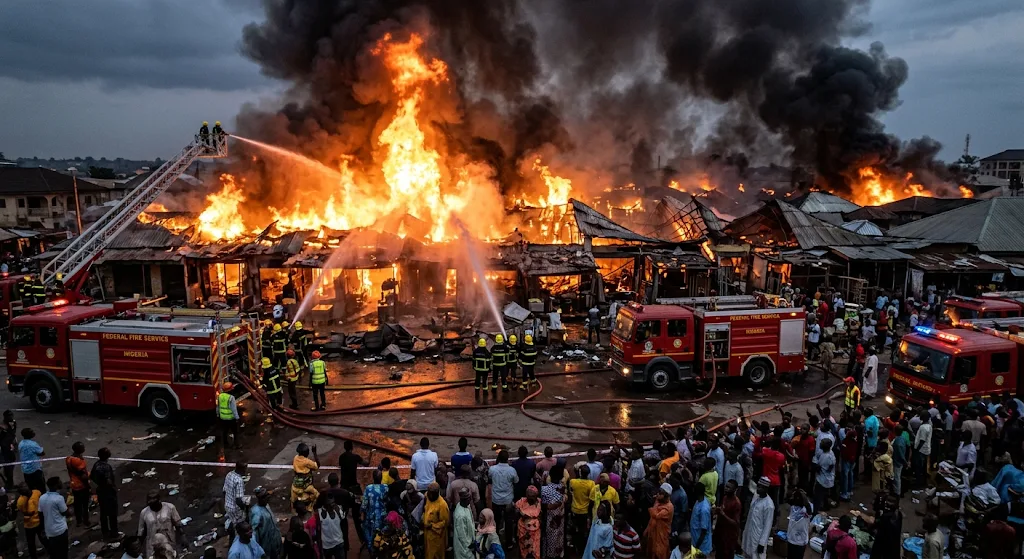
ABUJA — A massive fire outbreak has ravaged sections of the popular Gwagwalada Main Market in the Federal Capital Territory (FCT), Abuja, destroying numerous shops and goods worth millions of naira. Eyewitnesses reported that the inferno broke out unexpectedly and spread rapidly through the densely packed stalls, fueled by flammable materials and closely built structures within the commercial hub. Thick plumes of black smoke billowed into the sky, sparking panic among traders and shoppers who scrambled to salvage their wares before the flames engulfed the area.
Personnel from the Federal Fire Service and the FCT Fire Service, alongside local emergency responders and security agencies, mobilized to the scene to battle the blaze. Firefighters worked for hours to contain the inferno and prevent it from spreading to adjoining sections of the market and nearby residential buildings. While no fatalities have been confirmed, distressed shop owners gathered outside the cordoned-off premises, counting heavy financial losses as several stalls were reduced to rubble. Some traders attempted to rescue remaining inventory with the assistance of community volunteers before security personnel secured the perimeter to prevent looting.
Authorities have yet to determine the exact cause of the fire, though preliminary assessments point toward a possible electrical surge. Emergency management officials stated that a thorough investigation and damage assessment will be conducted once the site is completely cooled and cleared. The Gwagwalada Main Market serves as a vital economic lifeline for thousands of residents in the FCT, offering everything from fresh produce to textiles.
Local economic analysts predict this incident will cause significant disruption to the supply chain and may lead to price hikes in the area. Prominent local leaders are already calling for government intervention and the establishment of an emergency relief fund to assist the affected traders, many of whom have lost their entire livelihoods. This latest tragedy has reignited a critical conversation about safety standards within Nigeria's crowded traditional markets.
Gwagwalada residents are urging urban planning authorities to move beyond temporary relief and instead invest in a comprehensive modernization plan for the market. Key demands include installing robust, accessible fire hydrant systems, implementing stricter electrical safety codes, and widening pathways to facilitate faster emergency vehicle access during future incidents. The community's resilience and determination to advocate for better safety measures highlight the urgent need for systemic changes to prevent such disasters in the future.
Published by Banx Network. This article is part of the Banx decentralized media programme, powered by the BXE token on the XRP Ledger.