Key Highlights
- Incident:A significant fire erupted at an industrial facility in Rotterdam early Tuesday morning.
- Response:Emergency services deployed multiple fireboats and established a one-kilometer perimeter around the site.
- Impact:The fire has disrupted regional supply chains, halting barge transfers and rail freight services.
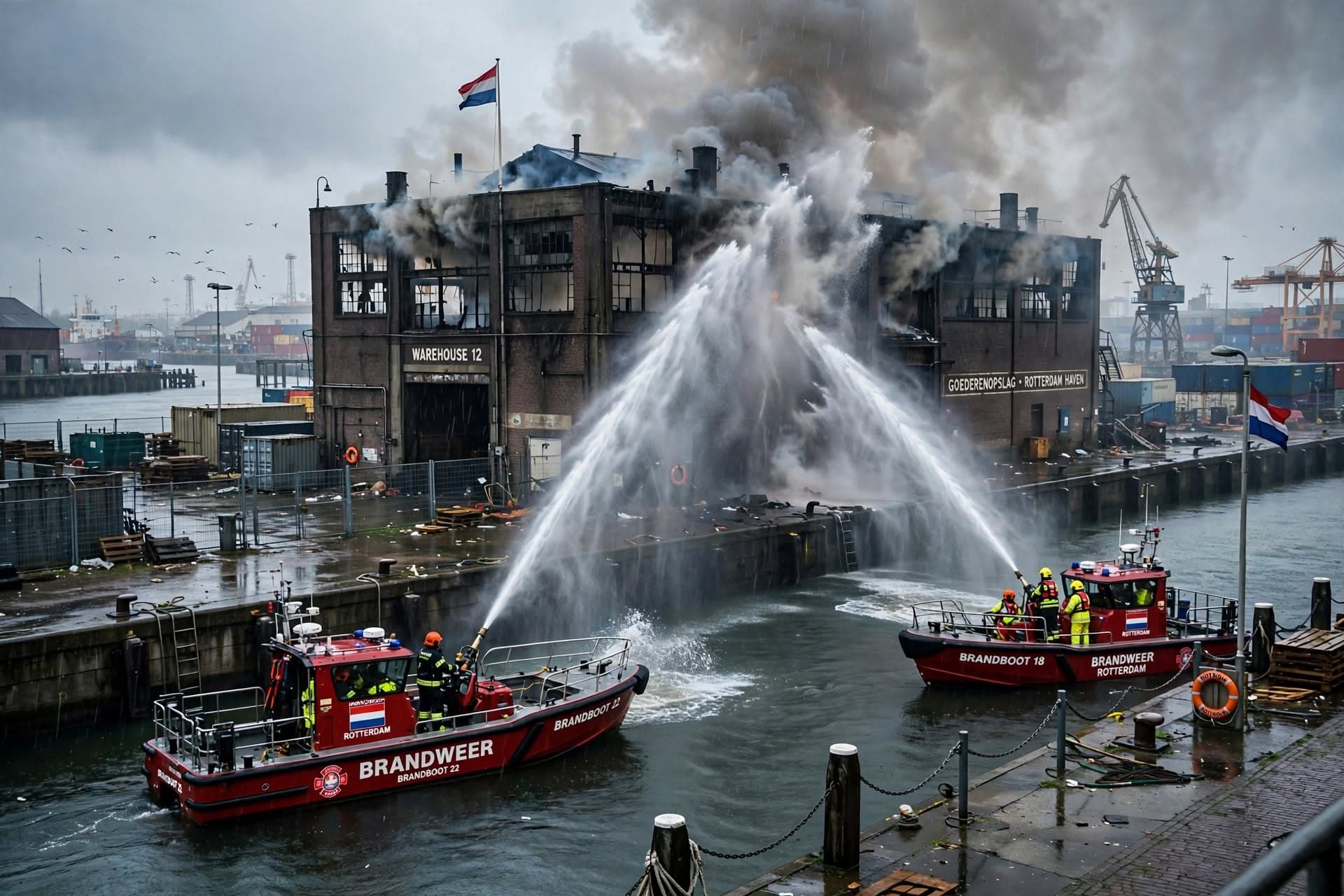
Rotterdam, Netherlands—A major fire broke out at an industrial recycling complex in the Waalhaven harbor district early Tuesday morning, following the rupture of a chemical storage tank. The incident occurred at approximately 4:15 AM when pressure valves failed, leading to a series of explosions that devastated two adjacent warehouses filled with commercial solvents. By dawn, thick black smoke was visible across the harbor, prompting immediate action from municipal fire crews.
In response to the emergency, harbor services deployed six specialized fireboats to draw seawater and combat the flames engulfing the facility. Ground units faced extreme heat, which caused the steel roofing of the primary storage site to collapse within ninety minutes of the initial explosion. As a precaution, the Port Authority suspended all barge transfers along the main canal, effectively halting the movement of raw chemical feedstocks to regional manufacturing hubs downstream.
Safety inspectors on the scene reported discrepancies in temperature control recorded in the facility's automated logging system late Monday evening. Operators had flagged elevated pressure readings in secondary containment units hours before the explosion, raising questions about the facility's maintenance protocols. However, management from the operating firm declined to comment on specific mechanical logs during an early morning briefing, citing ongoing containment efforts.
Regional health authorities issued shelter-in-place warnings for neighborhoods downwind of the harbor. Sensors along perimeter roads detected elevated levels of volatile organic compounds, although these levels remained below evacuation thresholds. Emergency response officials advised residents to keep windows closed as shifting coastal winds carried smoke toward populated areas.
As the fire continued to rage, port logistics hubs across Northern Europe began rerouting container traffic, with the harbor shutdown extending into midday. Rail freight lines servicing the industrial basin were also halted while inspectors assessed damage to overhead power infrastructure adjacent to the fire perimeter. Maritime operators estimated that dozens of commercial vessels faced docking delays ranging from twelve to forty-eight hours due to the incident.
Jan van der Meer, chief communications coordinator for the regional safety district, stated, "Containment lines are holding along the western wall, but interior fires continue to burn beneath collapsed structural steel. We cannot deploy interior teams until structural engineers confirm the integrity of the remaining concrete foundations." This statement underscores the ongoing challenges faced by emergency responders as they work to manage the situation.
Labor representatives expressed immediate concerns regarding staffing levels and maintenance schedules at the aging storage site. Union stewards claimed that previous safety audits had highlighted recurring cooling pump failures that management had not addressed. However, factory leadership countered these claims, asserting that all regulatory maintenance checks were completed on schedule earlier this quarter.
Cleanup crews equipped with heavy machinery began arriving at the outer perimeter checkpoints shortly after noon. Liquid runoff from firefighting foam accumulated in catchment basins designed to prevent toxic materials from leaking into the public waterway network. Environmental agency technicians continued to take water samples along the riverbank to verify whether chemical residue had breached secondary containment dikes.
Investigative units from the national safety board arrived on site to secure digital monitoring logs and video feeds from perimeter security posts. Technical teams plan to enter the core burn zone once hot spots are fully extinguished and toxic gas levels have dissipated. Meanwhile, operations at three neighboring logistics docks remain suspended indefinitely while structural engineers evaluate the stability of nearby fuel lines. Fire crews expect to maintain continuous water drenching over the site through Wednesday morning.
Published by Banx Network. This article is part of the Banx decentralized media programme, powered by the BXE token on the XRP Ledger.