Key Highlights
- Incident:A commercial bus plunged into a ravine in Peru, resulting in eleven fatalities and twenty severe injuries.
- Response:Rescue operations began promptly, with emergency teams navigating difficult terrain to reach victims.
- Investigation:Authorities are examining vehicle maintenance logs and driver compliance with safety protocols.
Lima, Peru—A commercial passenger bus carrying more than forty people veered off a narrow mountain highway and plunged into a steep ravine early Tuesday morning. Rescue operations commenced within two hours of the incident as regional police units navigated treacherous terrain to reach the wreckage. Authorities confirmed eleven passengers died at the scene, while emergency medical teams stabilized twenty survivors with severe injuries.
The vehicle was operating along a primary transit route connecting rural mountain settlements to coastal distribution centers. Preliminary reports from traffic controllers indicate the driver lost control while navigating a sharp decline under dense fog conditions. Debris from the chassis was scattered across three hundred meters of rocky slope, complicating recovery efforts.
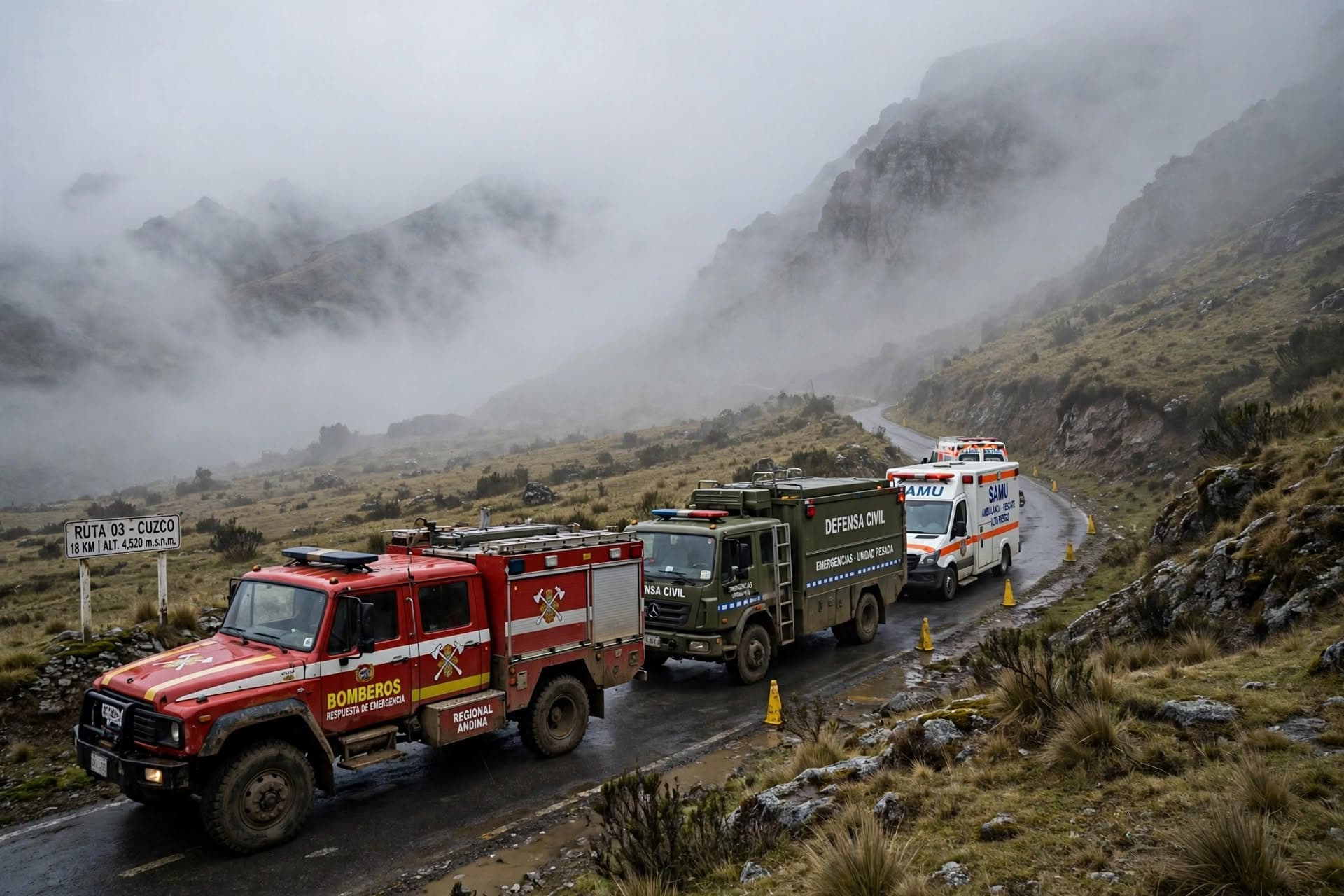
Local emergency dispatchers sent six ambulances and two heavy rescue vehicles to the remote access point. Paramedics scaled down the embankment using safety ropes to retrieve trapped passengers from the crushed cab. Regional hospitals in the surrounding province declared a code orange to clear capacity for incoming trauma cases, indicating the seriousness of the situation.
National Police Spokesperson Carlos Mendoza briefed reporters near the access perimeter. "Our tactical teams are working directly inside the ravine to clear heavy metal sections and confirm passenger manifests," Mendoza said. "The terrain remains unstable, which is limiting our ability to deploy heavy lifting equipment." This statement underscores the challenges faced by rescue teams in the aftermath of the accident.
Traffic along the mountain highway was completely halted by midday as state transport officials established a security line. Freight haulers carrying agricultural goods were rerouted onto unpaved secondary roads, causing extensive travel delays across the department. Highway patrol units began enforcing strict speed limits on adjacent passes to ensure safety in the area.
Regional Health Director Ana Torres released a status update outside the central emergency center. "Twenty patients have been admitted to our intensive care and surgical units," Torres said. "We have mobilized additional medical personnel and blood supplies to handle the critical nature of these injuries." This proactive response highlights the urgency of medical care required for the injured.
Investigating officers from the land transport authority seized vehicle maintenance logs from the operating bus line's regional terminal. Forensics experts are examining tire tread depth and brake assembly components to evaluate mechanical failure possibilities. Driver shift logs are also under review to verify compliance with mandatory rest protocols, which could shed light on the circumstances leading to the crash.
Recovery teams plan to utilize specialized crane units once weather conditions stabilize on Wednesday morning. Heavy fog continues to shroud the upper ridges of the mountain corridor, forcing rescue crews to work under portable floodlights. The formal identification process for victims remains ongoing at the provincial mortuary, as families await news of their loved ones.
Published by Banx Network. This article is part of the Banx decentralized media programme, powered by the BXE token on the XRP Ledger.