
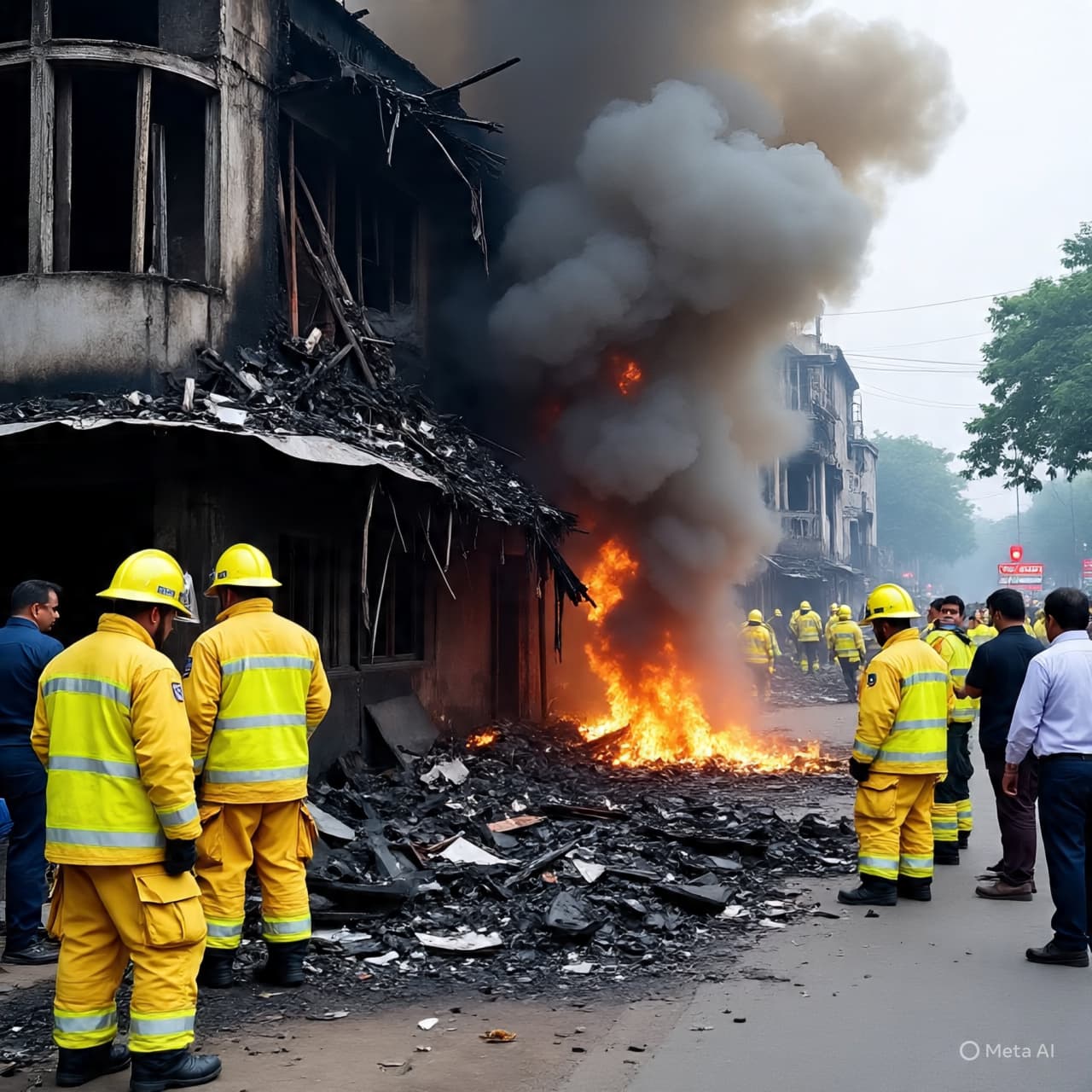
There is a brittle quiet to hope when it has barely had time to bloom. In Bangladesh — once greeted with cautious optimism after the ouster of long-time leader Sheikh Hasina and the promise of a new political chapter — that fragile promise now seems to crack under the weight of angry crowds and violent mobs. Instead of streets filled with discussions about reform and a hopeful electoral horizon, many citizens witness fire, fear, and disorder — a haunting echo of the very forces they hoped had been left behind.
What started as massive pro-democracy protests in 2024 has given way to a deeper crisis of civic order and political uncertainty. The assassination of a youth leader, Sharif Osman Hadi, recently reignited unrest, with mobs attacking media outlets such as Prothom Alo and The Daily Star, and burning cultural institutions in Dhaka and elsewhere. These attacks were justified by assailants as retaliation over perceived political affiliations and grievances following Hadi’s death. Such episodes have become stark symbols of the fading hope for a peaceful transition.
Mob violence has manifested in multiple ways across the country. Police have announced rewards for information on attackers who set fire to a Hindu-owned home near Chattogram, reflecting the disturbing rise in sectarian and communal attacks. In recent days, authorities also reported a man killed by a crude bomb in Dhaka’s Moghbazar area, a grim reminder that political tension has spilled over into everyday life for ordinary residents. Meanwhile, several homes in minority communities have been torched, forcing families to flee for safety.
Human rights groups and local reports highlight that mob violence deaths have risen sharply this year compared with past years, suggesting a pattern of lawlessness and retaliatory attacks that has taken hold amid political gridlock and institutional fragility.
Experts point to multiple intertwined reasons for this resurgence: a breakdown of effective law enforcement, a culture of impunity where perpetrators go unpunished, and a power vacuum that emboldens violent actors. Analysis from independent observers argues that when mobs feel they can act without consequence, violence becomes normalized and even politically instrumentalized.
Civil society groups, journalists and rights defenders have condemned the attacks, especially those targeting media institutions, stressing that they undermine freedom of expression and erode public trust in governance. Broad calls have emerged for collective action to safeguard journalists and uphold the rule of law as the nation navigates this precarious period.
Compounding these issues is the broader climate of distrust and polarization triggered by transitional politics. With the February 2026 elections approaching, tensions surrounding leadership, identity and national direction have intensified, leaving many Bangladeshis disillusioned about the promise of reform.
What was once a turning point of hope for “Bangladesh 2.0” now feels like a crossroads where optimism and fear collide. The resurgence of mob violence — whether directed at media houses, minorities, or public spaces — reflects deeper struggles over power, justice and identity. As civil society voices calls for accountability and protection of basic rights, the question remains whether Bangladesh can rise above chaos or whether the echoes of mob rule will continue to shape its political and social landscape.
AI Image Disclaimer “Illustrations were produced with AI and serve as conceptual depictions, not real photographs.”
Sources (Credible Media Names Only) The Guardian Reuters The Economic Times Times of India Reuters/AP
Published by Banx Network. This article is part of the Banx decentralized media programme, powered by the BXE token on the XRP Ledger.


