There is a particular loneliness to navigating an unfamiliar world. On Earth, we rarely feel it. Satellites circle above us, quietly guiding our steps, translating latitude and longitude into effortless direction. But on Mars, guidance has always required a different kind of patience — a careful dialogue between engineers millions of miles away and a rover waiting for instructions beneath a pale sky.
Now, that conversation has changed. has equipped its rover with a new navigation capability that functions much like a GPS system on Earth. The upgrade gives the rover greater autonomy, allowing it to determine its position on the Martian surface more precisely and navigate with improved efficiency. As mission team members described it, the enhancement grants Perseverance “a new ability.”
Unlike Earth, Mars has no operational satellite navigation network. Traditionally, rovers have relied on a combination of onboard cameras, inertial measurement systems, and orbital imagery to understand their surroundings. Commands are carefully planned on Earth, transmitted across space, and executed cautiously. The process is deliberate — and often slow.
The new system refines how Perseverance maps its environment and calculates its movements relative to landmarks and orbital data. By improving positional awareness, the rover can plan safer routes around obstacles and optimize its scientific traverses. It is not GPS in the terrestrial sense, but a sophisticated fusion of data that approximates that familiar convenience.
Perseverance has been exploring Jezero Crater, a region believed to have once hosted a river delta. Its mission includes searching for signs of ancient microbial life, collecting rock samples for future return to Earth, and studying Martian geology and climate. In such a terrain — layered with rocks, slopes, and shifting regolith — precise navigation is more than a convenience; it is essential for both safety and science.
Greater autonomy also reduces the time lag inherent in interplanetary exploration. Signals between Earth and Mars can take anywhere from several minutes to over twenty minutes one way, depending on planetary positions. By empowering the rover to make more decisions independently, engineers can increase productivity during each Martian day, or sol.
The development reflects a broader evolution in robotic exploration. Future missions — whether on Mars, the Moon, or more distant destinations — may depend increasingly on systems capable of self-guided movement. Autonomy becomes not just a technical feature, but a bridge between human intention and robotic execution.
NASA officials note that testing and calibration of the navigation capability are ongoing as Perseverance continues its scientific campaign. The rover remains healthy and operational, steadily advancing across the Martian landscape. With this added sense of direction, its path forward may become both more confident and more efficient.
On a planet where no satellites hum overhead to guide the way, Perseverance now carries a little more of that guidance within itself.
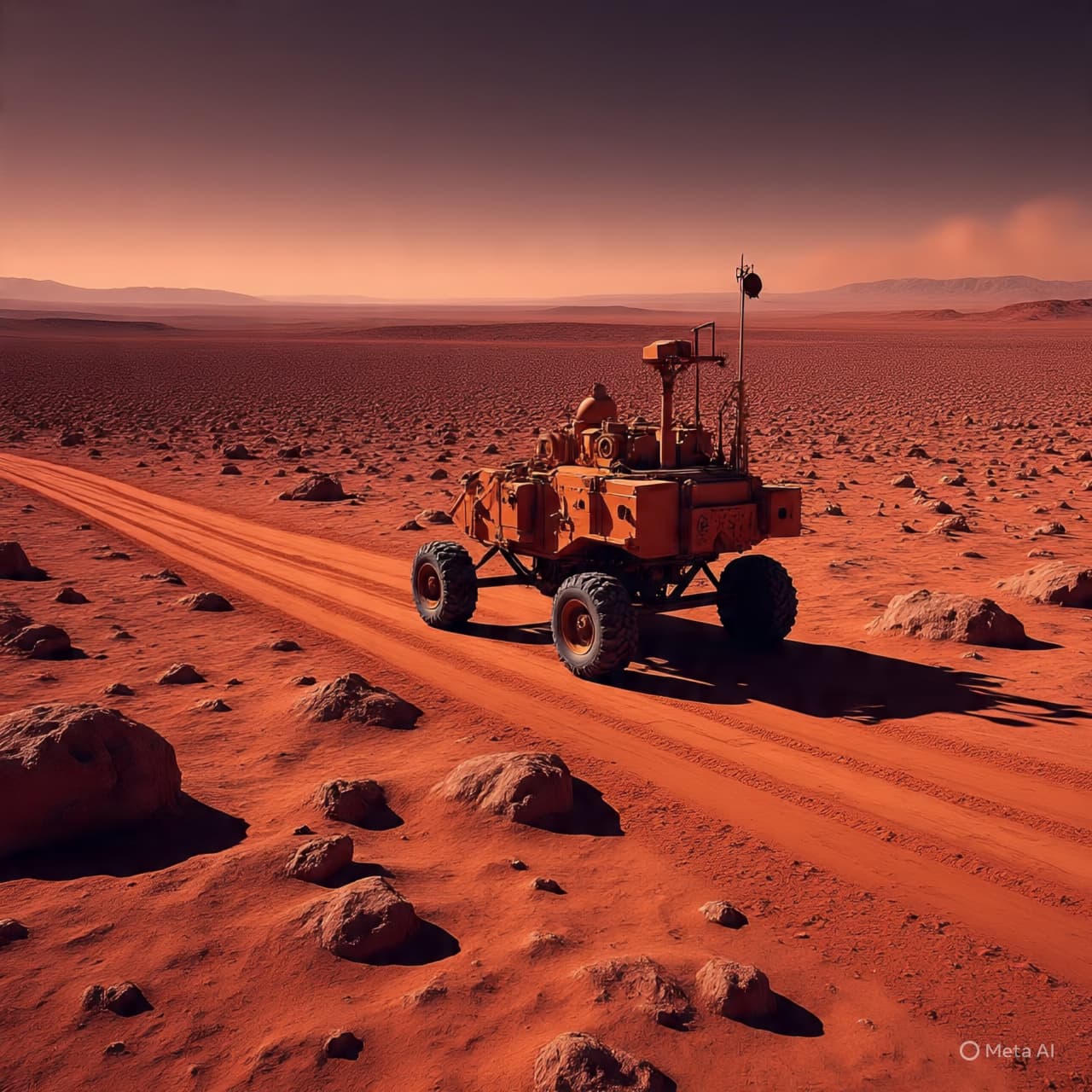
AI Image Disclaimer Graphics are AI-generated and intended for representation, not reality.
Sources
NASA
Space.com
The Associated Press
Reuters
Ars Technica
Published by Banx Network. This article is part of the Banx decentralized media programme, powered by the BXE token on the XRP Ledger.