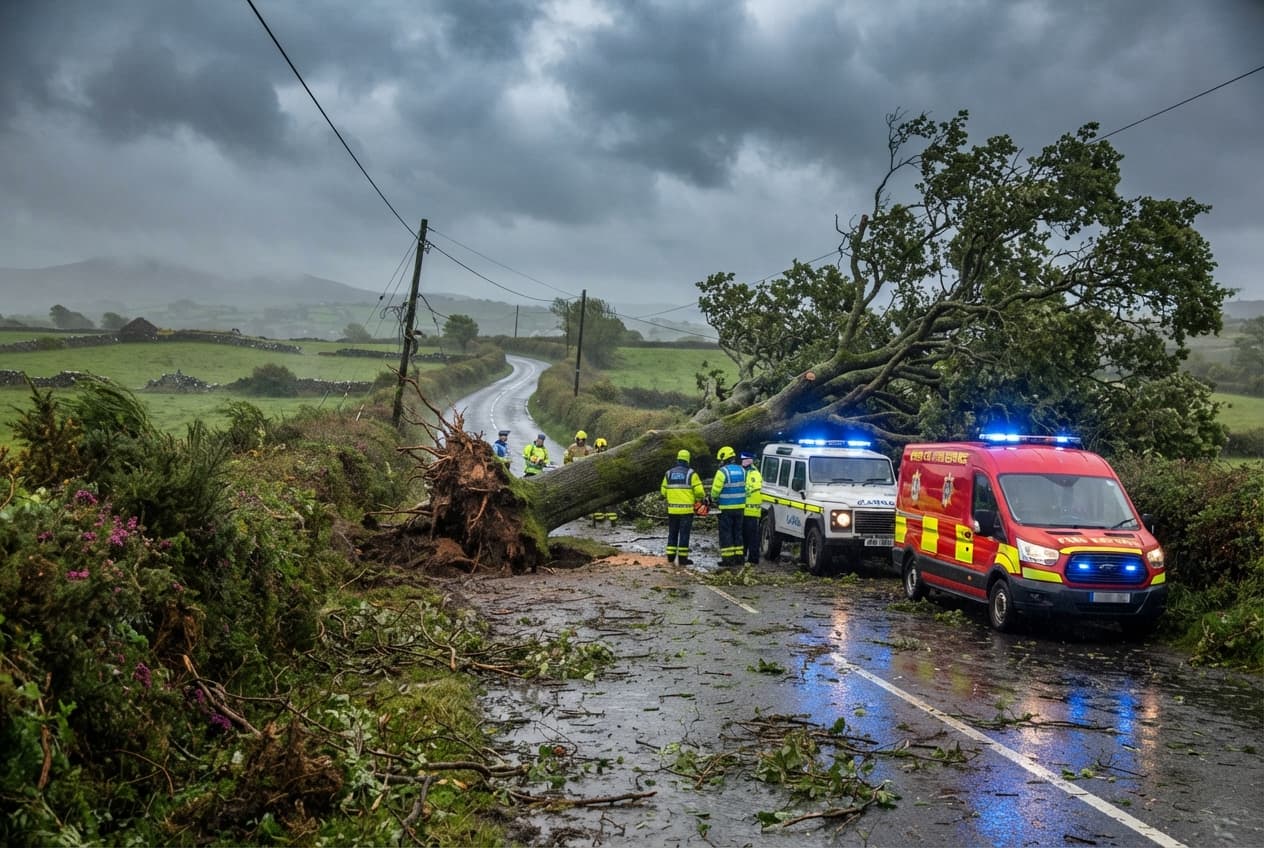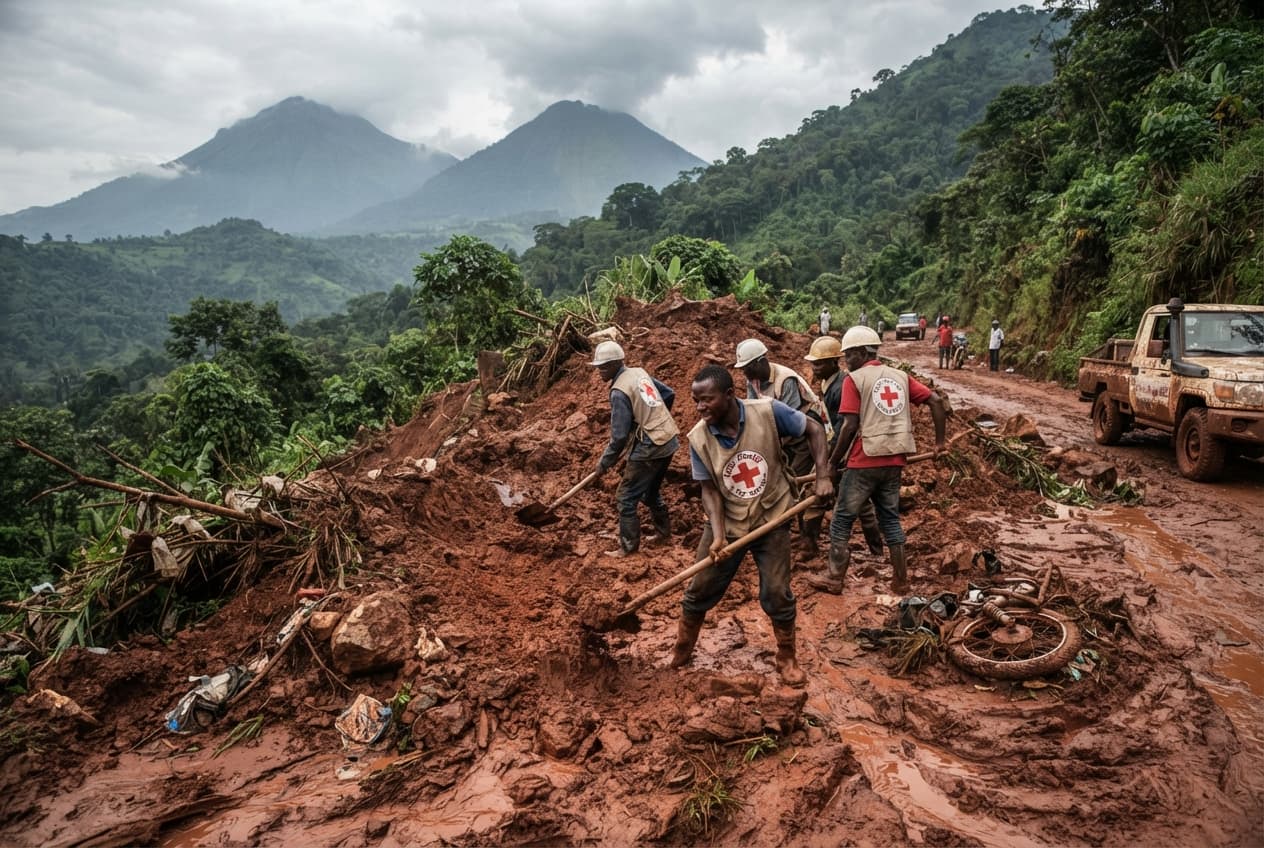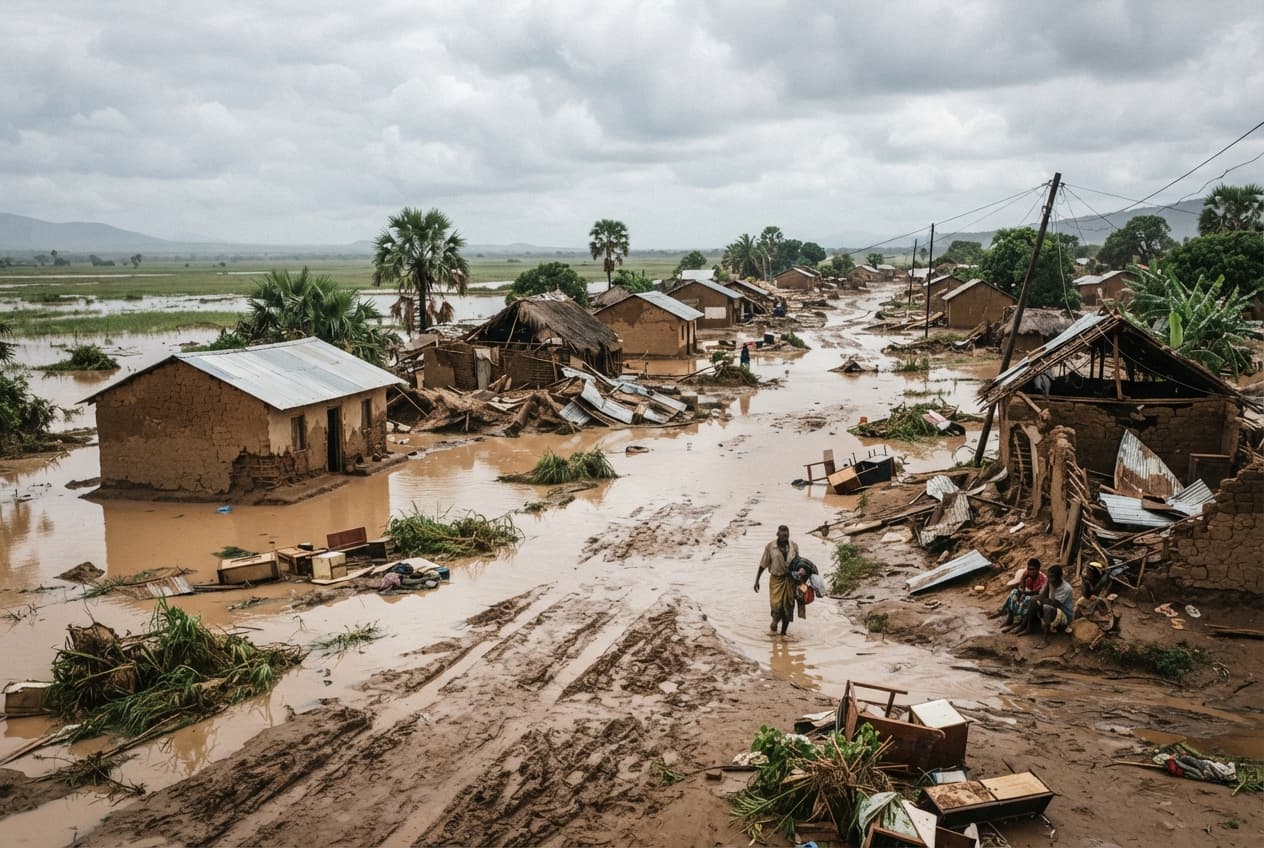
Quelimane, Mozambique—Torrential downpours tore through central Mozambique on Thursday night, destroying local roads and claiming three lives in Zambezia province. The violent weather system arrived without warning, catching rural communities off guard as swollen rivers burst their banks. Local officials confirmed that residential huts, community bridges, and primary schools suffered catastrophic structural failures under the force of the driving rain. Emergency response units struggled to reach isolated zones because major arterial routes remained blocked by fallen trees and deep mudslides.
Local resident Maria Paulo watched the outer wall of her home collapse into the rising floodwaters just after midnight. Water levels rose faster than anyone anticipated, giving families barely enough time to scramble to higher ground with nothing. Provincial disaster management coordinators set up temporary registration desks in makeshift shelters to account for displaced households. Initial damage assessments point to widespread agricultural losses, threatening food security for subsistence farmers across the district. Maize and cassava fields lie submerged under thick layers of silt, ruining months of laborious cultivation just weeks before harvest.
Hospital administrators in Quelimane reported receiving multiple patients suffering from severe hypothermia and trauma injuries sustained during structural collapses. Medical supplies are already running thin as doctors treat wounds inflicted by flying corrugated iron sheets and heavy debris. Provincial governor Manuel Carvalho acknowledged the severe strain on local emergency services during an impromptu press briefing this morning. State resources remain inadequate to address the sheer scale of the devastation spanning multiple isolated administrative posts.
Engineers from the public works department are attempting to clear blocked culverts using heavy machinery brought in from neighboring districts. Communication lines remain severed in several northern sectors, preventing a comprehensive tally of the total human toll. Relief agencies are coordinating food distributions, though washed-out bridges continue to delay truck convoys carrying emergency rations. Local authorities warned communities residing near riverbanks to evacuate immediately as upstream runoff threatens secondary flooding waves.
The heavy rains show no immediate sign of dissipating entirely, maintaining high alert statuses across meteorological observation posts in the region. Displaced families huddle under plastic sheeting, waiting for weather conditions to stabilize enough for structural damage repairs to begin. No additional funding has been officially allocated from the national treasury yet, leaving regional administrators scrambling to reallocate emergency reserves. Residents continue clearing mud from doorsteps by hand, bracing against another night of unpredictable weather conditions and rising dampness. Recovery efforts hang in the balance as technical teams assess whether foundational bridges can support heavy transit traffic safely.
Published by Banx Network. This article is part of the Banx decentralized media programme, powered by the BXE token on the XRP Ledger.