There is a particular kind of patience that belongs to people who work the land—a willingness to wait for rain, for harvest, for the market to turn. But patience is not infinite, and when the costs of fertilizer and fuel and feed climb higher while the promises from Washington remain unchanged, even the most patient begin to ask whether the waiting has a purpose. In farm country, that question is being asked with increasing urgency, and the answers are not what the Republican coalition once expected.
A survey commissioned by former Agriculture Department official Michael Amato and conducted by Farm Journal in April found that 39 percent of farmers could be persuaded not to back their usual party in November, including 35 percent who usually vote Republican and 15 percent who always vote Republican . Fifty-four percent said they were more motivated to vote in the midterms than in the last cycle. These are not numbers that suggest a landslide, but they suggest something perhaps more significant: cracks in a wall that has stood for generations.
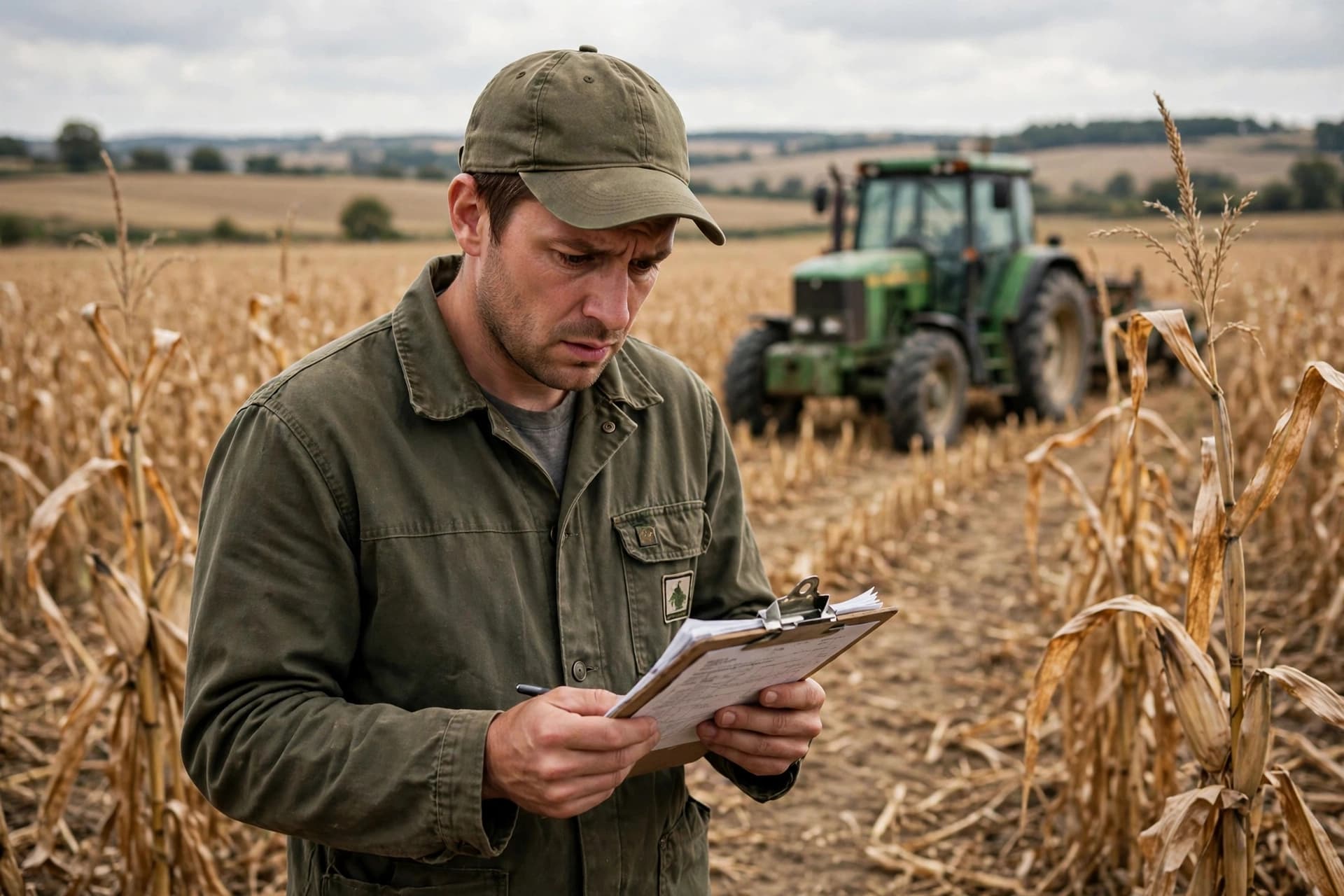
The causes are cumulative rather than singular. Farmers have navigated higher input costs driven in part by President Trump's tariffs and the war with Iran, which sent fertilizer and fuel prices upward . Farm bankruptcies have risen. Trade policy, which farmers depend on for access to overseas buyers, has been described by Iowa Farmers Union President Aaron Lehman as "completely haphazard" . "Farmers spend their time and make their investments of building these relationships with buyers overseas," Lehman said. "But all that effort goes for nothing if our trade policy is completely haphazard."
The political geography of this discontent matters as much as its depth. Farmers could play a crucial role in the most competitive Senate races, from Democratic-held seats in Georgia and Michigan to Republican-controlled seats in Iowa, North Carolina, Ohio, and Texas . They are not expected to swing heavily toward Democrats, but a bloc willing to stay home or vote third-party can reshape a close election. Amato described the phenomenon with a phrase that captures its ambiguity: "I see cracks in the wall, and in a way that I wasn't entirely expecting" .
The discontent extends beyond the farm gate. Republican operatives conducting a focus group in a traditionally red Midwestern state were taken aback when voters blamed rising gas prices on "corrupt politicians" and "billionaires"—a response that surprised strategists who had never seen government corruption emerge as a top issue for Republican voters in congressional races . One GOP consultant described corruption as an "underappreciated fact" of this midterm, calling it a "two or three issue" in polling even in reliably red seats .
Republican lawmakers are aware of the pressure. Rep. Jeff Van Drew of New Jersey, who has built a brand as a Trump-aligned populist willing to criticize his own party on healthcare costs, put it plainly: "Between their mortgage and their electric bill and the cost of everything else, they're having a hard time making it. That's real. That's a lot more important than the other insider crap we deal with" . The language is blunt, but the sentiment is not isolated.
What makes this moment difficult for the Republican coalition is that the grievances are not ideological. They are material. A farmer who cannot afford fertilizer, a trucker who cannot afford diesel, a parent who cannot afford groceries—these are not people questioning the party's stance on cultural issues or foreign policy. They are people asking whether the party in power is making their lives harder or easier. In a midterm election, that question often decides the answer.
The wall has not fallen. But the cracks are visible, and they run through the places where the party once felt safest. Whether they widen or are repaired before November will depend less on rhetoric than on whether the costs of daily life begin to ease. For now, the farmers and the working-class voters who once formed the backbone of the coalition are waiting—not patiently, but watchfully.
AI Image Disclaimer: The visuals in this report were produced using artificial intelligence and serve an illustrative purpose only.
Sources: CNN, National Journal
Published by Banx Network. This article is part of the Banx decentralized media programme, powered by the BXE token on the XRP Ledger.