In the vast, turquoise waters of the Whitsundays, where beauty and danger often coexist, a family of four faced a harrowing ordeal when their yacht ran aground on a remote reef. The incident, which occurred near Elizabeth Reef, required a high-risk rescue operation involving a helicopter and specialized winching techniques. For the family, including two children, the experience was a terrifying reminder of the unpredictability of the sea and the importance of maritime safety. It is a story of survival, skill, and the bravery of rescuers.
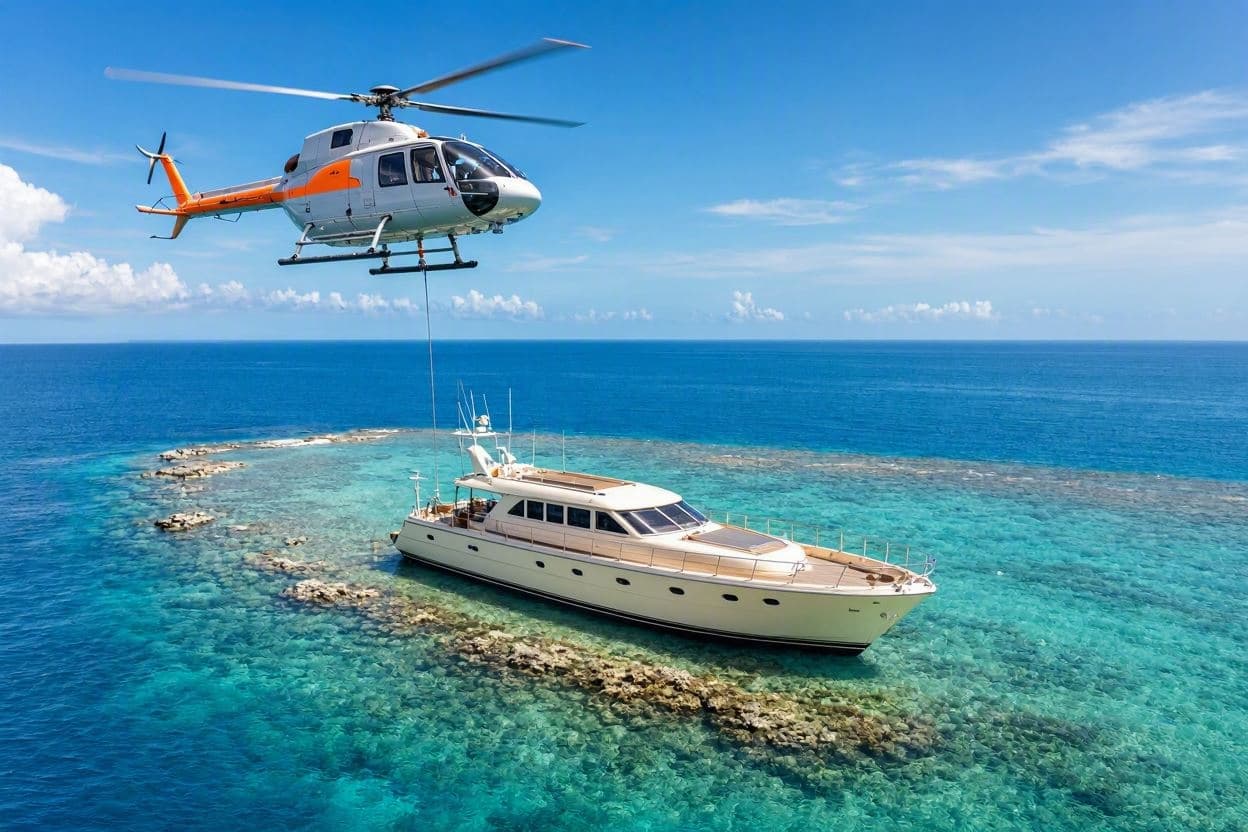
The yacht struck the reef during challenging conditions, leaving it stranded and vulnerable to the elements. With no immediate way to free the vessel, the family signaled for help. Emergency services responded quickly, deploying a rescue helicopter to the scene. The location, far from shore and surrounded by shallow coral, made the operation complex and dangerous. Pilots and rescue swimmers had to navigate tight spaces and strong currents to reach the stranded vessel.
The winching process involved lowering rescuers to the yacht and then lifting each family member to safety one by one. It is a delicate maneuver that requires precision and calm under pressure. The children, aged 13 and 11, were prioritized, ensuring their safe transfer before the adults. The entire operation was conducted with professionalism and care, minimizing risk to both the victims and the rescue team. It was a testament to the training and expertise of emergency responders.
For the family, the moment of being lifted from the deck was likely a mix of relief and anxiety. Being suspended above the water, dependent on a cable and the skill of the crew, is an intense experience. Yet, it was their only hope for a safe return. The successful rescue brought an end to their ordeal, allowing them to reunite on solid ground. The emotional toll of such an event can be significant, requiring time and support to process.
Maritime authorities have praised the quick thinking of the family in calling for help and following safety protocols. Having emergency communication devices and knowing how to use them can make the difference between life and death in remote areas. The incident highlights the importance of preparation and awareness for anyone venturing into coastal waters. It is a lesson learned through a close call.
The yacht itself remains stranded on the reef, posing a potential environmental hazard. Authorities are assessing the situation to determine the best course of action for removal. Protecting the fragile coral ecosystem is a priority, and efforts will be made to minimize damage. The incident serves as a reminder of the impact human activity can have on marine environments, even unintentionally.
Community reaction has been one of relief and gratitude for the rescue teams. Stories of such daring saves resonate deeply, highlighting the value of public service and dedication. The family has expressed their thanks to the pilots, swimmers, and coordinators who worked tirelessly to ensure their safety. Their survival is a tribute to the effectiveness of Australia’s emergency response systems.
In the end, the rescue of the family of four is a powerful narrative of hope and human resilience. It reminds us that while the sea can be unforgiving, it is also a place where courage and skill can prevail. As the family recovers from their experience, they carry with them a renewed respect for the ocean. The rescue stands as a beacon of safety in the vast blue expanse.
AI Image Disclaimer: The visual aids included here are AI-generated illustrations depicting maritime rescue scenes and ocean landscapes, not actual photographs of the specific rescue operation or the family involved.
Sources: ABC News Queensland Queensland Police Service 9News Brisbane
Published by Banx Network. This article is part of the Banx decentralized media programme, powered by the BXE token on the XRP Ledger.