Humanity has always looked upward, seeking to understand its place in the cosmos through the lens of curiosity. Soon, that lens will become significantly sharper and wider. NASA is preparing for a pivotal moment in astronomical history with the upcoming launch of the Nancy Grace Roman Space Telescope. As officials gather to discuss the final preparations, the anticipation builds not just for a new instrument, but for a new era of discovery that promises to reshape our understanding of the universe’s darkest mysteries.
The Roman Telescope, named after the first female chief astronomer at NASA, represents a significant leap forward in observational capability. Unlike its predecessor, the Hubble Space Telescope, which offers deep but narrow views, Roman is designed to survey vast swathes of the sky with unprecedented speed and precision. Its wide-field instrument will allow astronomers to capture images of the cosmos that are hundreds of times larger than those from Hubble, revealing structures and phenomena that have previously remained hidden in the margins.
One of the primary missions of the telescope is to investigate dark energy and dark matter, the invisible forces that constitute most of the universe’s mass and energy. By observing how light bends around massive objects and measuring the expansion rate of the universe, Roman aims to provide clues about why the cosmos is accelerating apart. This quest addresses one of the most profound questions in modern physics, seeking to illuminate the invisible scaffolding of reality.
In addition to cosmology, the telescope will play a crucial role in the search for exoplanets. Using a technique called microlensing, Roman will detect planets that are difficult to find with other methods, including those that roam freely without a host star. This capability could reveal a diverse population of worlds, offering insights into the formation of planetary systems and the potential for life beyond our solar system.
The upcoming briefing serves as a final checkpoint before the telescope begins its journey. Engineers and scientists will outline the rigorous testing processes the instrument has undergone, ensuring it can withstand the harsh conditions of space. They will also discuss the timeline for deployment and the initial calibration phase, which is critical for ensuring the data collected is accurate and reliable.
For the scientific community, the launch is the culmination of decades of planning and collaboration. It brings together experts from various fields, from optics to data analysis, all working toward a common goal. The excitement is palpable, not just for the technology itself, but for the unknown discoveries that await. Each image sent back will be a piece of a larger puzzle, helping to construct a more complete picture of the universe.
Public engagement is also a key component of the mission. NASA aims to share the wonders of the cosmos with people around the world, inspiring the next generation of scientists and explorers. The visual beauty of the data, combined with the intellectual depth of the findings, offers a unique opportunity to connect humanity with the grandeur of space.
As the countdown continues, the Roman Space Telescope stands ready to open its eyes to the sky. Its launch next month marks not just a technical achievement, but a testament to human ingenuity and the enduring desire to know what lies beyond. We wait with bated breath for the first light, knowing it will change how we see everything.
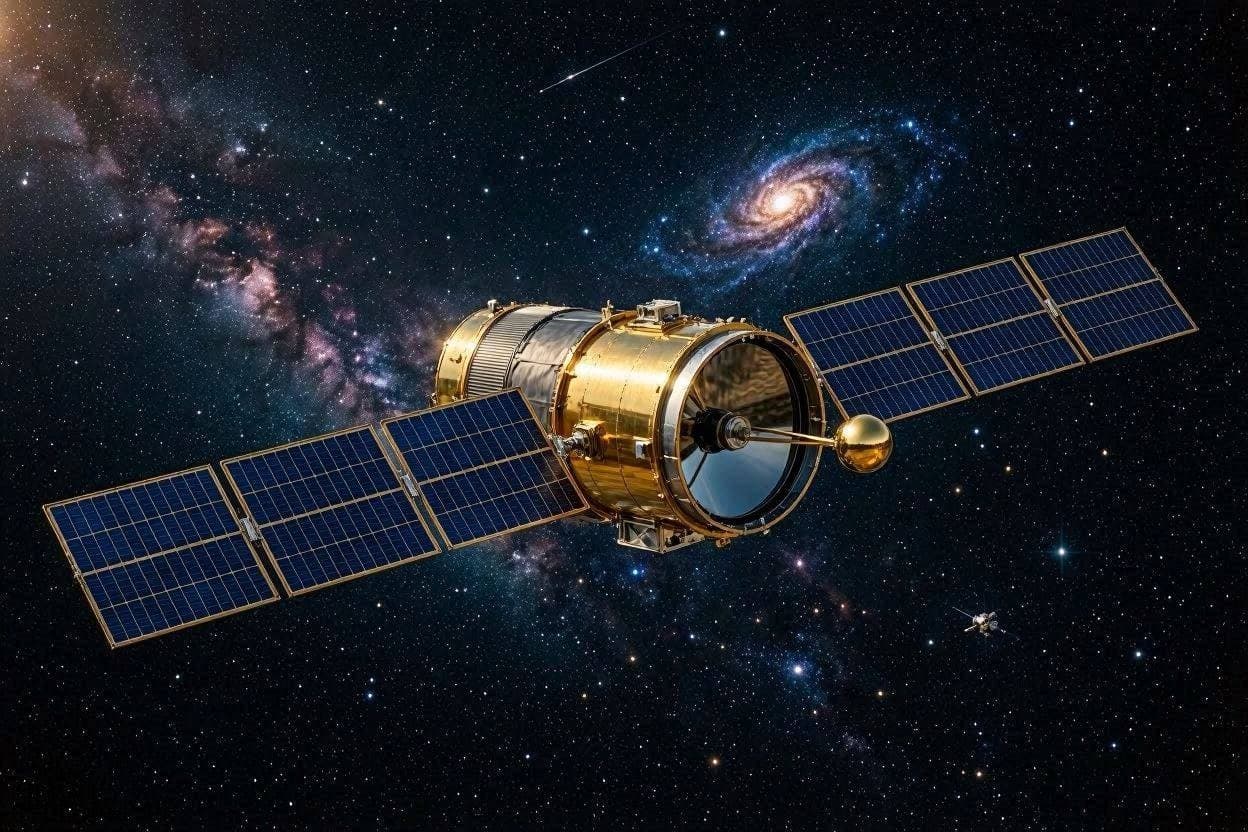
AI Image Disclaimer: The visuals accompanying this article are AI-generated conceptual illustrations of space telescopes and cosmic landscapes, designed to evoke the theme of astronomical exploration.
Sources: NASA Official Website Space.com Scientific American The Verge
Published by Banx Network. This article is part of the Banx decentralized media programme, powered by the BXE token on the XRP Ledger.