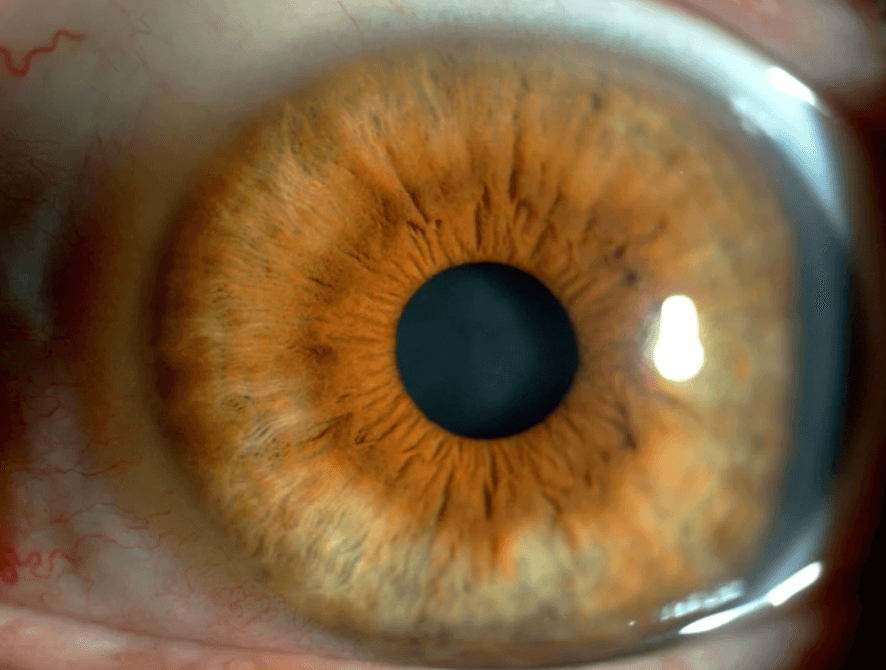
Scientists have developed eye drops made from pig semen that can stop tumor growth in the retina and help preserve vision, according to a new study in mice published today in the journal Science Advances. The researchers hope this treatment could eventually be used for children with retinoblastoma, a rare cancer of the retina. Current treatments for this condition — such as direct injections into the eye, chemotherapy, or laser therapy — often damage healthy parts of the eye. A team led by Yu Zhang at Shenyang Pharmaceutical University in China aimed to create a gentler method that could cross the protective barrier around the retina and deliver anti-cancer drugs without harming surrounding healthy tissue. The eye drops contain specially engineered exosomes — tiny particles naturally released by almost all cells — designed to carry molecules that kill cancer cells. In mice treated with the drops, tumor growth was halted, and the animals maintained eyesight similar to that of healthy mice without tumors. The study demonstrated that these exosomes are capable of penetrating the retina. Experts believe the technique could also improve drug delivery across other hard-to-cross biological barriers, such as the blood-brain barrier (potentially for treating Alzheimer’s disease) or mucosal barriers. Why pig semen? The team chose exosomes derived from pig semen because these particles naturally help sperm penetrate the female reproductive tract. Experiments using human corneal cells showed that the pig semen exosomes can temporarily open and close tight junctions — the semi-permeable structures on the eye’s surface. The researchers loaded the exosomes with a “nanozyme system” made of carbon dots, manganese dioxide, and glucose oxidase to attack cancer cells. To increase selectivity, they attached folic acid molecules to the exosomes, since retinoblastoma cells have significantly higher levels of folic acid receptors than healthy cells. After 30 days of treatment, mice with retinal tumors showed little to no tumor growth and retained healthy vision. In contrast, tumors continued to grow and even spread in mice that received the nanozyme components without being packaged inside exosomes, as those components could not cross the retinal barrier. Safety tests in rabbits indicated that the eye drops were generally safe when applied repeatedly over 30 days, although some mild corneal irritation was observed. David Greening, a biomedical researcher at the Baker Heart and Diabetes Institute in Australia, noted that eye drops would be far less invasive than injections directly into the eye. However, he emphasized that this is only a proof-of-concept study and that further research, including human trials, will be necessary. Long-term safety beyond 30 days will also need to be carefully evaluated. Another challenge, according to Chunxia Zhao from Adelaide University, is whether the complex manufacturing process required for these exosomes can be scaled up for mass production.
Published by Banx Network. This article is part of the Banx decentralized media programme, powered by the BXE token on the XRP Ledger.