The sky has always invited questions that outlive generations. Every sunrise is familiar, yet the star that sustains life on Earth still holds countless mysteries waiting to be understood. Scientific progress often advances quietly, one observation at a time, gradually revealing patterns hidden within the vastness of space.
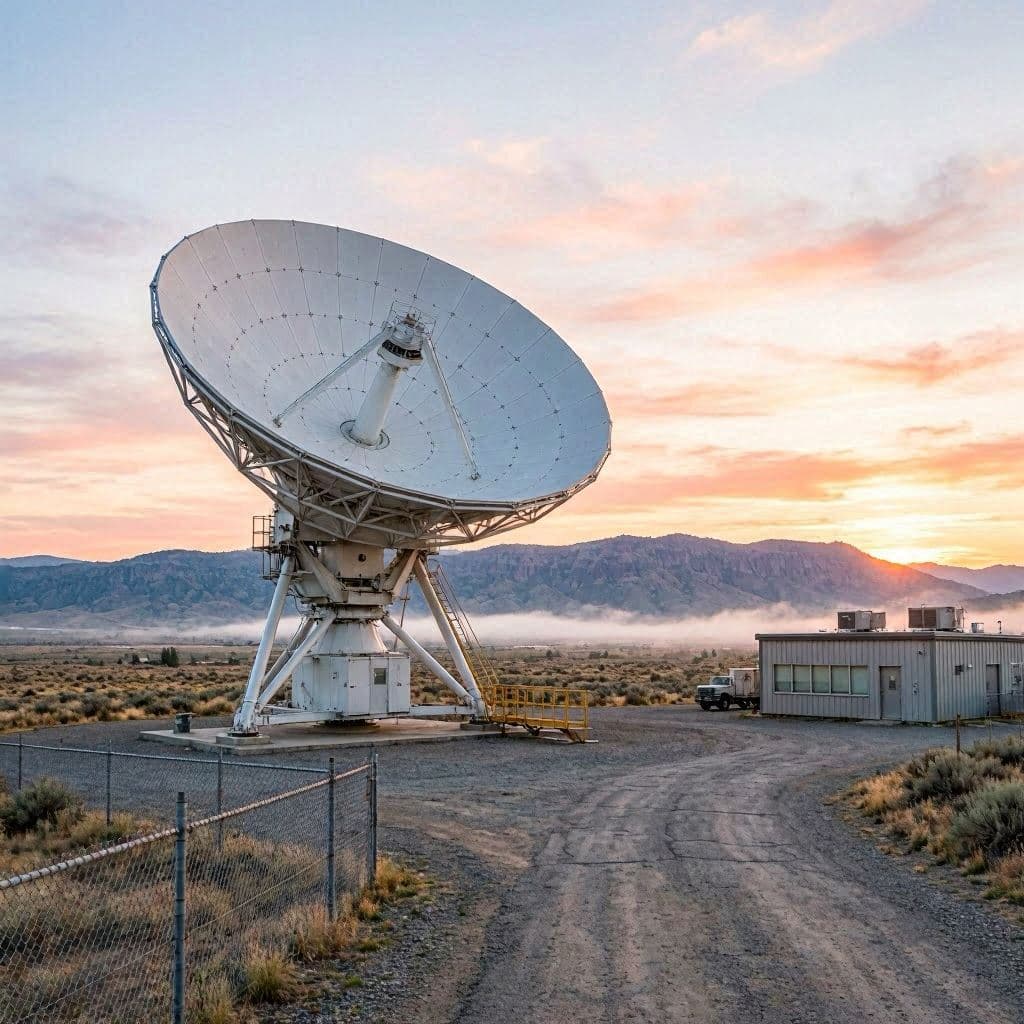
Astronomers in China have reported significant progress in observing the Sun through a new-generation radio telescope designed to capture detailed radio emissions from the solar atmosphere. The development is expected to improve scientists' understanding of solar activity and the physical processes occurring within the Sun's outer layers.
Unlike conventional optical telescopes, radio telescopes detect radio waves naturally emitted by celestial objects. These observations allow researchers to study solar flares, magnetic fields, and plasma behavior that may not be visible through traditional imaging methods.
Researchers explained that the upgraded observational capabilities provide higher-resolution data, enabling scientists to monitor changes in the Sun with greater precision. Such information contributes to broader efforts to understand how solar activity evolves over time.
Solar research carries practical significance beyond astronomy. Powerful solar storms can influence satellite communications, navigation systems, radio transmissions, and electrical infrastructure. Improved monitoring may strengthen space weather forecasting and help reduce potential disruptions.
The project also reflects China's continued investment in astronomical research and scientific infrastructure. Modern observatories increasingly rely on advanced computing, large-scale data analysis, and international scientific collaboration to interpret the enormous volume of information collected.
Astronomers emphasize that long-term observation remains essential because solar activity follows cycles that unfold over many years. Continuous monitoring allows researchers to compare changes across different phases of these natural cycles.
International scientists continue sharing observational data and research findings through academic collaborations. Such cooperation strengthens global understanding of the Sun while improving models used to predict future solar behavior.
The latest progress demonstrates how advances in scientific instruments continue expanding humanity's ability to observe the universe. Each improvement in technology provides another opportunity to better understand the star at the center of our solar system.
AI Image Disclaimer: The illustration accompanying this article was generated using AI to visually represent the scientific topic.
Source Verification Check: arXiv, Chinese Academy of Sciences, Nature Astronomy, Space.com
Published by Banx Network. This article is part of the Banx decentralized media programme, powered by the BXE token on the XRP Ledger.