
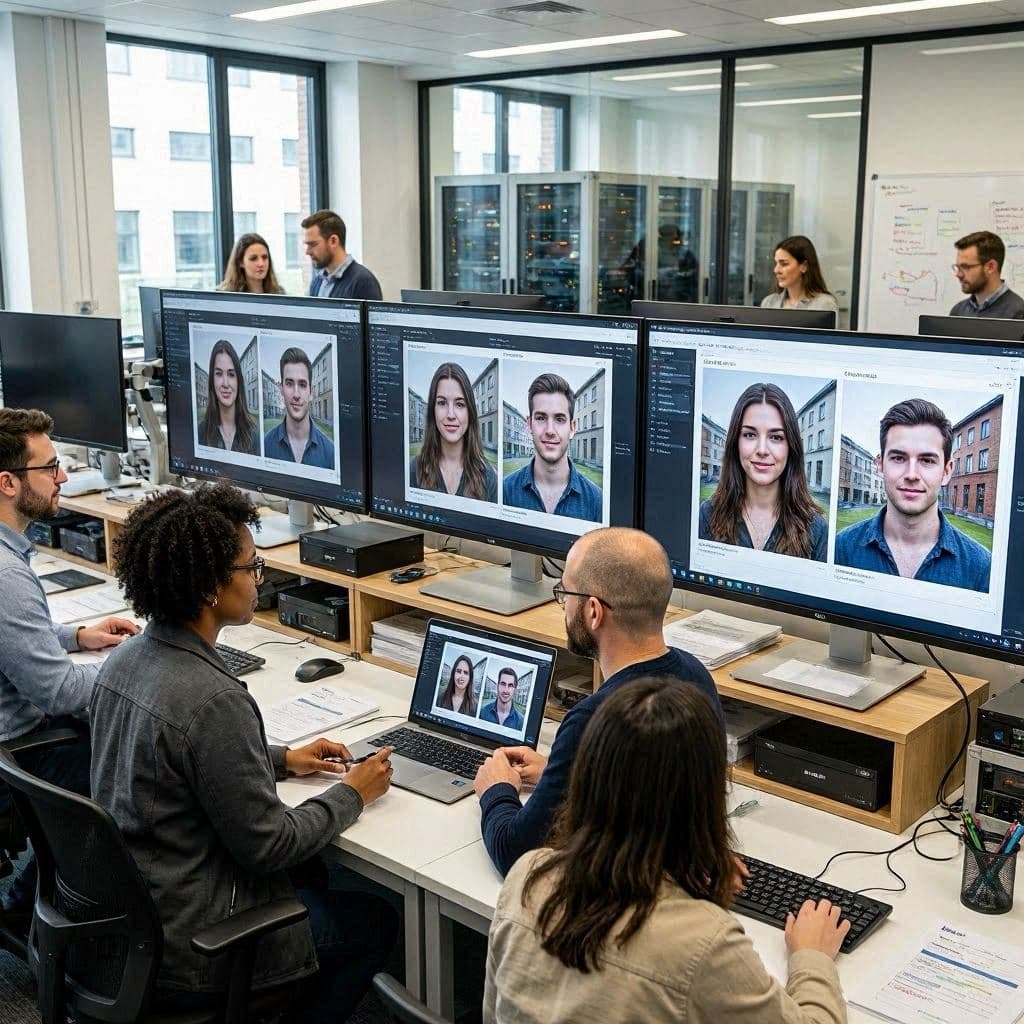
A photograph captures a moment, but technology continues to reshape how those moments are preserved and understood. From medical imaging to satellite observation and everyday smartphone photography, digital images have become part of modern life. The results of the NTIRE 2026 international competition highlight significant advances in artificial intelligence for image processing and enhancement.
NTIRE, short for New Trends in Image Restoration and Enhancement, is an international research competition that brings together scientists and engineers working on advanced image processing technologies. Participants develop AI systems capable of improving image quality through innovative computational methods.
The 2026 competition featured challenges involving image restoration, noise reduction, super-resolution, and related tasks. These problems require AI models to reconstruct visual information while preserving important details and minimizing distortions.
Artificial intelligence has transformed image processing by learning from large datasets. Modern algorithms can recognize patterns and improve image quality through sophisticated mathematical techniques, often achieving results that support scientific and practical applications.
Image enhancement technologies extend far beyond photography. Medical professionals use advanced imaging tools to assist diagnosis, astronomers process telescope observations, and environmental researchers analyze satellite imagery to study changes across the planet.
Competitions such as NTIRE encourage collaboration and innovation by providing common datasets and evaluation standards. Researchers from universities, technology companies, and independent laboratories compare methods while sharing scientific knowledge with the broader community.
The rapid development of AI image processing also raises important discussions about transparency and responsible use. Researchers continue to explore methods for improving reliability while ensuring that enhanced images remain scientifically and ethically appropriate for their intended purposes.
Advances in computing power and machine learning have accelerated progress in the field. Improved hardware and training techniques allow increasingly sophisticated AI systems to process complex visual information efficiently.
The achievements demonstrated during NTIRE 2026 illustrate how artificial intelligence continues to expand the possibilities of digital imaging. As research progresses, these technologies may contribute to scientific discovery, healthcare, environmental monitoring, and many other areas where accurate visual information is essential.
AI Image Disclaimer: The images associated with this article are AI-generated editorial illustrations created for visual context.
Sources Verified: arXiv, NTIRE research publications, IEEE research community, Reuters technology coverage.
Published by Banx Network. This article is part of the Banx decentralized media programme, powered by the BXE token on the XRP Ledger.



