Every generation inherits a different map of the universe. What once appeared as distant points of light has gradually become a landscape filled with galaxies, planets, and phenomena waiting to be understood. Scientific discovery continues expanding that map, reminding humanity that exploration is not limited to physical journeys.
Astronomical research published during early July 2026 highlights continued progress across several areas of space science, including exoplanet discovery, stellar evolution, galaxy formation, and observational astronomy. Scientists worldwide continue contributing new findings through peer-reviewed studies and international collaboration.
Exoplanet research remains one of astronomy's fastest-growing fields. Improved telescopes and observational techniques have enabled researchers to identify increasingly diverse planetary systems beyond our own solar system.
At the same time, astronomers continue studying distant galaxies to better understand how the universe has evolved over billions of years. Observations collected from both ground-based observatories and space telescopes provide essential data for refining existing cosmological models.
Modern astronomy increasingly depends on advanced computing technologies capable of processing enormous datasets. Artificial intelligence and machine learning have become valuable tools for identifying subtle astronomical signals that might otherwise remain undetected.
International cooperation continues playing a central role in scientific progress. Researchers routinely share observations, software, and analytical methods across institutions, allowing discoveries to be verified and expanded through collaborative investigation.
Public interest in astronomy has also grown alongside these scientific developments. Educational outreach programs and publicly available research data encourage students, educators, and amateur astronomers to engage with ongoing discoveries.
Scientists emphasize that each published study represents one contribution within a much larger body of research. Future observations may strengthen, refine, or challenge current interpretations as additional evidence becomes available.
The steady pace of astronomical discovery reflects the enduring human desire to better understand the cosmos. While countless mysteries remain, every new observation brings science one step closer to answering some of its oldest questions.
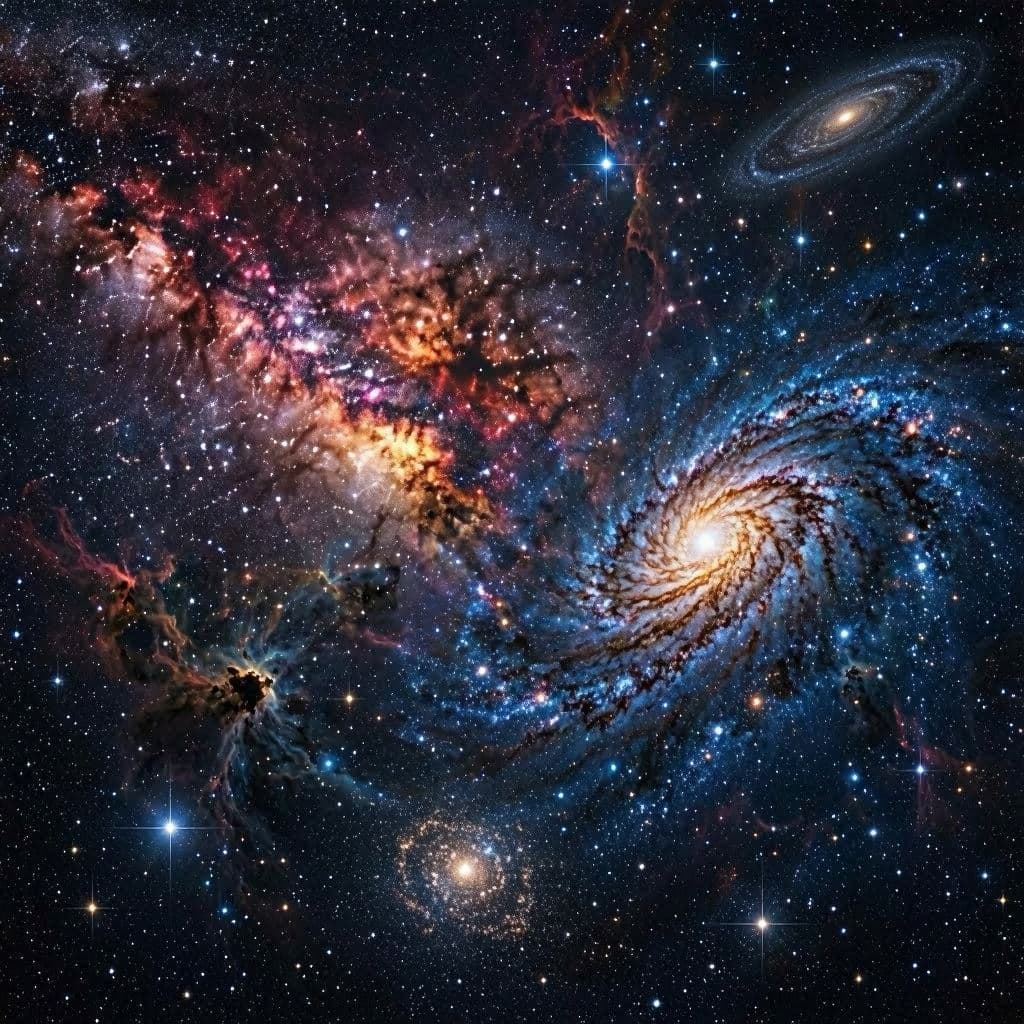
AI Image Disclaimer: The accompanying illustration was generated using AI to visually represent astronomical research described in this article.
Source Verification Check: arXiv, Nature Astronomy, European Southern Observatory, NASA, International Astronomical Union
Published by Banx Network. This article is part of the Banx decentralized media programme, powered by the BXE token on the XRP Ledger.