
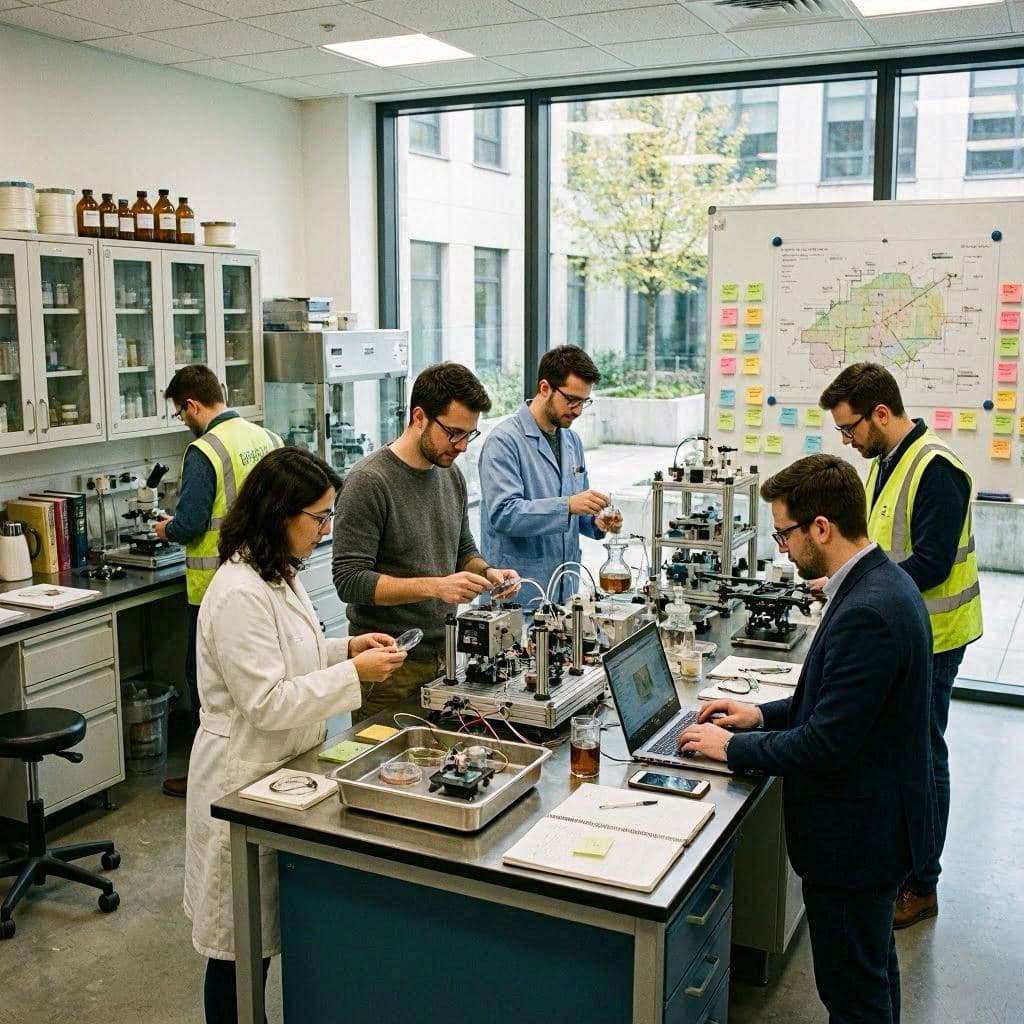
Scientific progress rarely arrives all at once. More often, it appears through a collection of careful observations, experiments, and peer-reviewed studies that gradually expand humanity's understanding of the natural world. Each published paper represents not an ending, but another step in an ongoing conversation that spans laboratories, universities, and research institutions across the globe.
Several newly published scientific studies have drawn attention across multiple disciplines, including astronomy, environmental science, medicine, artificial intelligence, and materials research. Collectively, these publications demonstrate the continuing pace of scientific discovery and the importance of international collaboration in advancing knowledge.
Researchers emphasize that modern science increasingly relies on multidisciplinary approaches. Specialists from different fields frequently work together, combining expertise in computing, engineering, biology, chemistry, and physics to address complex scientific questions that extend beyond traditional academic boundaries.
Among the recently discussed research are advances in astronomical observation, improvements in climate modeling, new applications of artificial intelligence for scientific analysis, and developments in biomedical technologies. While each study focuses on a specific subject, together they reflect broader trends in global research and innovation.
Peer review continues to serve as one of the foundations of scientific publication. Before research findings are widely accepted, independent experts evaluate the methodology, supporting evidence, and conclusions to ensure that published work meets recognized academic standards.
Scientific journals and research organizations also encourage transparency by making datasets, analytical methods, and supporting materials increasingly accessible to the wider scientific community. This openness allows other researchers to verify findings, reproduce experiments, and expand upon previous work.
Technological advances have accelerated scientific discovery by enabling researchers to process larger datasets and perform more sophisticated analyses than ever before. High-performance computing, advanced laboratory equipment, and international data-sharing networks continue strengthening research capabilities.
Experts note that scientific understanding evolves over time. New evidence may reinforce existing theories, refine previous conclusions, or introduce entirely new perspectives as additional observations become available.
The latest collection of published studies highlights the steady and collaborative nature of modern science. Rather than isolated breakthroughs, these discoveries illustrate how progress is built through continuous research, careful verification, and cooperation among scientists around the world.
AI Image Disclaimer: This illustration was generated using AI to visually represent the scientific themes discussed in this article.
Source Verification Check: Science News, Nature, Science, New Scientist, arXiv
Published by Banx Network. This article is part of the Banx decentralized media programme, powered by the BXE token on the XRP Ledger.



