Space exploration is often imagined through rockets, astronauts, and distant planets. Yet some of the most important discoveries emerge from the smallest living organisms, quietly traveling through orbit while carrying questions larger than themselves.
Researchers in Ontario are highlighting a new experiment involving worms sent to the International Space Station. Scientists hope the study will improve understanding of biological adaptation, evolution, and health in low-gravity environments.
The experiment focuses on microscopic worms frequently used in biological research because of their simple structure and genetic similarities to more complex organisms. Their short life cycles also allow researchers to observe changes across generations relatively quickly.
Scientists are particularly interested in how space conditions affect muscle function, cellular aging, and natural selection. Long-duration space travel exposes living organisms to unusual environmental pressures that may reveal hidden biological mechanisms.
Space agencies worldwide increasingly rely on biological experiments to prepare for future deep-space missions. Understanding how organisms respond to microgravity could influence medicine, nutrition, and astronaut health planning.
Ontario researchers note that experiments involving simple life forms often produce insights relevant to human biology. Similar studies have previously contributed to research in genetics, neuroscience, and disease prevention.
The project also reflects growing international collaboration aboard the International Space Station. Scientific missions in orbit frequently combine expertise from universities, government agencies, and private research organizations across multiple countries.
While the worms themselves may seem unremarkable, scientists argue that discovery often depends on studying life at its most fundamental level. Small organisms can reveal patterns invisible in larger systems.
As the experiment continues hundreds of kilometers above Earth, researchers remain hopeful that these tiny travelers may help answer enduring questions about adaptation, survival, and the future of human exploration beyond the planet.
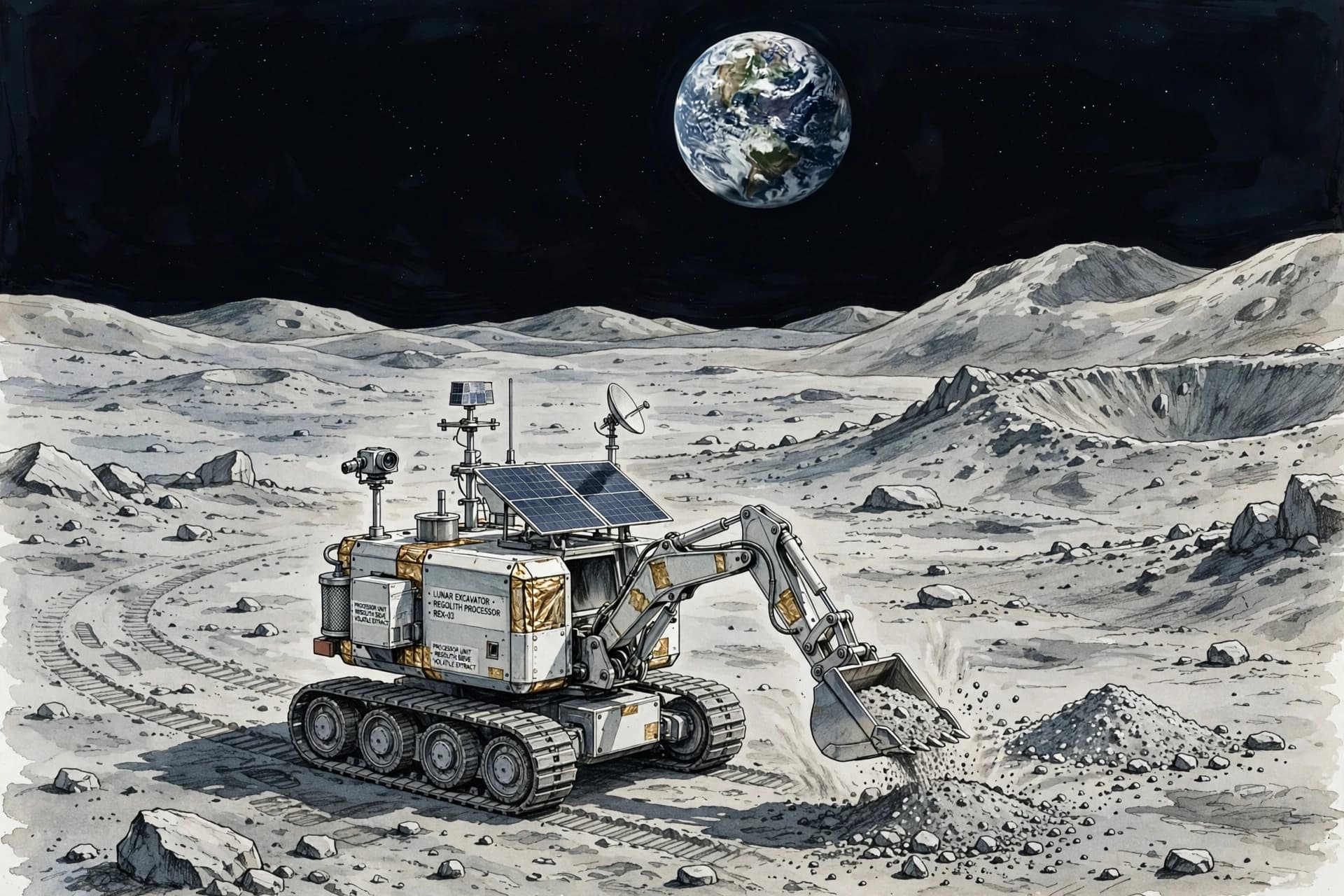
AI Image Disclaimer: Illustrative images for this article were AI-generated to visually represent biological research conducted in space environments.
Sources Verified: Global News Canada, NASA, Canadian Space Agency, Nature Journal
Published by Banx Network. This article is part of the Banx decentralized media programme, powered by the BXE token on the XRP Ledger.