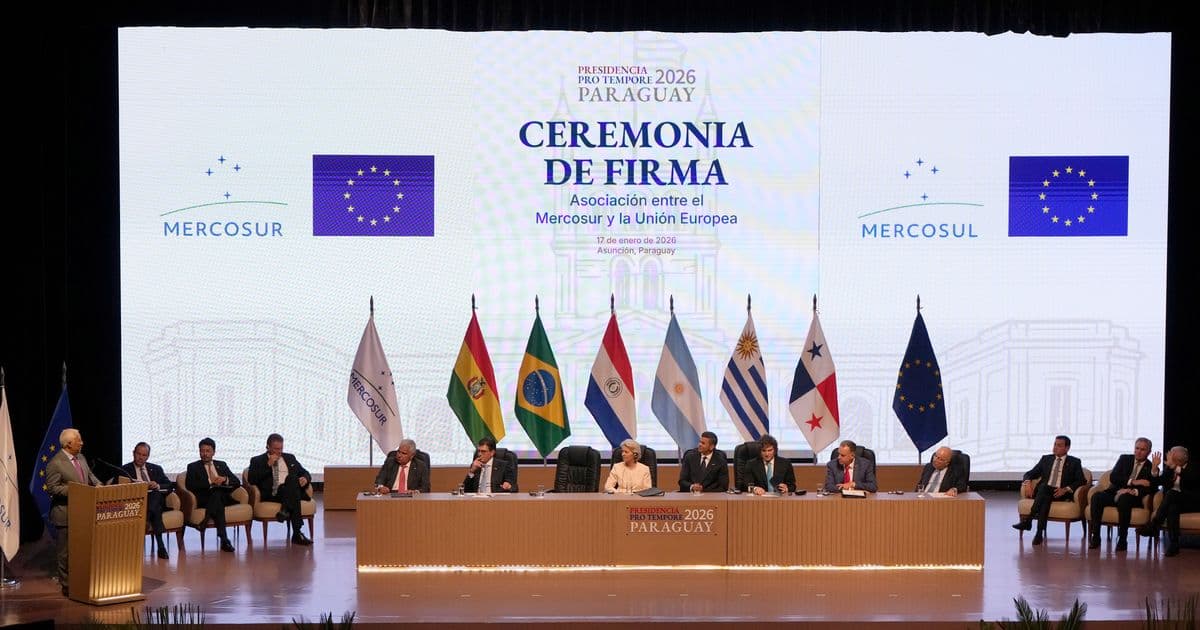
In a significant development for international trade, the European Union (EU) and the Mercosur bloc, which includes Brazil, Argentina, Paraguay, and Uruguay, have reached a groundbreaking deal with the signing of a free trade agreement. This landmark agreement is expected to create one of the largest markets in the world, accounting for about 750 million consumers while opening new avenues for trade and investment.
The agreement aims to eliminate tariffs on various goods, enhance cooperation in environmental standards, and promote sustainable development practices. By reducing trade barriers, both regions anticipate increased exports and economic growth opportunities, allowing European companies greater access to South American agricultural products and allowing Mercosur nations to import European industrial goods.
However, the signing also faces criticism related to environmental concerns, particularly regarding deforestation in the Amazon and the potential impact on sustainable farming practices. Negotiators have emphasized the commitment of both regions to uphold environmental standards and work towards a mutually beneficial outcome.
This agreement marks a notable shift in economic relations and showcases the EU's strategy to engage more deeply with South America amid shifting global trade dynamics. It represents a crucial step towards strengthening partnerships, promoting economic resilience, and addressing common global challenges.
As the details of the agreement are implemented, both the EU and Mercosur will need to navigate the complexities of these new economic ties, ensuring that they foster growth while safeguarding environmental and social standards. The long-term impact on trade relations and economic prosperity will be closely monitored by stakeholders in both regions.
Published by Banx Network. This article is part of the Banx decentralized media programme, powered by the BXE token on the XRP Ledger.

.jpg&w=3840&q=75 "Same-Sex Couple Sue Slovakia Over Refusal to Register Their Marriage")