Banx Media Platform logo
HEALTHHappening Now

Europe's Dramatic Decline in Pharmaceutical Production Threatens Health Sovereignty

A significant downturn in pharmaceutical production across Europe is raising alarms about the continent's health sovereignty, as reliance on external suppliers increases and local manufacturing capabilities diminish.

D

Darren Sofia

EXPERIENCED
5 min read
1 Views
Credibility Score: 94/100
Europe's Dramatic Decline in Pharmaceutical Production Threatens Health Sovereignty

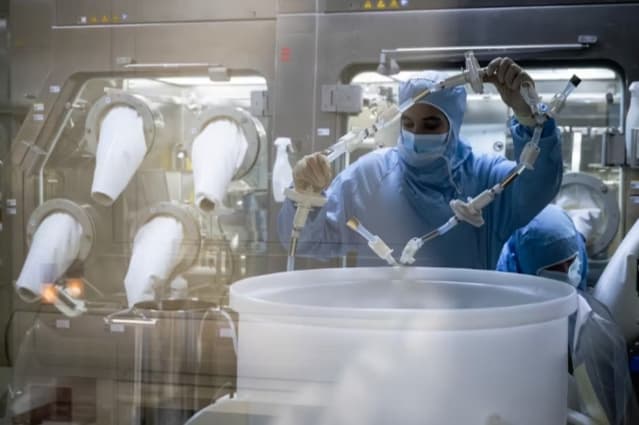
Europe is facing a concerning decline in its pharmaceutical production capabilities, a situation that is threatening the continent's health sovereignty. Once a global leader in pharmaceutical manufacturing, Europe now finds itself increasingly reliant on external suppliers for essential medications and vaccines.

Recent reports indicate that several pharmaceutical companies have shifted manufacturing operations to countries with lower production costs, leading to job losses and reduced capacity within the EU. This transition has raised red flags among health officials and policymakers, who fear that diminished production capacity could compromise access to life-saving treatments during public health crises.

Health experts caution that this trend not only jeopardizes the availability of essential medicines but also poses risks to the region's overall health security. The COVID-19 pandemic highlighted the vulnerabilities of global supply chains, revealing how quickly mandates and import dependencies can disrupt the flow of critical healthcare resources.

European leaders are now calling for a comprehensive strategy to revive local pharmaceutical production. Proposed measures include incentivizing investment in domestic manufacturing, enhancing research and development within Europe, and establishing emergency stockpiles of essential drugs.

Promises of a renewed focus on health sovereignty echo throughout policy discussions, emphasizing the need for Europe to reclaim its position as a reliable source of pharmaceuticals. Experts advocate for collaboration between governments and the private sector to build resilient supply chains and ensure that Europe is prepared for future health crises.

As the stakes continue to rise, the urgency for a coordinated response becomes critical. The future of Europe's health sovereignty hinges on its ability to restore robust pharmaceutical production within its borders, thus safeguarding the health of millions across the continent.

Published by Banx Network. This article is part of the Banx decentralized media programme, powered by the BXE token on the XRP Ledger.

Decentralized Media

Powered by the XRP Ledger & BXE Token

This article is part of the XRP Ledger decentralized media ecosystem. Become an author, publish original content, and earn rewards through the BXE token.

Newsletter

Stay ahead of the news — and win free BXE every week

Subscribe for the latest news headlines and get automatically entered into our weekly BXE token giveaway.

No spam. Unsubscribe anytime.

Share this story

Help others stay informed about crypto news

Related articles

Keep exploring the latest stories.

View more
Revolution Medicines’ Pancreatic Cancer Drug Wins Fast FDA Approval for Expanded Access

Revolution Medicines’ Pancreatic Cancer Drug Wins Fast FDA Approval for Expanded Access

The FDA rapidly authorized expanded access to daraxonrasib, allowing eligible patients with previously treated metastatic pancreatic cancer to receive the expe…

When Britain's Laboratories Turn Toward Tomorrow, Artificial Intelligence Finds New Ground in Medical Discovery

When Britain's Laboratories Turn Toward Tomorrow, Artificial Intelligence Finds New Ground in Medical Discovery

British researchers are expanding the use of AI in drug discovery, using advanced models to analyze biological data and accelerate early-stage research

When Japanese Scientists Give Light Two Paths, Tiny Devices Open New Windows Into the Future of Electronics

When Japanese Scientists Give Light Two Paths, Tiny Devices Open New Windows Into the Future of Electronics

Researchers from Okayama and Hokkaido universities developed a nanodevice that combines two different light-manipulation functions in one structure.