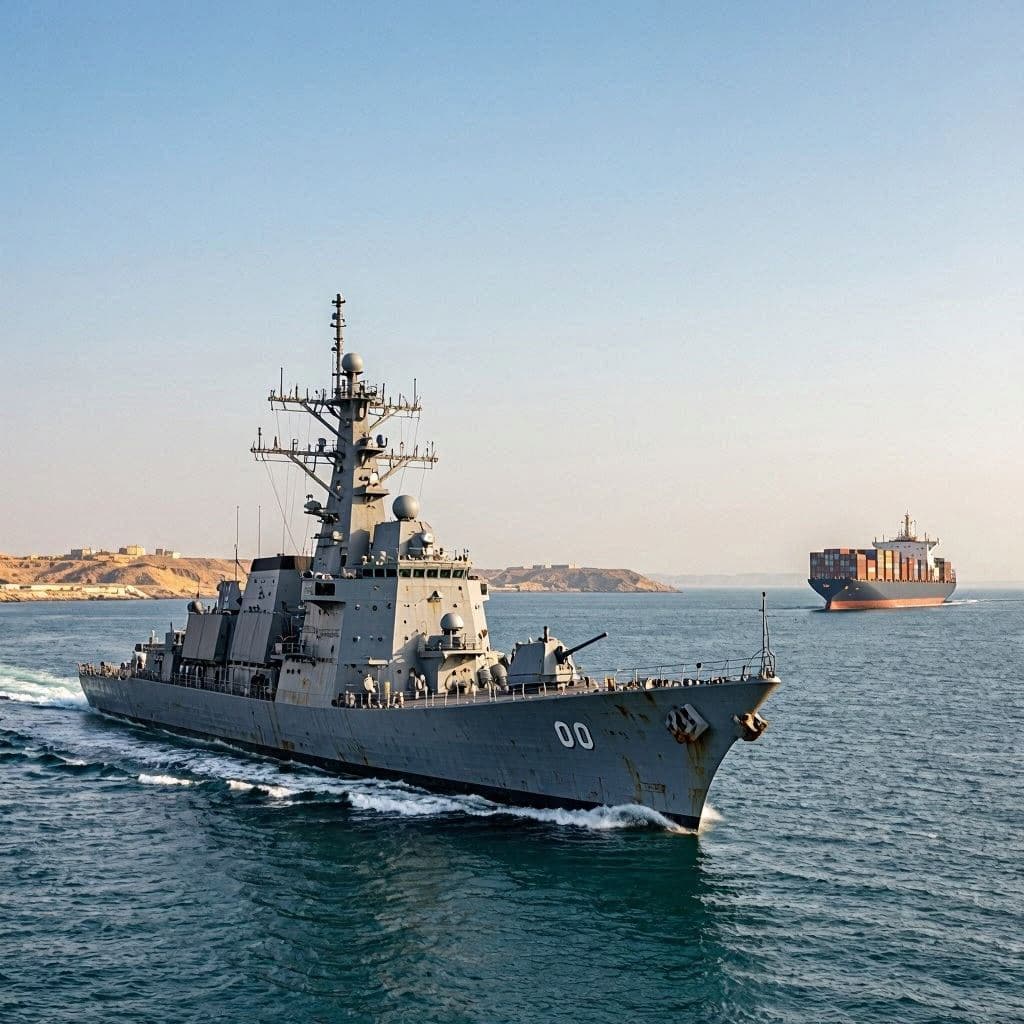
In the strategic waters of the Strait of Hormuz, where global energy flows converge, a decisive action by US forces has underscored the complexities of maritime security. The disabling of ships attempting to breach a naval blockade highlights the ongoing tensions in the region and the lengths to which nations will go to enforce their strategic interests. This event, unfolding amidst a backdrop of political maneuvering, serves as a reminder of the fragile balance between commerce and conflict.
The operation, carried out by the US Central Command, targeted vessels that failed to comply with warnings, demonstrating a firm stance on maintaining the integrity of the blockade. For the international community, it raises questions about the implications for global trade and the rules of engagement in contested waters.
Body: The incident occurred as part of a broader effort to restrict maritime traffic entering and exiting Iranian ports. US forces, including destroyers and aircraft, monitored the strait closely, issuing repeated warnings to ships that attempted to pass. When compliance was not achieved, measures were taken to disable the propulsion systems of the offending vessels, ensuring they could not proceed.
This enforcement action is linked to the wider geopolitical context of US-Iran relations, which have been marked by periods of intense hostility and tentative diplomacy. The blockade aims to exert pressure on Iran regarding its nuclear program and regional activities, while also seeking to protect allied interests and ensure freedom of navigation for compliant ships.
The reaction from Iran has been one of condemnation, with officials describing the action as an act of aggression and a violation of international law. They argue that the blockade disproportionately affects civilian commerce and harms the global economy. This perspective highlights the divergent views on the legitimacy and necessity of such military measures.
Global markets reacted with caution, as the Strait of Hormuz is a critical artery for oil shipments. Any disruption in this corridor can lead to price volatility and supply chain issues, affecting economies worldwide. Stakeholders are closely monitoring the situation to assess potential risks and adjust their strategies accordingly.
Legal experts debate the justification for such actions under international maritime law. While blockades are recognized in times of conflict, their application in peacetime or during limited engagements remains a contentious issue. The precedent set by this incident could influence future naval operations and diplomatic negotiations.
Domestically, the action has sparked discussion about the role of the US military in foreign policy. Supporters argue that it demonstrates strength and resolve, while critics worry about the potential for escalation and the human cost of such interventions. The political discourse reflects the broader divide on how best to manage international relations.
As the situation evolves, diplomatic efforts continue in parallel with military operations. Mediators are working to find a solution that addresses security concerns while minimizing economic disruption. The hope is that dialogue can eventually replace confrontation, leading to a more stable regional environment.
Closing: The disabling of ships in the Strait of Hormuz by US forces is a significant event in contemporary geopolitics. It illustrates the challenges of enforcing strategic objectives in a interconnected world and the need for careful consideration of the broader impacts of military action.
AI Image Disclaimer: The visuals in this article are AI-generated illustrations designed to reflect the seriousness of the maritime incident.
Sources: US Central Command The Hill Navy Times CBS News
Published by Banx Network. This article is part of the Banx decentralized media programme, powered by the BXE token on the XRP Ledger.