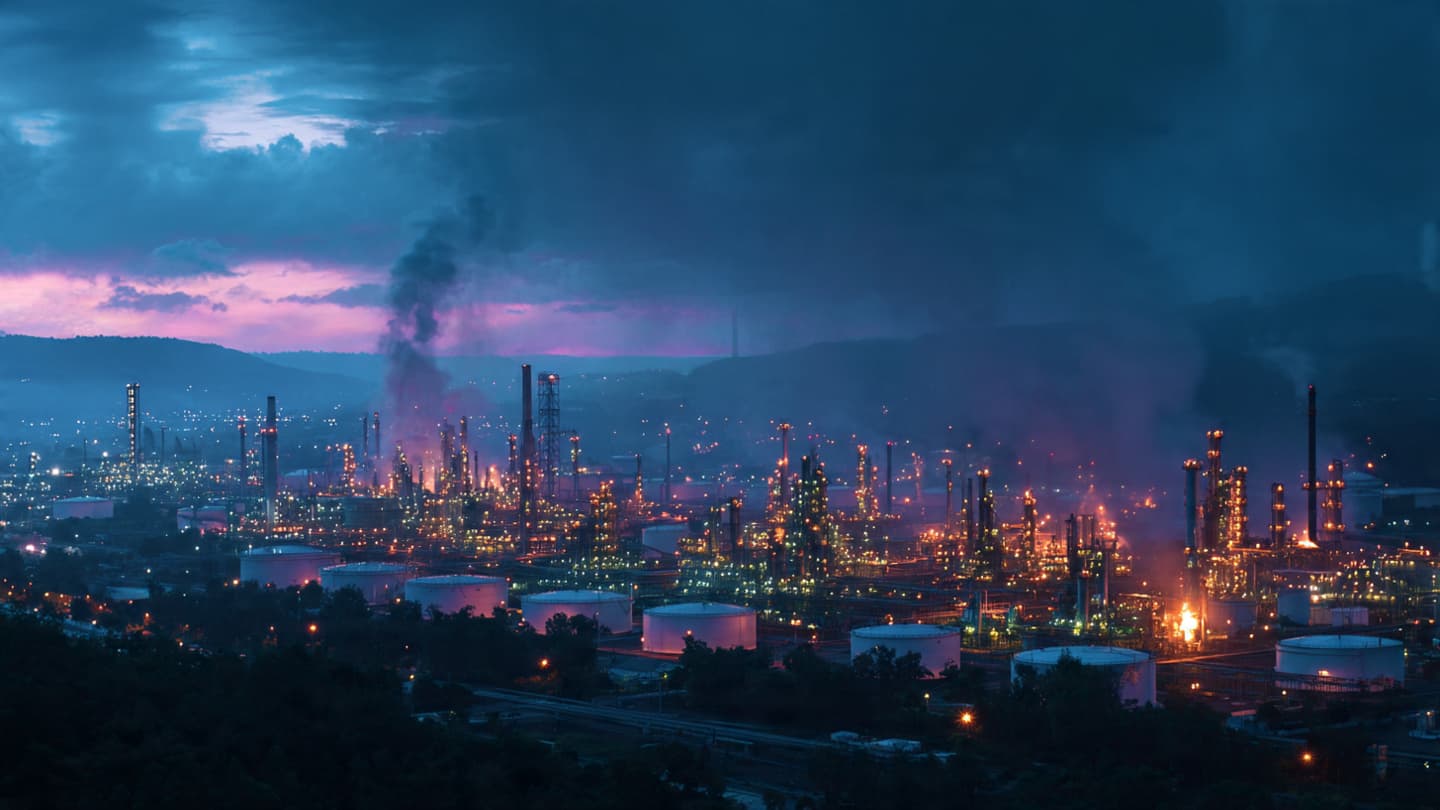
Industrial landscapes are often built to appear permanent. Towers of steel, endless pipes, and burning refinery flames usually symbolize stability, energy, and economic continuity. Yet in times of conflict, even these carefully engineered systems can suddenly become fragile reminders that modern wars no longer remain confined to distant battlefields alone.
Recent drone attacks linked to the conflict between Ukraine and Russia reportedly disrupted operations at several Russian oil refineries. According to international reports, the strikes targeted infrastructure connected to fuel processing and energy distribution, sectors that remain critically important to Russia’s wartime economy and global export position.
The attacks reflect how warfare has increasingly evolved beyond traditional troop movements. Low-cost drone technology has transformed the strategic landscape, allowing targets far from front lines to become vulnerable in ways that were once difficult to imagine. Refineries, power stations, and logistics hubs have all emerged as central points of pressure within prolonged conflicts.
Russian authorities stated that emergency teams responded quickly to contain damage and maintain production where possible. While some facilities reportedly experienced temporary disruptions, officials emphasized that broader energy supplies remained stable. Independent verification of the full operational impact remains limited due to wartime restrictions and security controls surrounding industrial sites.
For Ukraine, such strikes are often framed as attempts to weaken military supply chains and reduce the economic capacity supporting Russian operations. Ukrainian officials have argued that energy infrastructure plays a direct role in sustaining prolonged military campaigns. Moscow, however, describes the attacks as acts targeting civilian economic stability and national security.
The broader consequences extend beyond the two countries involved. Energy markets remain highly sensitive to disruptions involving Russian oil infrastructure, especially as global economies continue recovering from earlier inflation and supply chain pressures. Even limited interruptions can influence commodity prices, shipping insurance costs, and investor sentiment across international markets.
Analysts also note the psychological dimension of these attacks. Infrastructure once viewed as geographically protected now appears increasingly exposed. This changes not only military calculations but also public perception, as ordinary citizens witness the conflict reaching deeper into industrial and economic life. Modern warfare often unfolds not only through territorial gains but through persistent pressure on systems that support daily stability.
At the same time, diplomacy surrounding the conflict remains difficult. International mediation efforts have struggled to produce lasting ceasefire conditions, while sanctions and military assistance programs continue shaping the broader geopolitical environment. Many governments remain concerned that prolonged escalation could further destabilize energy supplies and regional security.
For now, the attacks on Russian refineries illustrate how deeply interconnected war and infrastructure have become in the twenty-first century. What once stood primarily as engines of economic production now also occupy the uncertain terrain between industry and strategic vulnerability, where even distant mechanical hums can carry the weight of international conflict.
AI Image Disclaimer: Visual illustrations attached to this report may include AI-generated depictions created for contextual newsroom presentation.
Sources: Reuters, BBC, The Guardian
Published by Banx Network. This article is part of the Banx decentralized media programme, powered by the BXE token on the XRP Ledger.