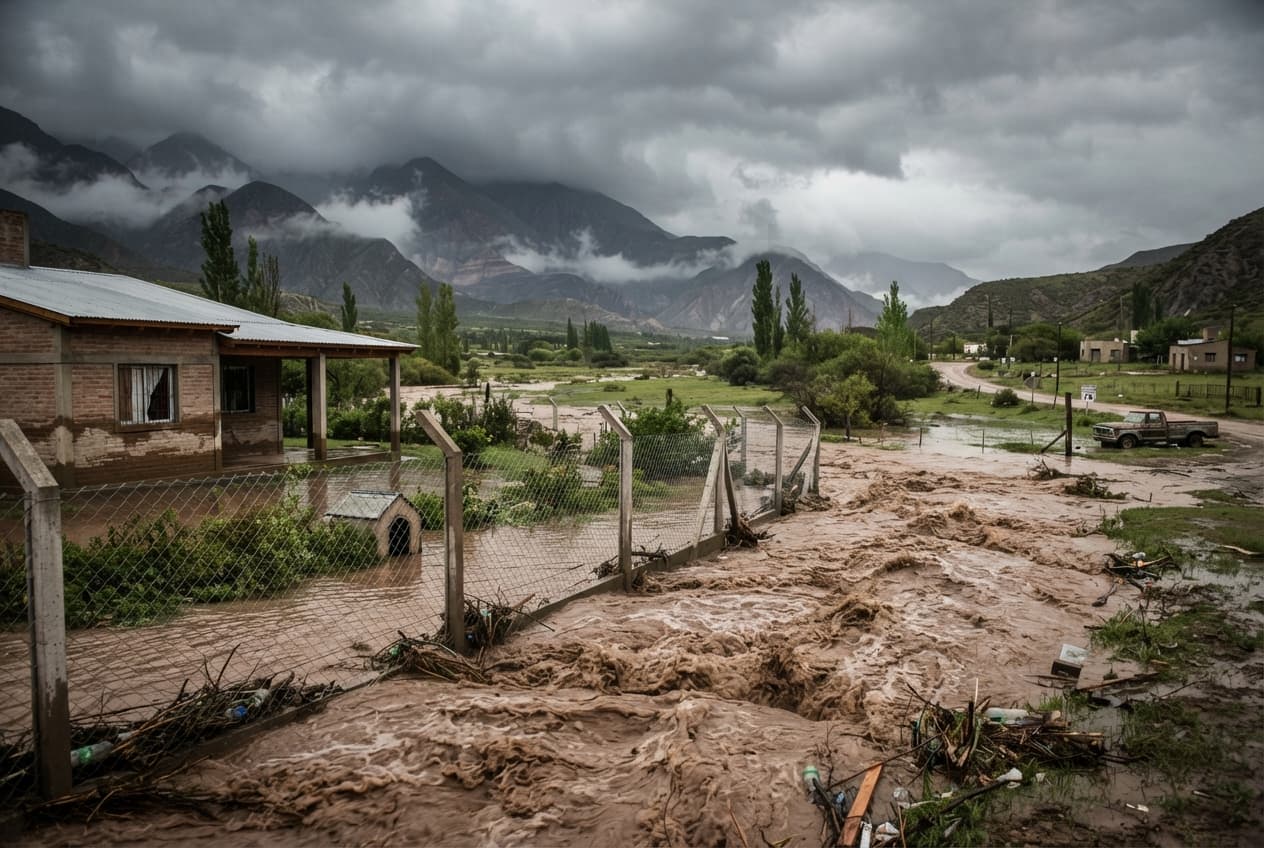
Mendoza, Argentina—A wall of rushing brown water swept through residential neighborhoods early Tuesday morning after heavy downpours swelled regional valley river channels beyond capacity. Local civil defense operators reported that municipal siren networks sounded moments before waist-high torrents poured into suburban streets and ground-floor apartments. Residents scrambled toward rooftops, carrying children and pets while electrical transformers blew out with bright blue arcs across the skyline.
Emergency dispatchers logged hundreds of distress calls from trapped homeowners pleading for immediate rescue as currents tore parked vehicles from their parking spots. Municipal crews utilized inflatable rubber boats to navigate flooded avenues where swift-moving debris threatened to capsize rescue watercraft. Local clinics activated backup generators after floodwaters breached basement utility rooms and disabled primary electrical distribution panels.
Provincial disaster committees declared a red alert across the valley floor as meteorological services predicted additional precipitation throughout the afternoon hours. Heavy earth-moving machinery arrived at dawn to clear blocked culverts choked with uprooted brush and domestic waste swept down from surrounding slopes. Eyewitnesses described seeing modular fences and backyard sheds float down primary residential streets like discarded paper boxes.
Red Cross volunteers established a temporary shelter inside a municipal sports stadium situated on higher ground overlooking the flooded agricultural valley. Social workers registered hundreds of displaced families arriving with minimal belongings while logistics teams distributed dry blankets and bottled water. Public health officials warned citizens against wading through standing floodwaters contaminated by breached residential septic systems.
Regional utility workers labored under intermittent rainfall to isolate damaged gas lines and prevent secondary explosions in submerged residential blocks. Municipal inspectors initiated preliminary structural assessments to determine which waterlogged foundations posed immediate collapse hazards to returning homeowners. Federal disaster authorities deployed mobile water purification units to support isolated neighborhoods cut off by washed-out bridge approaches.
Local agricultural cooperatives reported extensive crop losses as flood channels overflowed into adjacent orchards and vineyards across the lower valley floor. Opposition lawmakers criticized municipal authorities for failing to complete promised river-dredging projects authorized following previous seasonal inundations. Independent hydrologists noted that rapid urban expansion over natural absorption basins severely exacerbated the destructive velocity of the runoff.
State police established security perimeters around evacuated districts to deter opportunistic looting while families remained sheltered in municipal facilities. Exhausted firefighters rotated out of swift-water rescue assignments after twelve hours of continuous operations against freezing currents. Emergency directors confirmed that rescue teams had successfully reached all reported rooftop holdouts by mid-afternoon.
Reconstruction estimates remained unavailable as municipal engineers waited for swollen river levels to recede before conducting comprehensive structural integrity surveys across the valley.
ILLUSTRATION PROMPTS
Published by Banx Network. This article is part of the Banx decentralized media programme, powered by the BXE token on the XRP Ledger.