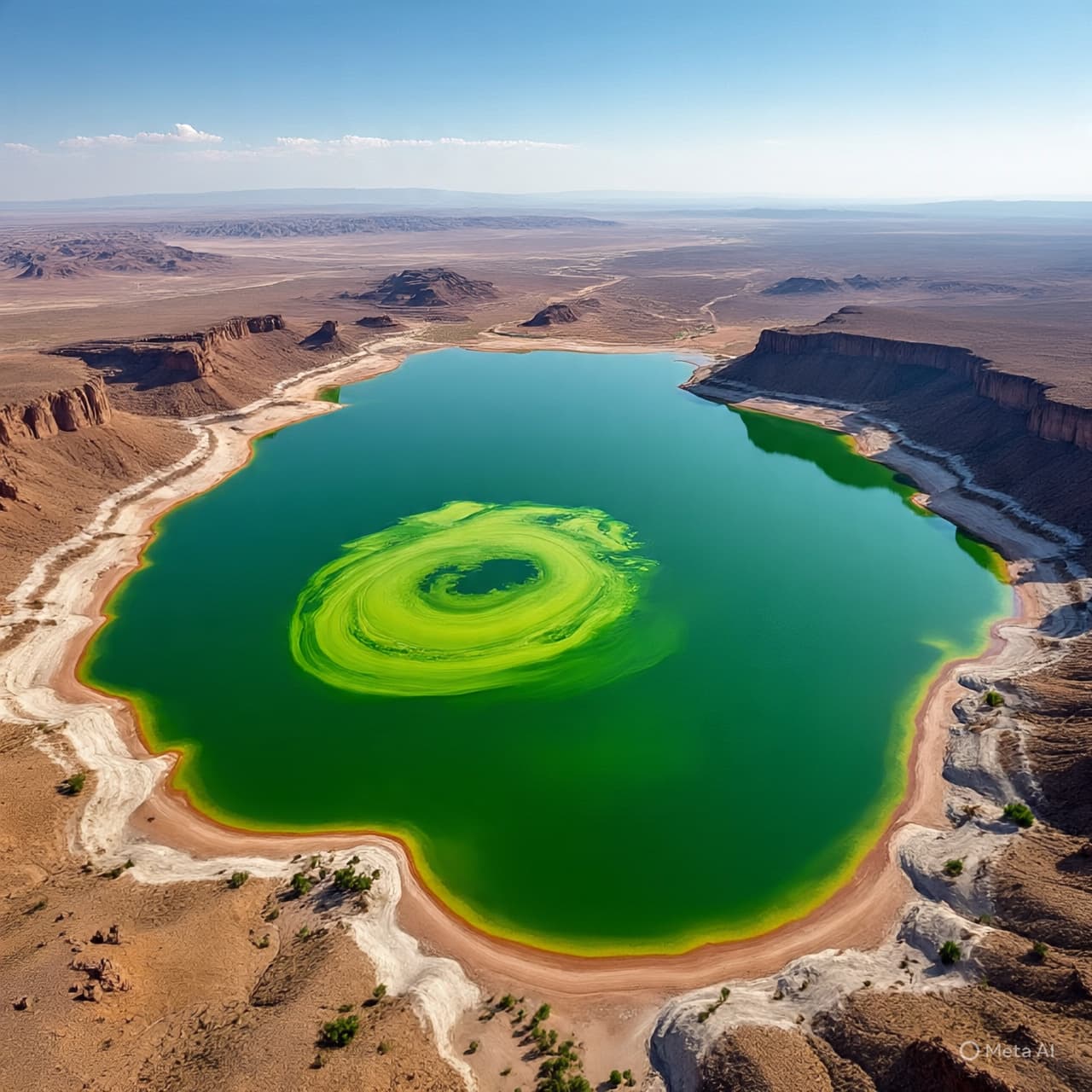
On October 8, 2024, Landsat 9 captured a striking natural-color image of Pyramid Lake, showing dense bands of blue-green algae curling across its surface. This isn’t the first time the lake has suffered such a bloom: scientists and tribal authorities report similar events almost every fall.
The culprit behind this phenomenon is a species of cyanobacteria called Nodularia spumigena, known for thriving in warm, saline, and alkaline waters — conditions that Pyramid Lake routinely offers. What makes it especially concerning is its ability to produce nodularin, a toxin that can damage livers and accumulate in aquatic life. The Paiute Tribe’s Water Quality Program confirmed that the 2024 bloom released toxins, and issued warnings to avoid contact with the water.
The bloom’s intensity is not just a local issue. Satellite tools from NASA and the European Union make it clear: this is a large-scale, highly visible event. The Copernicus Sentinel-2 mission observed these green swirls earlier in October, and instruments like the NOAA/ESA ocean-color sensors tracked increases in chlorophyll a and cyanobacterial concentrations.
Ecologically, Pyramid Lake is unique. It’s a terminal lake (no outflow), which means salts concentrate as water evaporates, and its pH hovers around 9 — quite alkaline. These conditions favor Nodularia, giving it a leg up over other algae. The bacterium also fixes nitrogen from the atmosphere, helping fuel its own growth even when nutrients are limited.
Public health implications are serious: in past blooms, authorities have closed beaches, warned people not to swim, and cautioned livestock owners. Even though the patterns in the water are mesmerizing from above, for people on the ground, the message is clear — avoid the water when the bloom is active.
AI-Image Disclaimer Visuals are AI-generated concept illustrations and not real photographs.
Sources NASA Earth Observatory U.S. Geological Survey (USGS) Copernicus / European Union Sentinel-2 satellite data Earth.com coverage of the bloom Local tribal / health advisory reporting from the Pyramid Lake Paiute Tribe
Published by Banx Network. This article is part of the Banx decentralized media programme, powered by the BXE token on the XRP Ledger.