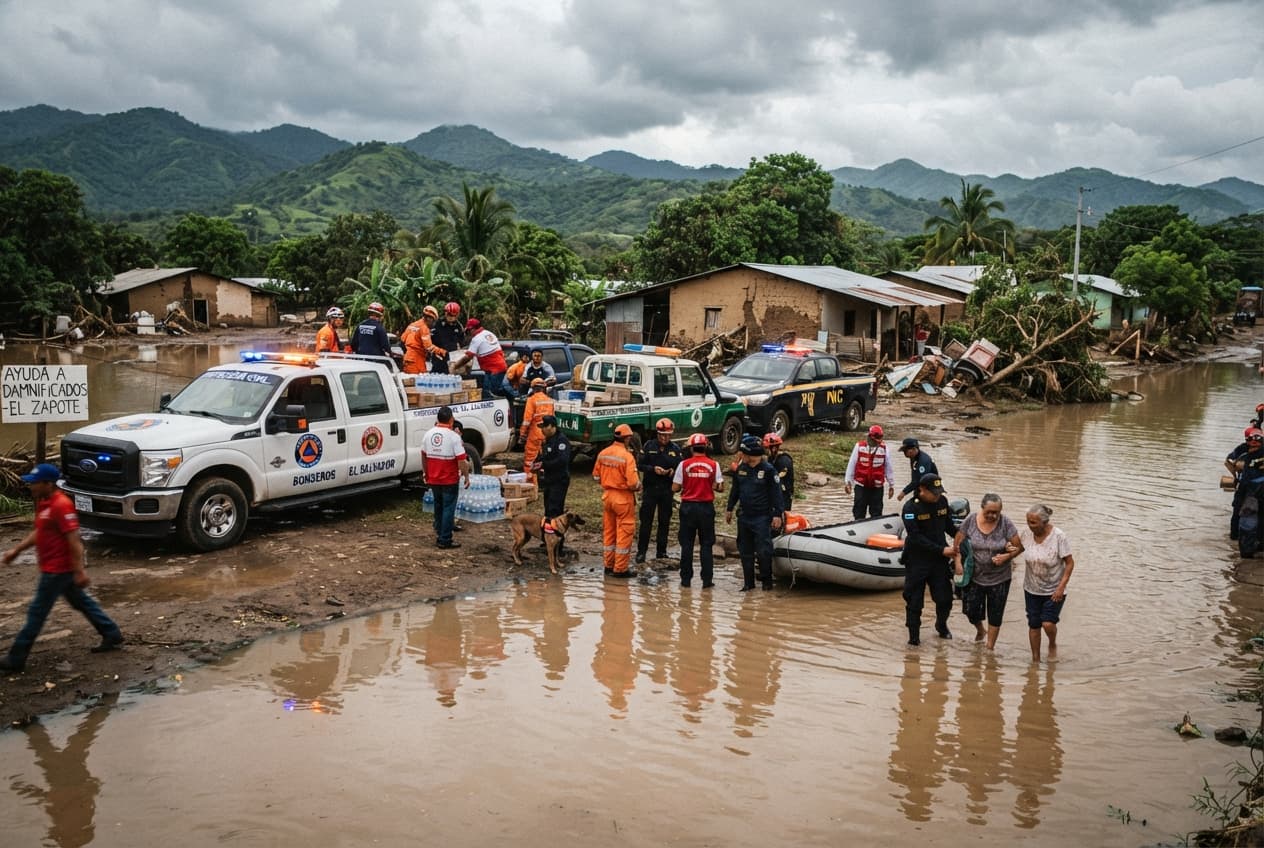
San Salvador, El Salvador—Violent electrical storms and relentless precipitation overwhelmed rural drainage basins across the southern department of Usulután. Civil protection authorities confirmed that two residents lost their lives when sudden flash floods surged through residential sectors before dawn. The rapid rise of local rivers caught farming families asleep, submerging modest adobe homes under fast-moving brown water. Emergency response units deployed amphibious vehicles and ground teams toward the stricken rural municipality.
The violent torrent swept away livestock, destroyed agricultural fences, and deposited thick layers of silt across village pathways. Surviving residents scrambled onto thatched roofs, watching their possessions wash away in the murky current. Local police units established security perimeters around the flooded zones to prevent looting and manage civilian movement. First responders utilized rescue ropes and inflatable rafts to evacuate stranded families from vulnerable ground-floor rooms.
The director of civil protection briefed journalists at the municipal emergency operations center established in the regional capital. Local river basins reached absolute capacity within two hours of the initial storm band passing overhead, officials stated. Our field units are prioritizing life-saving extractions across isolated hamlets where water levels remain elevated. Citizens must heed evacuation orders immediately.
Community representatives criticized municipal authorities for failing to dredge local river channels and clear blocked drainage culverts prior to the rainy season. Requests submitted to central government agencies for structural flood barriers went unanswered for multiple budgetary cycles. Those administrative delays left rural farming communities entirely exposed to standard seasonal weather events. The resulting overflow transformed routine precipitation into a fatal disaster.
Medical field stations set up in community schools treated displaced villagers for hypothermia, acute stress, and waterborne skin infections. Local health centers reported adequate medical stocks, though psychological support teams were dispatched to comfort grieving relatives. Power distribution companies cut electricity across affected districts to prevent widespread electrical hazards from downed distribution lines. Heavy transport traffic along secondary agricultural routes remained suspended.
Civil protection engineers began inspecting bridge foundations and road embankments upstream to verify structural integrity following peak discharge. Relief convoys transporting bottled water, blankets, and food rations arrived from the national distribution depot. Forensic transport units prepared to move the victims' remains to the regional medical examiner's facility. Recovery operations continue late into the evening as weather bands slowly move offshore.
Published by Banx Network. This article is part of the Banx decentralized media programme, powered by the BXE token on the XRP Ledger.