Soft waves of morning mist drift over the restless Pacific — a silent reminder that even in vast, open waters, currents of tension can stir without warning. On a winter day near the southern reaches of Okinawa, an encounter unfolded in the skies: radar beams briefly locked from one nation’s jets onto another’s. What might have passed as a distant technical incident instead rippled quietly across capitals and coaxed two nations to call for calm.
Over the weekend, Chinese military aircraft — identified as J-15 jets from the carrier Liaoning — locked their radar on Japanese F-15 fighter jets during exercises over international waters southeast of Okinawa. According to Japan’s Defence Ministry, this “fire-control radar lock” occurred twice: once for a few minutes in the late afternoon, and again for roughly thirty minutes in the evening.
For Tokyo, the act crossed a threshold. The Japanese Defence Minister described it as “extremely regrettable” and “dangerous,” beyond what is needed for routine aircraft operations. A formal protest has been lodged with Beijing, demanding preventive measures to avoid recurrence. Yet Japanese officials emphasize there was no breach of Japanese airspace — no damage, no injuries, and no weapons released. Japanese fighters had responded at a safe distance, reportedly without provocative moves.
Beijing, meanwhile, rejects Tokyo’s depiction of events. A spokesperson for the Chinese navy asserted that the training had been publicly announced in advance — and accused the Japanese jets of “harassment.” The statement described the manoeuvres as lawful protection of “security and legitimate rights.”
Amid those contrasting narratives, an unexpected voice rose with measured gravity: the defence ministers of both Japan and Australia. In a scheduled Tokyo meeting, they urged a calm response. Australia voiced concern over the act but underlined that interactions — especially among military forces — must remain “safe and professional.” The two nations also agreed to deepen military coordination as part of regional defence cooperation.
This episode comes against a backdrop of heightened regional sensitivity. Recent remarks by Japan’s leadership about potential military involvement over issues surrounding Taiwan have already strained ties with Beijing. The radar-lock incident, then, may be read as a signal — perhaps a warning — in a larger strategic dialogue over influence, deterrence, and regional balance.
But for now, in the hush after the radar blips and the diplomatic protests, the call from Tokyo and Canberra is gentle yet firm: to temper rhetoric with caution, to treat the skies — and the risks they carry — with a wary respect. In a region where geography turns maritime lanes into arteries of connection and fault lines alike, calm may be the rarest strength.
As the two nations seek deeper cooperation, eyes will remain on Beijing’s next move — but for now, the potential for escalation has been met with measured restraint, not abrupt retaliation.
In quieter words than those exchanged in radar-locked seconds, Tokyo and Canberra have asked for calm.
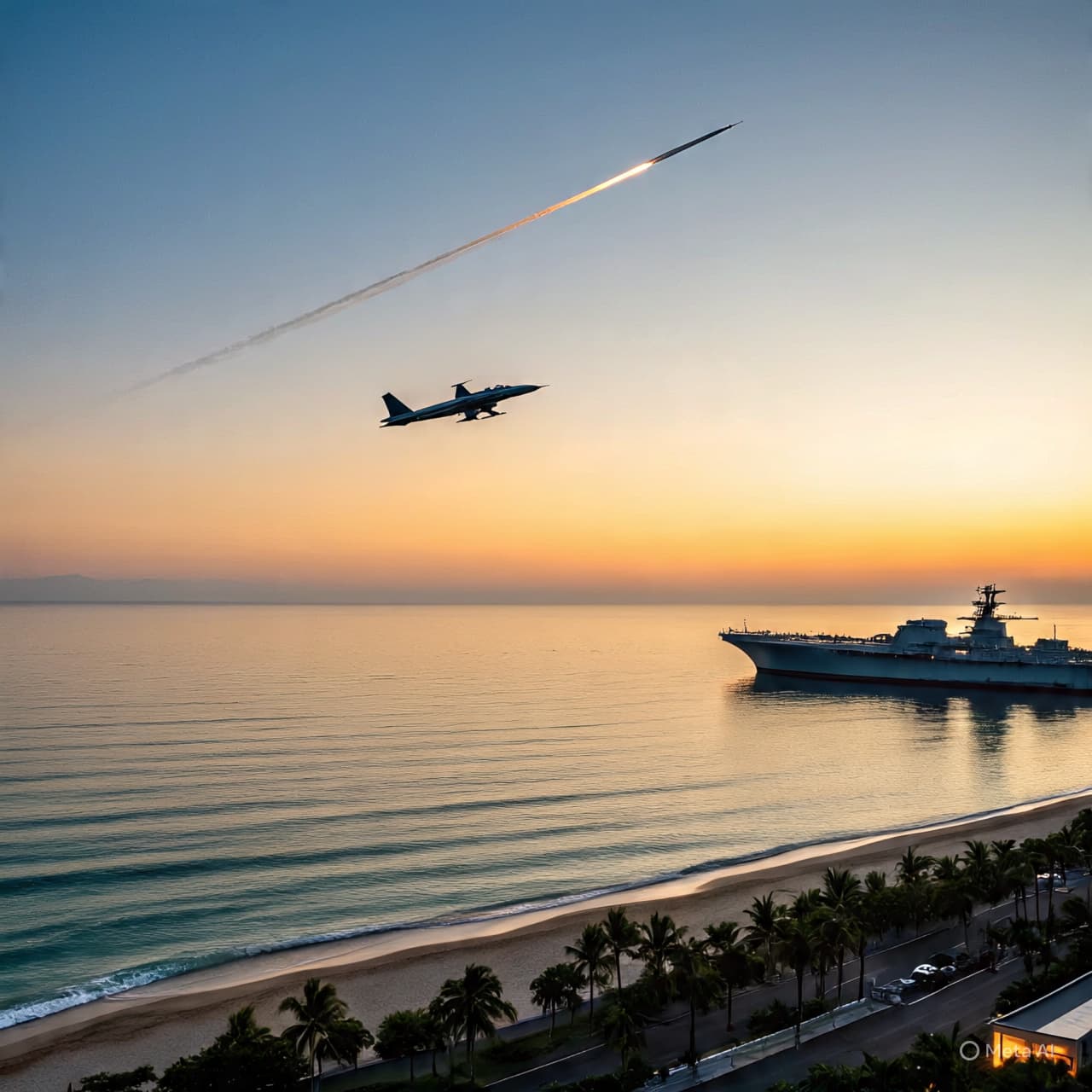
AI Image Disclaimer: Visuals are created with AI tools and are conceptual illustrations, not real photographs.
Sources (media names): Associated Press / ABC, The Defense Post, Reuters, The Japan Times
Published by Banx Network. This article is part of the Banx decentralized media programme, powered by the BXE token on the XRP Ledger.