In the vast silence above our pale blue planet, time seems to stretch like a whispered promise—until an unexpected crack disturbs that quiet. This week, the familiar rhythm of life aboard the International Space Station was interrupted not by technical failure, but by something deeply human: health. NASA’s Crew‑11 returned to Earth earlier than planned, marking the agency’s first medical evacuation from space in its decades‑long history, a reminder that even among the stars, fragile bodies remain tethered to Earth’s care.
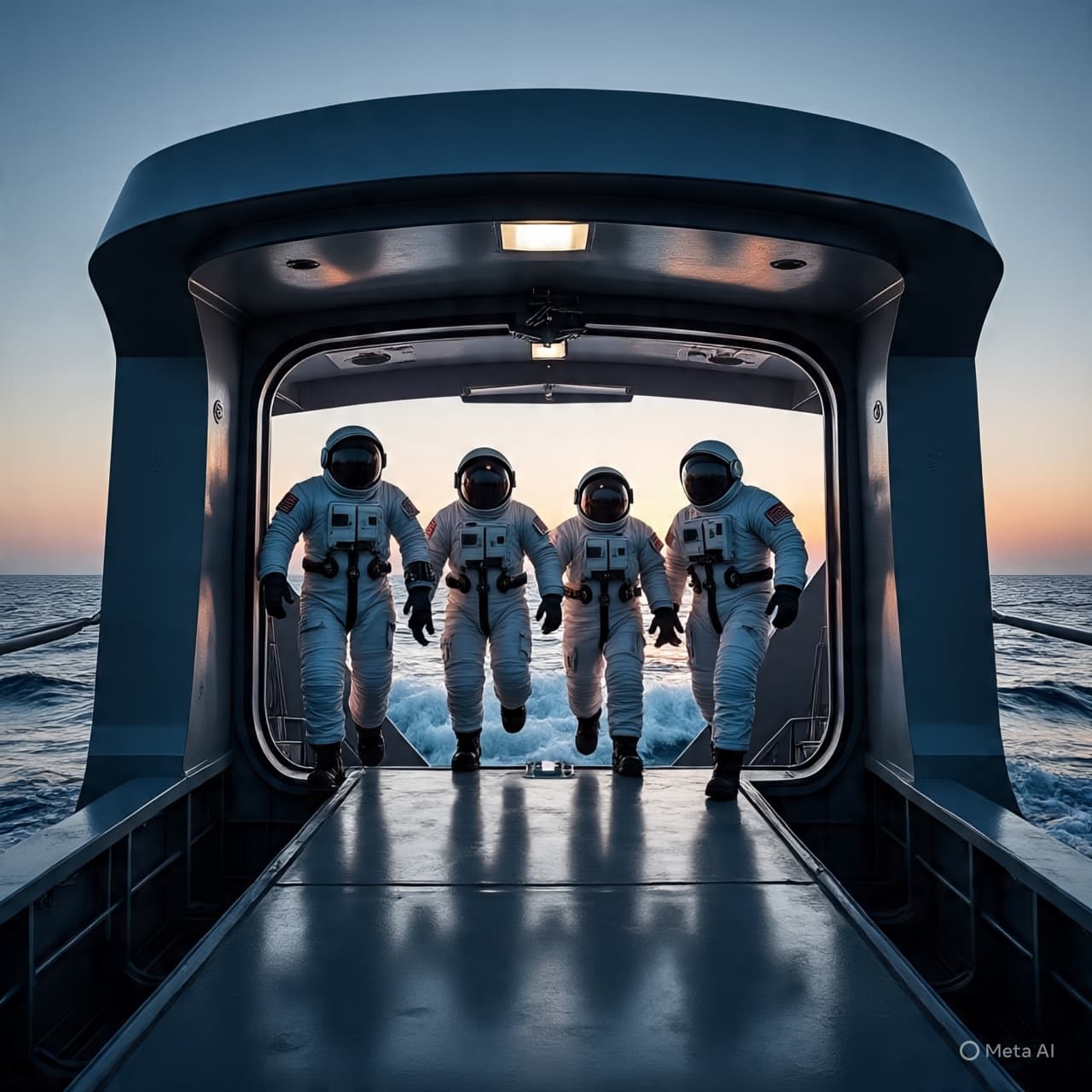
In the early hours off the Southern California coast, a SpaceX Crew Dragon capsule carrying four astronauts gently splashed down in the Pacific near San Diego, concluding a mission that had begun last August. One member of the crew developed a serious medical condition in early January, prompting NASA to make the unprecedented decision to bring all four home more than a month ahead of schedule. While specifics of the health issue remain private, officials emphasized the astronaut is stable, in good spirits, and receiving proper care.
Commanded by NASA astronaut Zena Cardman, the returning group included her fellow American Mike Fincke, Japanese astronaut Kimiya Yui, and Russian cosmonaut Oleg Platonov. All four were taken directly to a hospital following splashdown for overnight monitoring and further evaluation. NASA Administrator Jared Isaacman noted that the decision to cut the mission short underscored the priority given to crew well‑being, reflecting extensive preparation for unexpected situations beyond Earth’s atmosphere.
The early return has temporarily reduced the station’s complement of astronauts, with critical tasks such as planned spacewalks postponed until the next crew arrives. NASA and SpaceX are working to accelerate the launch of Crew‑12, currently targeted for mid‑February. Meanwhile, the astronaut remaining aboard the ISS, supported by partners on the ground, continues essential operations.
This milestone comes as NASA prepares for future exploration, including lunar missions and, ultimately, human journeys farther into the solar system. The experience gained from this first in‑orbit medical evacuation will inform how agencies care for astronauts on longer, more distant voyages—where distance from Earth makes health contingencies even more challenging.
the Crew‑11 return was more than just a splashdown; it was a testament to the delicate balance between human ambition and human vulnerability. In the quiet aftermath of their landing, we are reminded that the courage to explore space goes hand in hand with the compassion to protect those who venture there.
AI Image Disclaimer “Illustrations were produced with AI and serve as conceptual depictions.”
Sources AP News Reuters Washington Post The Guardian Scientific American
Published by Banx Network. This article is part of the Banx decentralized media programme, powered by the BXE token on the XRP Ledger.