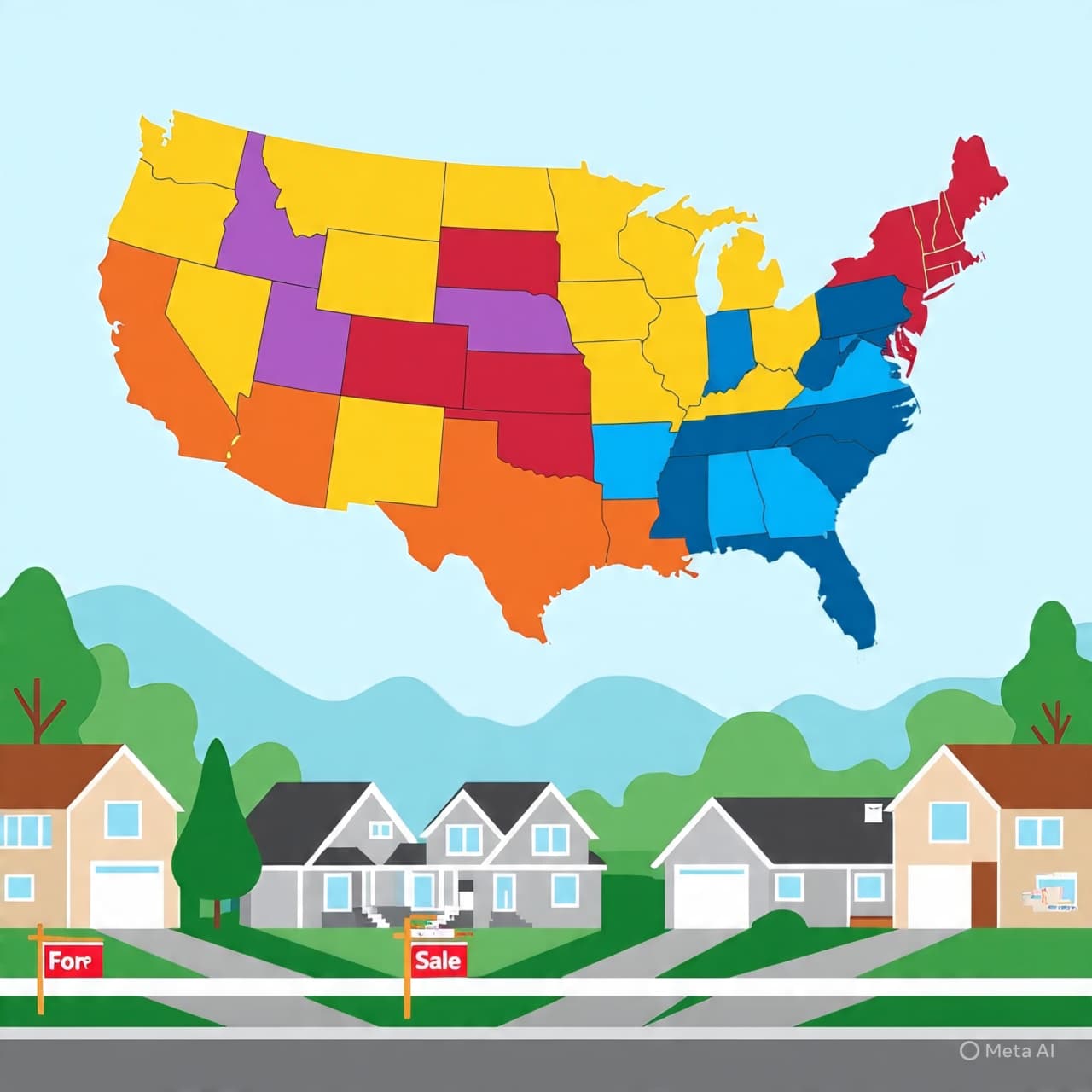
Opening In the quiet orchestra of daily life, the rhythm of the housing market is rarely the melody we hum to ourselves. Yet every so often, a shifting chord in its cadence catches our collective attention like the sudden hush before rain begins. In early January 2026, a map of the United States housing landscape set many hearts and minds wandering down unexpected pathways, as it suggested that the harmonies that once dictated sellers’ advantage may have softened into a more balanced or even buyer-friendly refrain. Amid this evolving score, just seven metro areas remain where sellers hold discernible sway, while the rest of the nation’s housing market hums to a different, less assertive tune.
Body Across much of the continental United States, the dance between supply and demand in the housing market has taken on a more measured pace. Where once homes flew off the shelves with a kind of youthful urgency, rising bidding wars and growing lines of hopeful buyers, today we see a broader field of choice for those stepping into the market. According to recent analysis, there are now about 37 percent more sellers than buyers nationwide, the widest such gap in a decade, painting a picture where buyers might take a quiet lead in negotiations.
Yet within that broad landscape, small pockets of resistance remain places where the familiar tension of limited supply and earnest demand still keeps sellers poised with confidence. Counties like Nassau in New York, along with parts of New Jersey and select Midwest and West Coast metros such as San Francisco and Milwaukee, continue to show stronger buyer interest relative to homes for sale. In these enclaves, days on market are shorter, and houses may still command prices that challenge potential buyers to stretch their budgets.
Elsewhere, the broader housing market tells a different tale. In many Sun Belt metros—once known for their breakneck growth fueled by migration and construction inventory now outpaces demand. Homes linger longer on listings, price growth has slowed or even dipped, and buyers find themselves in a position to take their time, ask for concessions, and negotiate with renewed confidence. This shift is part of a larger trend that many analysts expect to define 2026: a housing market that reflects a more balanced exchange between sellers and buyers than the frenzied conditions seen in recent years.
Such transitions can feel like stepping from sunlight into a gentle, dappled shade. For homeowners who bought at peak prices, slower market kinetics and cooler demand might seem like a quiet thaw of equity. For prospective buyers, however, the broadening of opportunity could feel like the breath of fresh air they’ve been awaiting windows of price moderation and choice they didn’t see before. Together, these subtle movements remind us that markets, like seasons, have rhythms that shift not in sudden drama but through gradual turns.
Closing As we settle into this chapter of the housing market story, it’s clear that the narrative is neither one of abrupt collapse nor of unchecked ascent. Instead, the market appears to be reconciling its own tempo finding a new balance amid changing demand, mortgage conditions, and regional developments. Where a handful of cities still resonate with the clear voice of a seller’s advantage, much of the country is learning the softer language of equilibrium. This is not a story of sharp divisions, but rather of a broader landscape adapting to its own changing contours, with implications that both buyers and sellers may navigate in the months to come.
AI Image Disclaimer Illustrations were produced with AI and serve as conceptual depictions.
Sources (mainstream/niche media names)
Daily Mail (UK edition) — report on U.S. housing market imbalances. CBS News — housing market forecast and price changes. Zillow — hottest housing markets forecast for 2026. Investopedia — housing market trend outlook for 2026. Realtor.com research — top housing markets forecast.
Published by Banx Network. This article is part of the Banx decentralized media programme, powered by the BXE token on the XRP Ledger.