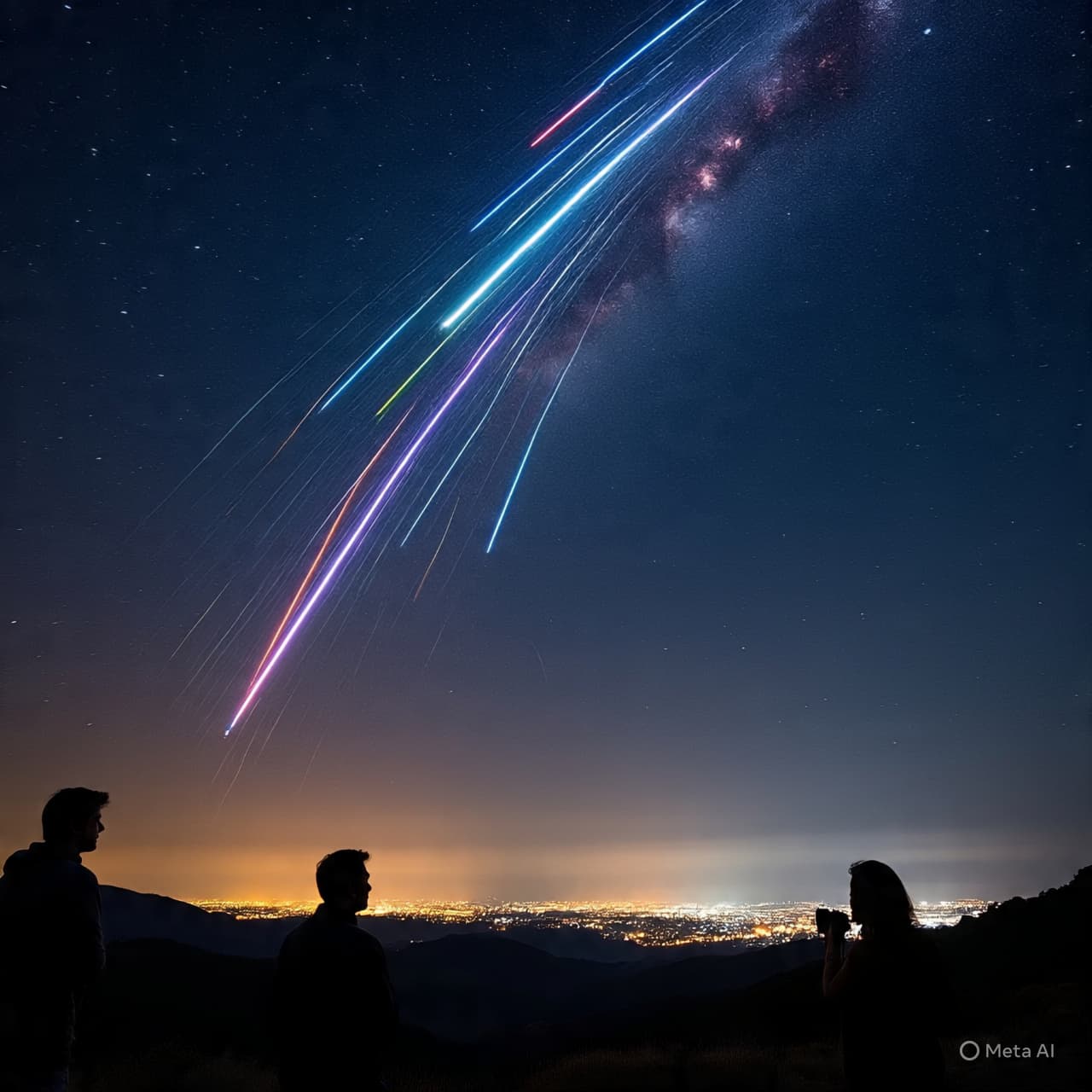
On certain nights, the heavens seem to reach down and brush the earth with light, reminding us that the world above is neither silent nor still. This weekend, such a moment is set to unfold over the Bay Area, as remnants of an ancient celestial traveler — no longer an active comet but whose dusty trail endures — intersect with Earth’s path, producing a spectacular meteor display known as the Geminid meteor shower.
Unlike most meteor showers that originate from the icy tails of comets, the Geminids trace their origin to 3200 Phaethon, an unusual asteroid-like object that behaves more like a dead comet and sheds rocky debris along its orbit. When our planet passes through this stream of debris, each tiny fragment heats up and burns in our atmosphere, producing brilliant streaks of light across the night sky.
For stargazers in the Bay Area, the show begins after nightfall, with meteors often visible from about 9 p.m. onward. The greatest activity — potentially up to 120 meteors per hour under ideal conditions — is expected in the early morning hours before dawn, especially between 11 p.m. and 3:30 a.m..
Observers are encouraged to seek out darker, elevated viewing spots away from city lights — such as hills or parks — lie back, and let their eyes adjust to the sky. Because the meteors radiate from a point near the constellation Gemini, but can appear anywhere overhead, the whole sky becomes fair game for fleeting lights.
This year’s conditions look promising due to a late-rising moon that won’t wash out the view until later in the night, though a returning marine layer could obscure lower-elevation sightlines. Higher terrain usually promises better clarity. Alongside the meteors, Jupiter will be visible early in the evening, adding another celestial companion for early stargazers.
While the Geminids are heralded for their brightness and reliability — often considered among the best meteor showers of the year — patience and a bit of preparation help elevate the experience. Dress warmly, find a wide open view of the sky, and let the city’s glow fade behind you. What unfolds isn’t just a scientific event, but a moment where countless tiny pieces of ancient cosmic dust flash across our atmosphere, each one a quiet reminder of Earth’s place in the larger tapestry of the cosmos.
AI Image Disclaimer Visuals are created with AI tools and are not real photographs.
Sources SFGate Associated Press (AP) Time Magazine Almanac meteor calendar The Times (astronomy overview)
Published by Banx Network. This article is part of the Banx decentralized media programme, powered by the BXE token on the XRP Ledger.