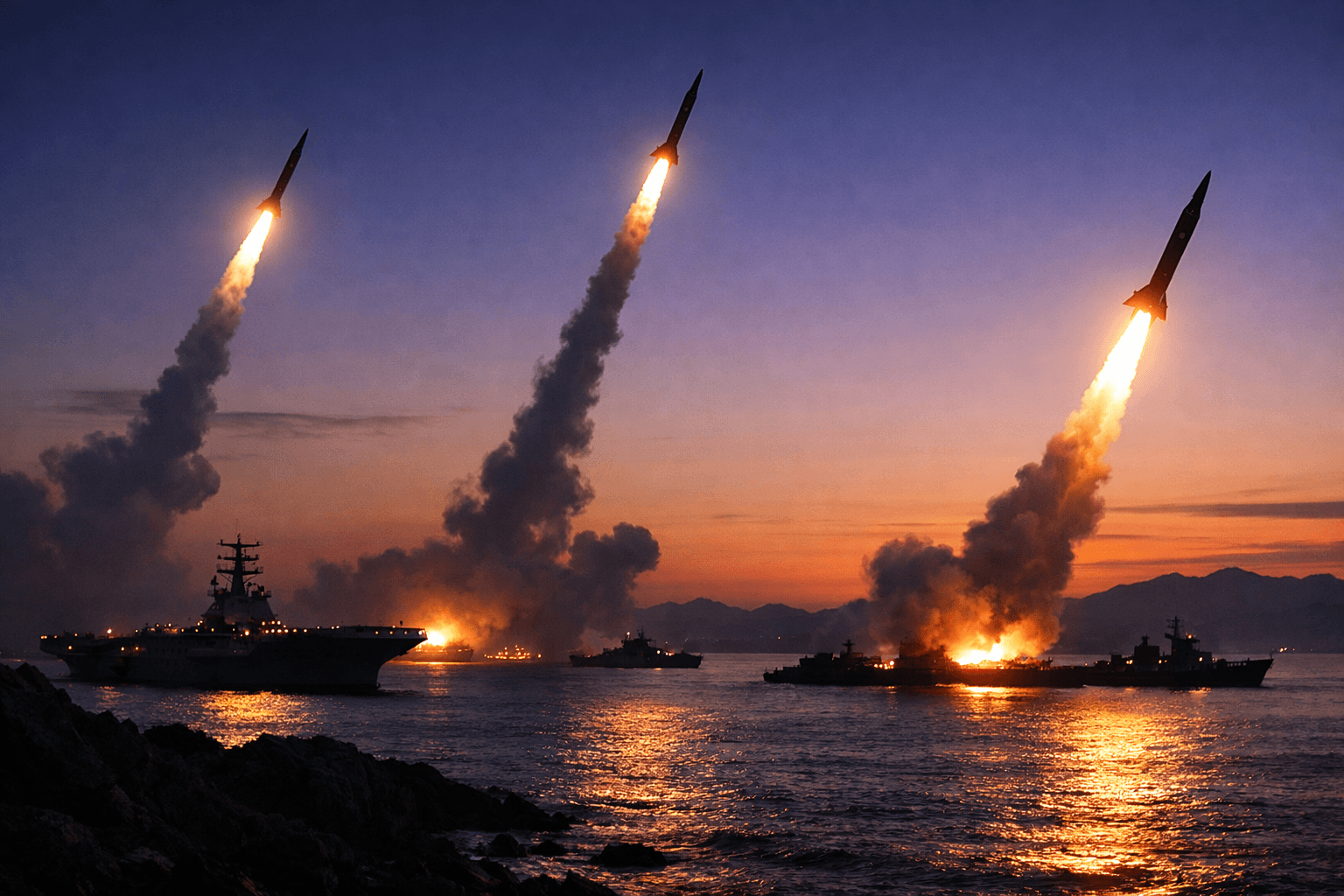
In the gentle gray of a late winter morning, the horizon over West Asia was meant to hold the promise of another ordinary day. Birds would have risen on soft wings, markets would have opened with warm greetings, and life would have carried on, just as it has for decades under skies both weary and hopeful. But that fragile promise was disrupted, when a sequence of explosions echoed across cities like Tehran and beyond, rippling through the everyday rhythms of millions and reminding a vigilant world that peace, once unsettled, can be hard to recapture. On February 28, 2026, a coordinated military operation by the United States and Israel unfolded across Iranian territory, marked by air and missile strikes against strategic sites including military installations, leadership compounds, and what officials described as facilities tied to security concerns. The offensive — described in military terms by its architects as a planned and calibrated action — unleashed consequences that would be felt far beyond the initial flash. Leaders of both nations framed the operation in stark, assertive language, emphasizing strategic goals and perceived threats. Yet for citizens on the ground, the impact was deeply human: scenes of panic, people rushing to stockpile essentials, and the gaze of children—like those struck in a primary school in Minab — frozen in disbelief amid rubble and smoke. � The Guardian + 1 As the day wore on, Tehran responded. The morning’s quiet was replaced by the sound of air-raid sirens and new volleys of missiles and drones launched toward targets in Israel, American military bases in the Gulf, and other regional locations. The retaliatory strikes reflected vows from Iran’s leadership that any attack on Iranian sovereignty would not go unanswered. These actions sparked further alarms across neighboring states, prompting airspace closures and travel disruptions as families and travelers faced uncertainty. � AP News Amid this unfolding crisis, ordinary lives became intertwined with geopolitical telegrams. Markets around the globe whispered about potential disruptions to oil flows, diplomats across continents issued statements of concern, and international bodies called for restraint. Some governments appealed for de-escalation, emphasizing the shared value of civilian safety and the dangers of unchecked conflict. Others expressed support for defensive measures and security imperatives. Yet all of these words sit alongside the poignant image of displaced families and cities that once hummed with life now veiled in fear. � Reuters In these fragile hours, the tangible toll — of lives lost, of homes shaken, of futures interrupted — stands as a reminder that the abstract calculus of strategy has real echoes in the daily lives of people who wish only for fields to bloom and schools to ring with laughter once more.
AI Image Disclaimer (Rotated Wording) “Visuals are created with AI tools and are not real photographs.” Sources (from Source Check above) The Guardian AP News Reuters Financial Times Onmanorama / Reuters coverage
Published by Banx Network. This article is part of the Banx decentralized media programme, powered by the BXE token on the XRP Ledger.