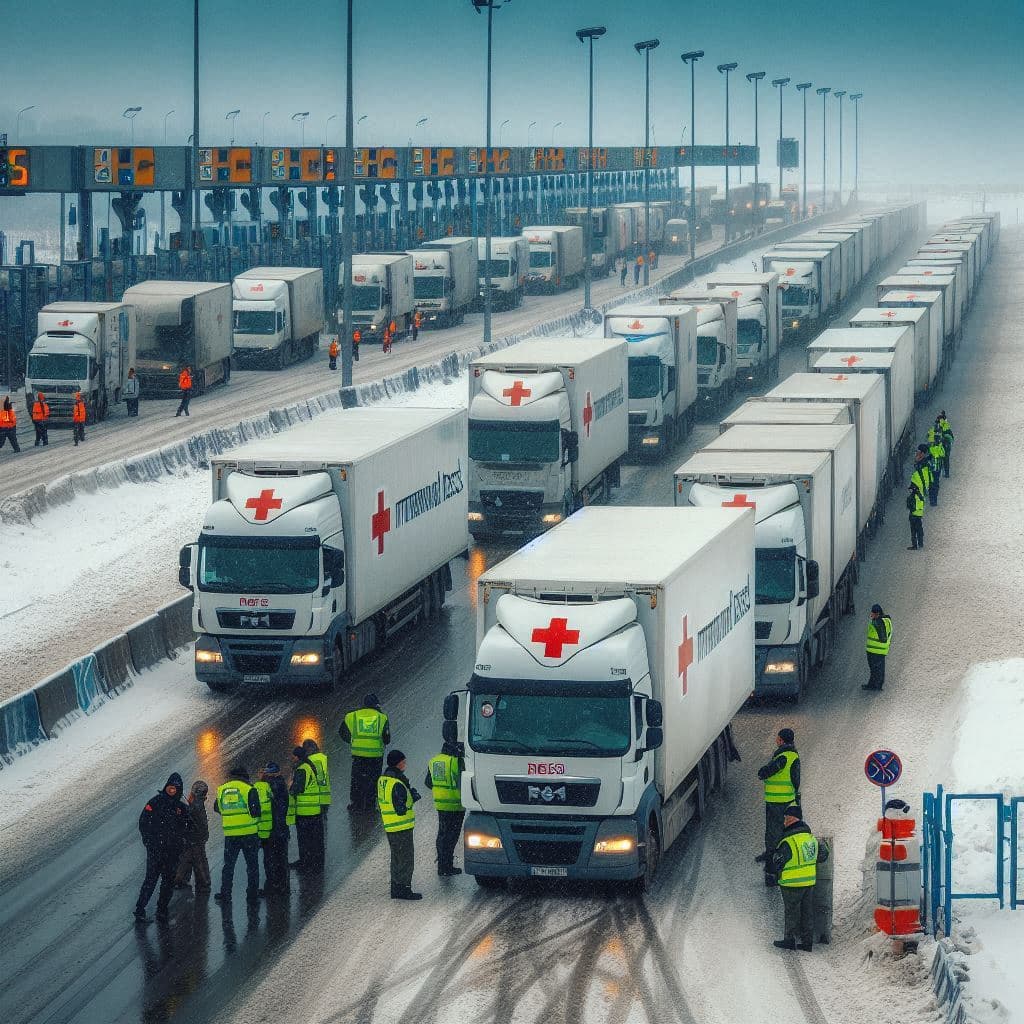
On a winter afternoon that seemed hushed by snow and distance, a solemn procession of refrigerated trucks crossed from where battle lines have long etched the earth. Like shadows drifting between two worlds, they carried the silent weight of a thousand lives once entwined with the cadence of war. For families on both sides of the front, this transfer was not a headline, but a moment etched in memory — a thousand names whispered into the cold air, each tied to a story of home, hope, and loss.
Ukraine announced this week that it has received the bodies of 1,000 soldiers from Russia, part of an ongoing practice between the two countries to return the fallen to their homelands. These exchanges, rare threads of cooperation amid years of conflict that erupted with Russia’s full-scale invasion in February 2022, are bound in an agreement that both sides have invoked at different times since the early months of the war.
According to officials from both Kyiv and Moscow, the procession of remains was accompanied by representatives of the International Red Cross, underscoring the humanitarian dimension that persists in sporadic moments even as the wider war presses on. Ukrainian authorities confirmed the handover and expressed gratitude for the efforts that make such repatriations possible, emphasizing the importance of allowing families to lay their loved ones to rest.
The Russian side, as reported, also received a much smaller number of bodies in return — a detail that once again highlights the asymmetrical nature of these exchanges and the broader, complex human costs of the conflict. Such disparity, while noted in media accounts, speaks less to statistical tallies and more to the uneven and unpredictable terrain of loss that families on both sides must navigate.
Beyond the numbers, these exchanges evoke a delicate interplay between official negotiation and human longing — between what the battlefield dictates and what the heart quietly demands. Each body moved from one land to another represents an effort to piece together fragments of closure in a conflict that often resists resolution.
As the war continues into its fourth year, with diplomatic efforts intermittently kindled and just as often fading, these exchanges stand out as a testament to shared grief. They are reminders that even in the midst of strife, there are moments when the language of dignity and respect prevails over that of discord.
In the latest round, Ukraine welcomed the transfer of remains from Russian authorities, reinforcing a humanitarian practice that, though limited in scope, persists against the broader backdrop of war. Officials on both sides acknowledged the handover on Thursday, noting it as part of the existing agreements to facilitate such returns.
AI Image Disclaimer Illustrations were produced with AI and serve as conceptual depictions.
Source Check — Credible News Outlets Reporting This Event
Al Jazeera Anadolu Agency The Moscow Times Punch Al Arabiya
Published by Banx Network. This article is part of the Banx decentralized media programme, powered by the BXE token on the XRP Ledger.