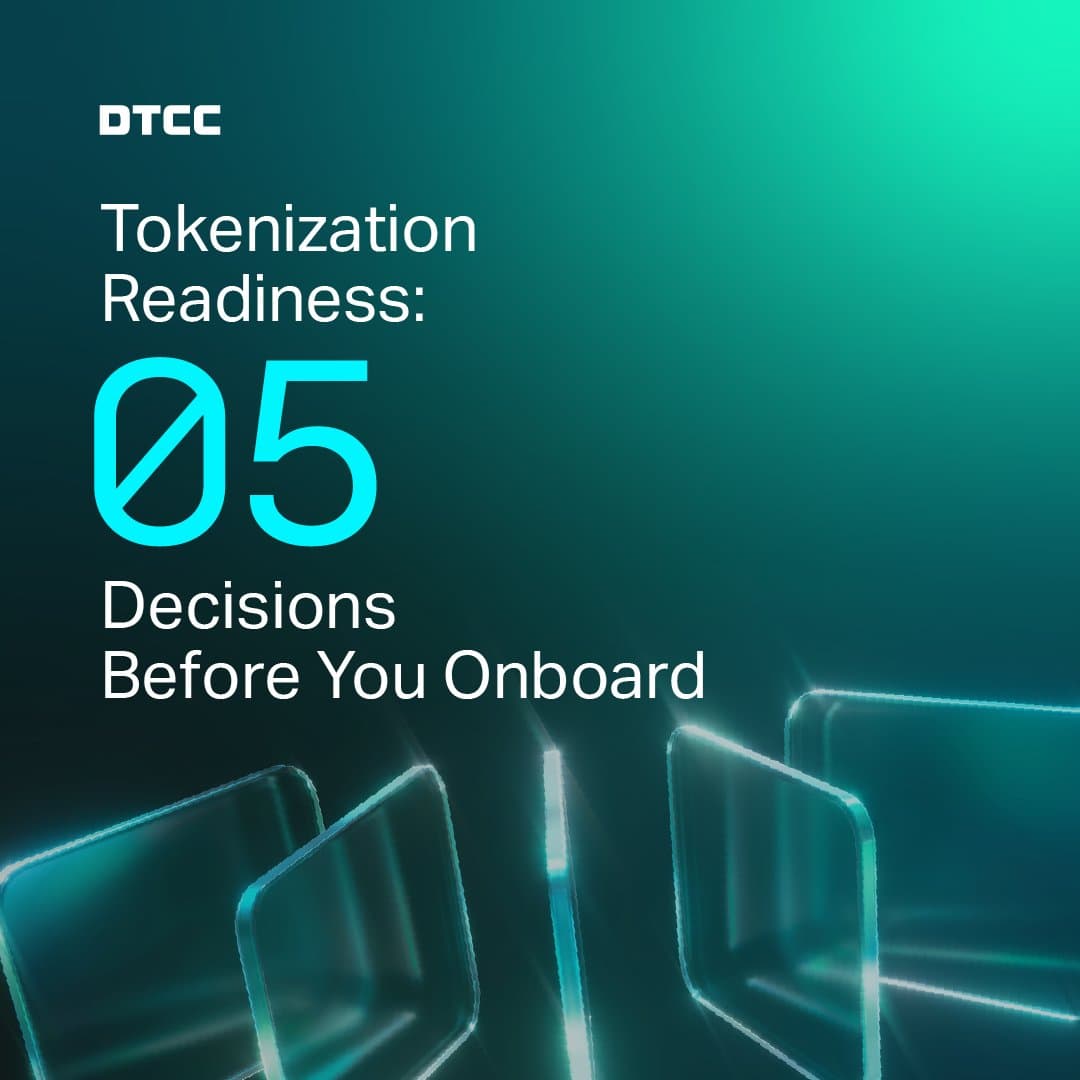
The Depository Trust & Clearing Corporation (DTCC) is highlighting the strategic decisions financial institutions must consider before onboarding a tokenization service, reinforcing the growing importance of institutional readiness as traditional financial markets explore blockchain-based infrastructure. According to the material shared by DTCC, its tokenization readiness guidance focuses on five decisions institutions should address before implementation. The framework emphasizes the importance of establishing clear objectives, evaluating operational requirements, and understanding how tokenization will fit into existing financial systems. Tokenization involves representing financial assets, such as securities and other instruments, as digital tokens on a blockchain or compatible distributed ledger. Depending on the structure, tokenization can potentially improve the transferability of assets, automate certain processes, and support more efficient settlement mechanisms. However, introducing tokenized assets into institutional finance requires more than selecting a blockchain. Financial institutions must determine which assets they intend to tokenize, how ownership records will be maintained, what legal framework will govern transactions, and how the new infrastructure will interact with existing custody and settlement arrangements. Institutions must also consider interoperability. Financial markets operate through interconnected networks of exchanges, clearinghouses, custodians, banks, and payment providers. For tokenization to achieve meaningful adoption, blockchain-based systems must connect effectively with these established participants rather than operate as isolated platforms. Security and governance are equally important. Institutions need clear procedures for managing digital keys, authorizing transactions, responding to operational failures, and protecting customer assets. They must also establish responsibilities for compliance, reporting, and dispute resolution. DTCC's position is particularly significant because of its role in the United States securities market. Its subsidiaries provide critical post-trade infrastructure, including clearing, settlement, custody, and recordkeeping services. Consequently, developments in its tokenization strategy offer an important indication of how established financial market infrastructure is approaching blockchain adoption. The broader implication is that institutional tokenization is moving beyond discussions about whether blockchain technology can support financial assets. Attention is increasingly shifting toward implementation, operational readiness, governance, and the practical requirements for bringing tokenized products into production. Nevertheless, a readiness framework does not automatically mean that every institution will adopt tokenization immediately. Implementation will depend on business objectives, regulatory requirements, technical compatibility, and the commercial benefits of individual projects. For blockchain networks seeking institutional adoption, the opportunity lies in supporting reliable infrastructure that can meet these requirements. Networks must demonstrate security, predictable performance, integration capabilities, and suitability for the assets and transactions they are designed to support. As tokenization initiatives expand, institutions that prepare their systems and operating models could be better positioned to introduce blockchain-based financial products. DTCC's five-decision framework highlights why preparation may become as important as the technology itself.
Published by Banx Network. This article is part of the Banx decentralized media programme, powered by the BXE token on the XRP Ledger.