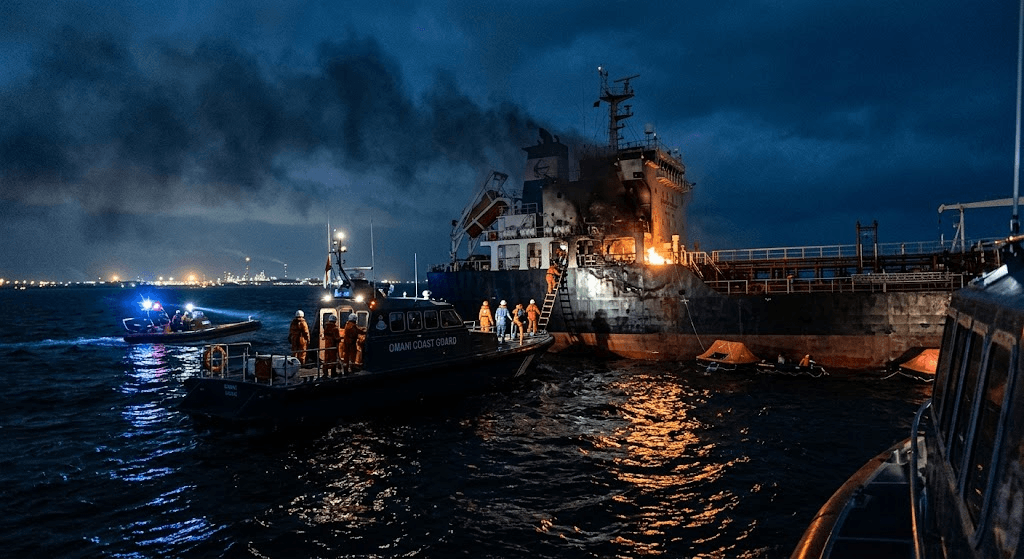
SOHAR, OMAN — A commercial oil tanker transiting off the coast of Oman was struck by an unscrewed aerial vehicle (UAV) in the vicinity of the Sohar anchorage, prompting an emergency search-and-rescue operation and immediate crew evacuation. The attack has renewed sharp concerns regarding maritime security across key Middle Eastern shipping lanes.
The incident was initially monitored by the United Kingdom Maritime Trade Operations (UKMTO), which reclassified the event as an armed drone attack following verification from on-site security reports. The vessel, identified as the MT Petro Dolphin, was struck by a drone carrying an explosive payload while positioned near the critical northern port of Sohar. The impact triggered onboard damage control protocols as local coast guard units moved in to assist.
Local Omani authorities, working alongside regional maritime task forces, deployed emergency vessels to extract crew members from the damaged tanker.
Indian Union Minister of Ports, Shipping and Waterways, Sarbananda Sonowal, confirmed that nine of the eleven Indian crew members aboard were successfully rescued and brought to safety. However, an active search-and-rescue mission remains underway for two missing sailors.
"Nine of our crew members have been successfully rescued and are safe, while two nationals currently remain missing. Search-and-rescue operations are actively underway by the local Coast Guard to safely locate our missing personnel."— Sarbananda Sonowal, Indian Minister of Ports, Shipping and Waterways
Preliminary assessments on structural damage and potential environmental contamination from oil spillage remain ongoing as naval safety teams inspect the hull.
The UKMTO has issued advisory alerts instructing all commercial traffic passing through the Gulf of Oman and adjacent transit corridors to maintain extreme vigilance, implement heightened security measures, and immediately report any suspicious aerial or surface activity. Investigations into the origin of the drone strike remain active.
As geopolitical tension and regional naval activity remain heightened, industry analysts warn that continued disruptions along these vital trade channels could lead to increased maritime insurance premiums and delayed cargo deliveries across global energy supply chains. Consequently, international naval forces have stepped up aerial surveillance and sea patrols around the Strait of Hormuz and the Gulf of Oman to safeguard commercial vessels and ensure uninterrupted passage through these essential transit lanes.
Published by Banx Network. This article is part of the Banx decentralized media programme, powered by the BXE token on the XRP Ledger.