

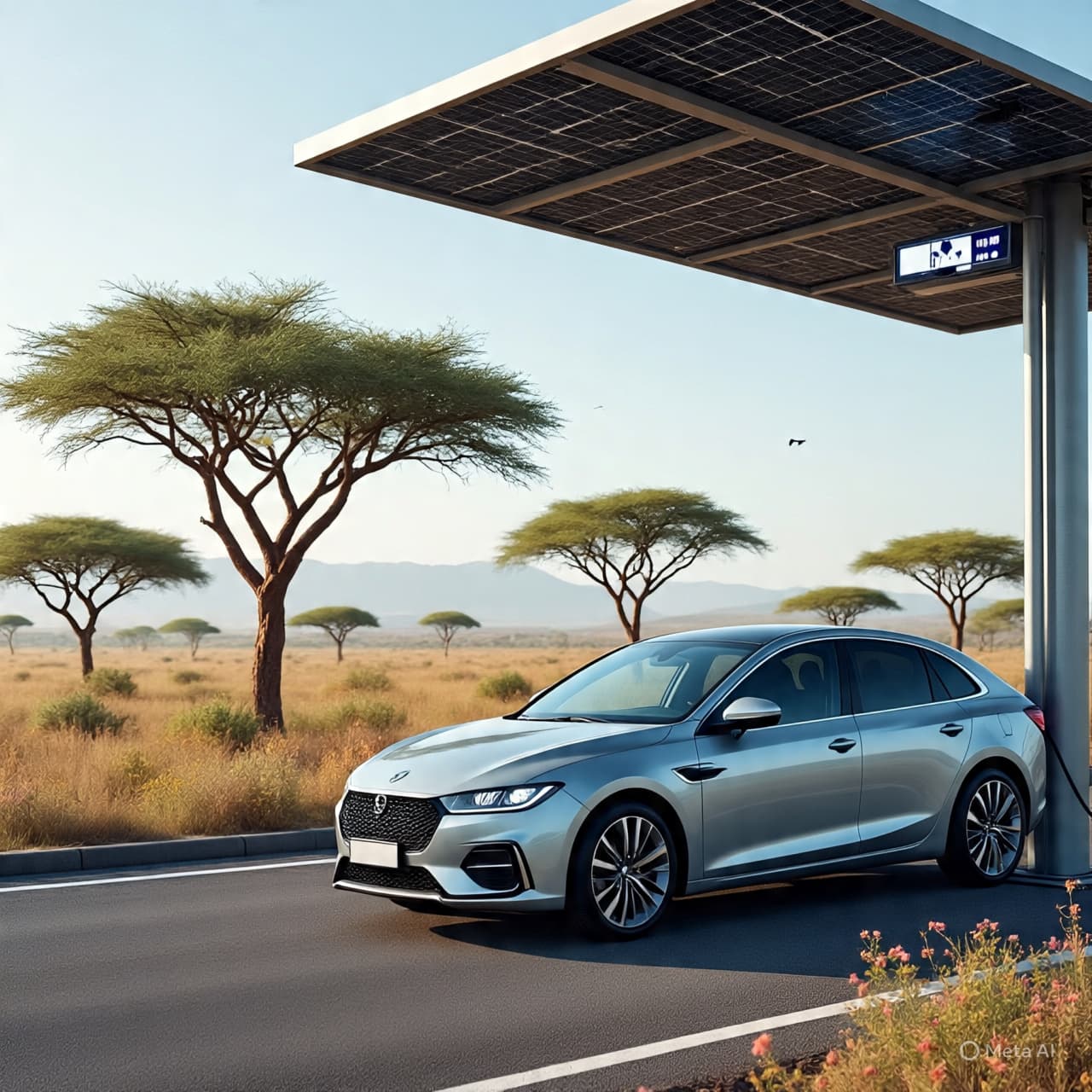
Key Highlights
- Electric vehicles (EVs) are becoming more viable in Africa as costs decrease.
- Research indicates total cost of ownership for EVs may soon be lower than petrol cars.
- Financing barriers remain a significant challenge for widespread EV adoption.
The dawn of a new era in transportation is on the horizon for Africa, where the familiar sound of petrol engines may soon be accompanied by the quieter hum of electric vehicles (EVs). As the continent grapples with the challenges of climate change and urbanization, the transition to cleaner transport solutions is not just a possibility but an emerging reality. The promise of EVs, powered by renewable energy sources like solar, offers a glimpse into a sustainable future where mobility is both affordable and environmentally friendly.
Historically, the adoption of electric vehicles in Africa has been hindered by several factors, including high initial costs and a lack of charging infrastructure. Many potential buyers have been deterred by the price tag associated with EVs, which often exceeds that of traditional petrol-powered vehicles. Furthermore, the absence of a robust network of charging stations has made it difficult for consumers to consider EVs as a practical option for daily use. In many regions, access to affordable financing has also been limited, creating additional barriers to entry for prospective EV owners.
However, recent research conducted across 52 African nations suggests a significant shift in this narrative. When evaluating the total cost of ownership—which encompasses purchase price, fuel or electricity expenses, maintenance, and charging—battery electric vehicles are projected to become more cost-effective than their petrol and diesel counterparts. This trend is particularly promising when considering the potential for off-grid solar systems, which can leverage Africa's abundant sunlight to power these vehicles. The findings indicate that the transition to electric mobility could occur much sooner than previously anticipated, potentially before 2040, as advancements in battery technology and production efficiencies continue to evolve.
The crux of this transformation lies not solely in the technology itself but in the financial mechanisms that support it. In many African countries, high interest rates and risk premiums have historically inflated the cost of borrowing, making even relatively affordable vehicles out of reach for many households. By addressing these financing barriers—potentially through public-private partnerships, government de-risking initiatives, and improved access to credit—the economic landscape for electric mobility could shift dramatically.
In markets like South Africa, where financing conditions are beginning to align more closely with global standards, electric vehicles are already nearing cost parity with traditional petrol cars. Insights from consumer interviews and economic modeling suggest that integrating electric vehicles with solar energy systems and vehicle-to-grid (V2G) technologies could transform EVs into valuable energy assets. This integration not only facilitates transportation but also provides households with a means to reduce their overall energy costs.
Despite the promising outlook, challenges remain. The current infrastructure for public charging stations is limited, and financing gaps continue to pose significant hurdles. Additionally, the reliability of the electrical grid varies across the continent, complicating the transition to electric mobility. These obstacles highlight that the journey toward sustainable transport is not solely about the vehicles themselves but also about the broader systems that support their adoption.
As research and policy initiatives continue to evolve, the road ahead for electric vehicles in Africa appears increasingly promising. With the right investments and innovations, electric mobility could soon transition from a hopeful aspiration to a tangible reality for millions of drivers, marking a pivotal moment in the continent's transportation narrative.
Published by Banx Network. This article is part of the Banx decentralized media programme, powered by the BXE token on the XRP Ledger.




