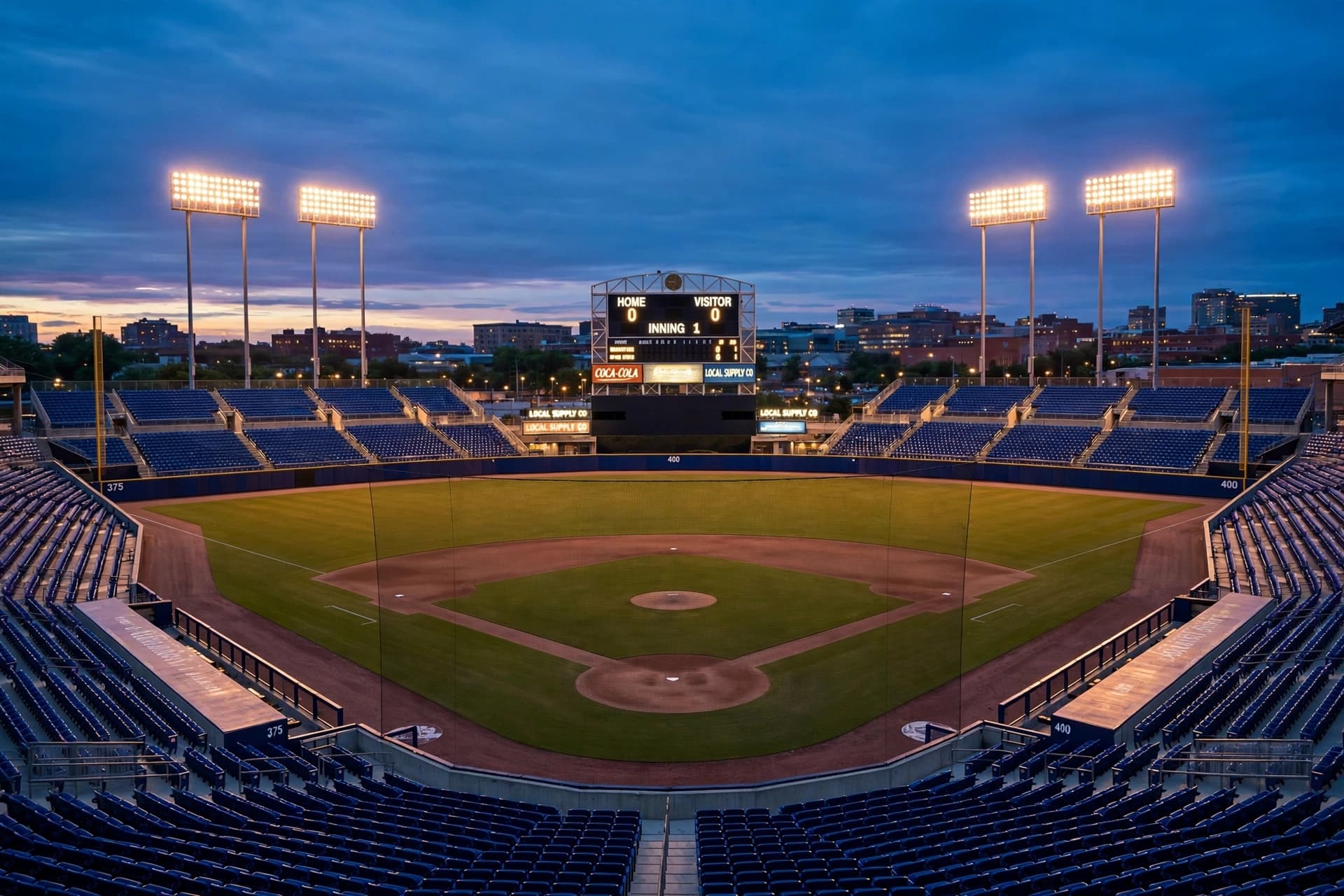
In Los Angeles, where the light falls golden on Chavez Ravine and the ghosts of October past seem always near, there was a different kind of evening this week. The scoreboard told a story that the Dodgers and their fans had not expected to read: a season that began with dreams of a third consecutive World Series title ended not with celebration but with a quiet, orderly exit, the Brewers celebrating on the visitors' side of the field while the home clubhouse sat in solemn reflection .
The sweep was complete and emphatic. Milwaukee outscored Los Angeles 21-9 across four games, out-homered them 7-1, and never allowed the Dodgers to find the rhythm that had carried them to back-to-back championships . Game 4 ended 6-4, but the final score flattered the home team; the Brewers led for most of the series and answered every moment of Dodgers momentum with a counterpunch of their own . When Jackson Chourio caught the final out in left field, the Brewers had earned their first World Series appearance since 1982, and the Dodgers were left to contemplate what went wrong .
The offensive numbers tell part of the story. The Dodgers combined to hit 5-for-43 with runners in scoring position during the NLCS, a futility that manager Dave Roberts acknowledged with characteristic directness: "We got outplayed in all facets" . Shohei Ohtani, battling right biceps and left knee injuries, produced a dramatic three-run home run in Game 4—his first since August 18—but it proved to be a brief flicker rather than a turning point . The rotation, which had been the Dodgers' presumed advantage, allowed thirteen earned runs in eighteen innings, a 6.50 ERA that gave the offense little margin for error .
There is a temptation, in moments like this, to speak of dynasties ending. But the word may be premature. The Dodgers won championships in 2024 and 2025; their core remains largely intact; their financial resources remain unmatched. Freddie Freeman, Mookie Betts, and Ohtani are all under contract. What the series exposed was not a lack of talent but a set of vulnerabilities that had been present all along—an older roster, a bullpen that had been volatile in previous postseasons, and the physical toll of three consecutive deep October runs . "The train finally ran out of steam, I guess," Max Muncy said, and there was no self-pity in the observation, only the recognition of a limit that every athlete eventually meets .
For Milwaukee, the victory carries a different weight. The Brewers' payroll of approximately $144.5 million is a fraction of the Dodgers' estimated $522.7 million, and their triumph is a reminder that baseball, for all its economic inequalities, remains a game played by humans on a field where money cannot guarantee a hit with runners in scoring position . Manager Pat Murphy put it simply: "They may have a bunch of Hall of Famers, but we have a bunch of gamers. And the gamers won this week" . It is the kind of quote that will be remembered in Milwaukee for years.
The offseason ahead brings its own uncertainties. The collective bargaining agreement expires on December 1, and the owners have proposed a salary cap that the players' union views as a non-starter . A lockout threatens to disrupt the sport's calendar and cast a shadow over whatever momentum the Brewers' run has generated. For the Dodgers, there are questions about roster construction, about how to manage an aging core, about whether the deference granted to Ohtani's ambitions needs reassessment . Miguel Rojas announced his retirement in the quiet of the clubhouse afterward, a reminder that even in a game of continuity, endings come for everyone .
The Dodgers will not disappear. They will spend, they will contend, they will likely return to October in the years ahead. But the three-peat that once seemed so plausible—the first by a National League team in history—will not happen, and the finality of that fact settles slowly . In the end, the 2026 Dodgers were beaten by a team that was simply better in the moments that mattered. There is no shame in that, only the particular ache of a season that ended sooner than anyone in Los Angeles had imagined.
The visuals accompanying this article are AI-generated and serve illustrative purposes only.
Sources: The New York Times, MLB.com, Los Angeles Times, ESPN, The Washington Post
Published by Banx Network. This article is part of the Banx decentralized media programme, powered by the BXE token on the XRP Ledger.