There is a profound silence in the rock layers of North Dakota, a stillness that has held secrets for sixty-six million years. Yet, within this quiet stone, a story of movement and presence has recently emerged. For the first time, scientists have identified a trackway made by an adult Tyrannosaurus rex, offering a rare glimpse into the physical journey of this iconic predator. Unlike bones, which tell us about structure and death, footprints speak of life, of weight shifting, of steps taken in the mud of a long-vanished world. This discovery invites us to walk alongside the giant, if only in our imagination.
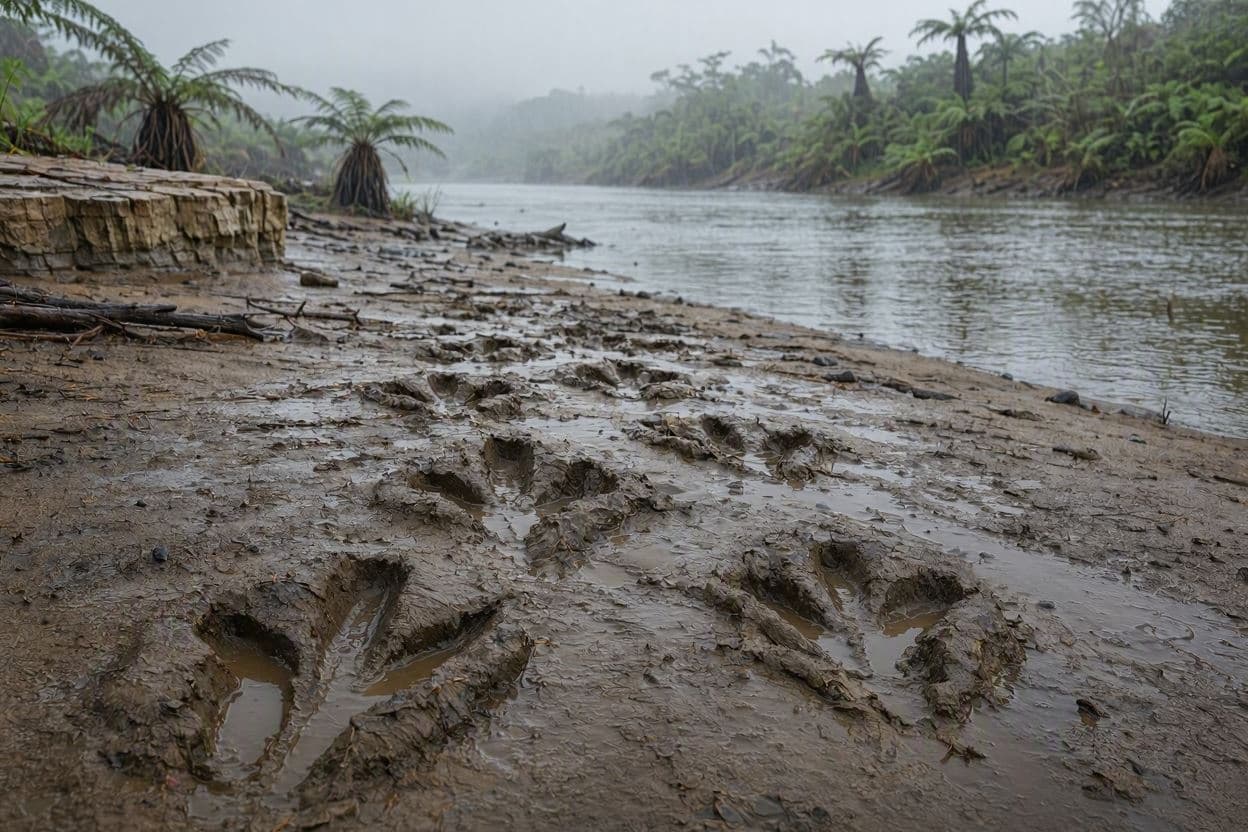
The trackway, discovered in the Hell Creek Formation, consists of a series of deep impressions left in the sedimentary rock. These prints are distinct in their size and shape, matching the known anatomy of an adult T. rex. The depth of the impressions suggests a heavy, powerful animal moving with purpose. Unlike juvenile tracks, which have been found before, these prints convey the sheer mass and authority of a fully grown tyrant lizard. The spacing between the steps provides clues about its gait, suggesting a steady, confident stride rather than a hurried run.
This finding is significant because trace fossils like footprints are far rarer than body fossils. Bones can be transported by water and deposited far from where the animal lived, but footprints are created in situ, exactly where the animal walked. This provides precise contextual information about the environment and behavior of the T. rex. The location of the trackway suggests that these predators roamed the floodplains and riverbanks of ancient North America, navigating a landscape rich with prey and vegetation.
The preservation of these tracks is a testament to the specific geological conditions of the area. The mud must have been firm enough to hold the shape of the foot yet soft enough to register the detail. Over millennia, this mud hardened into rock, preserving the moment of contact between flesh and earth. Studying these prints allows scientists to reconstruct the biomechanics of the T. rex, understanding how it balanced its massive head and tail while moving. It adds a dynamic dimension to our static knowledge of its skeleton.
Moreover, the discovery of an adult trackway helps fill gaps in our understanding of T. rex growth and development. By comparing these adult prints with previously found juvenile tracks, researchers can map out changes in locomotion as the animal matured. Did juveniles move differently? Were they more agile? The adult trackway suggests a creature that had settled into its power, moving with an efficiency born of experience and size. This comparative analysis enriches our picture of the T. rex life cycle.
The emotional impact of standing near these ancient footsteps should not be underestimated. They serve as a tangible link to the past, a physical reminder that these creatures were real, breathing entities that occupied space and time. They walked the same earth we do, though separated by eons. This connection fosters a sense of humility and wonder, reminding us of the transient nature of all life and the enduring legacy left in the stone.
As excavation and analysis continue, more details may emerge. Perhaps associated plant fossils or other animal tracks will provide a broader ecological context. Was the T. rex hunting? Migrating? Resting? Each new piece of data adds color to the black-and-white sketch of prehistory. The North Dakota trackway is not just a scientific datum; it is a narrative fragment, inviting us to piece together the story of a day in the life of a dinosaur.
The discovery of the first known adult T. rex trackway in North Dakota marks a pivotal moment in paleontology. It transforms the tyrant lizard from a skeletal abstraction into a walking, breathing presence. As we study these ancient steps, we gain not only scientific insight but also a deeper appreciation for the vibrant, dynamic world that existed long before our own.
AI Image Disclaimer: Visuals associated with this article are AI-generated representations intended to visualize the historical context and should not be considered photographic evidence.
Sources: Scientific Reports National Geographic University of Kansas Biodiversity Institute BBC Science
Published by Banx Network. This article is part of the Banx decentralized media programme, powered by the BXE token on the XRP Ledger.