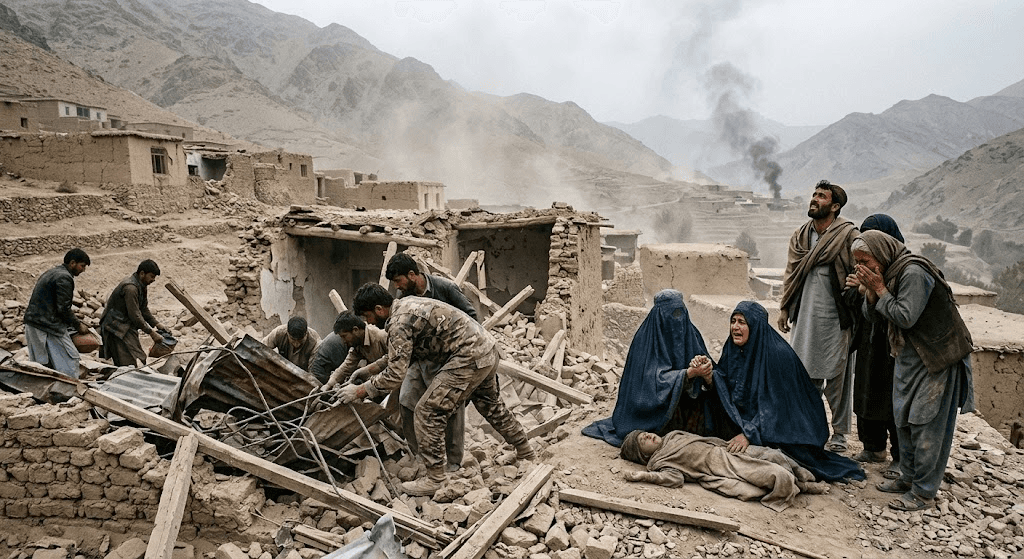
AFGHANISTAN - A series of overnight Pakistani airstrikes targeted residential areas across multiple provinces in Afghanistan, killing at least nine civilians—including women and children—and injuring 11 others, according to Taliban government officials. The bombardments heavily damaged several family homes, marking a dramatic escalation in cross-border tensions between the two neighboring nations.
The aerial attacks struck civilian residences in the Chugam and Shultan districts of eastern Kunar province, as well as the Safar and Garmser districts in southern Helmand province. Local residents reported being awakened by violent explosions as missiles leveled three residential structures. Taliban chief spokesperson Zabihullah Mujahid strongly condemned the strikes, describing the operation as a blatant act of aggression and a violation of international principles.
While Afghan authorities reported civilian casualties and destruction of private property, Pakistan’s Ministry of Information presented a starkly different account, asserting that the operation was a targeted strike against militant hideouts. Islamabad claimed that its air forces killed at least 22 fighters affiliated with anti-Pakistan militant groups and destroyed significant caches of weapons and ammunition.
The strikes follow weeks of mounting friction along the Durand Line, fueled by a recent surge in militant attacks inside Pakistan. Pakistani authorities have repeatedly accused Kabul of harboring armed groups operating along the frontier—allegations that the Taliban leadership continues to deny.
Humanitarian organizations and international observers have expressed serious concern over the rising toll on non-combatants in the border regions. Local search and rescue teams in Kunar and Helmand spent hours digging through the rubble of destroyed homes to recover victims and transport the wounded to regional medical centers.
As military activity intensifies along the border, analysts warn that repeated cross-border bombardments threaten to paralyze diplomatic channels and trigger broader conflict, leaving civilian communities caught directly in the crossfire.
In response to the escalation, international diplomats and regional peacekeeping bodies have called for immediate restraint, urging both nations to open direct channels of communication to prevent a wider conflict. UN officials warned that continued military action near populated border zones risks provoking a severe humanitarian emergency, as displaced families begin fleeing affected villages in search of safety.
Published by Banx Network. This article is part of the Banx decentralized media programme, powered by the BXE token on the XRP Ledger.