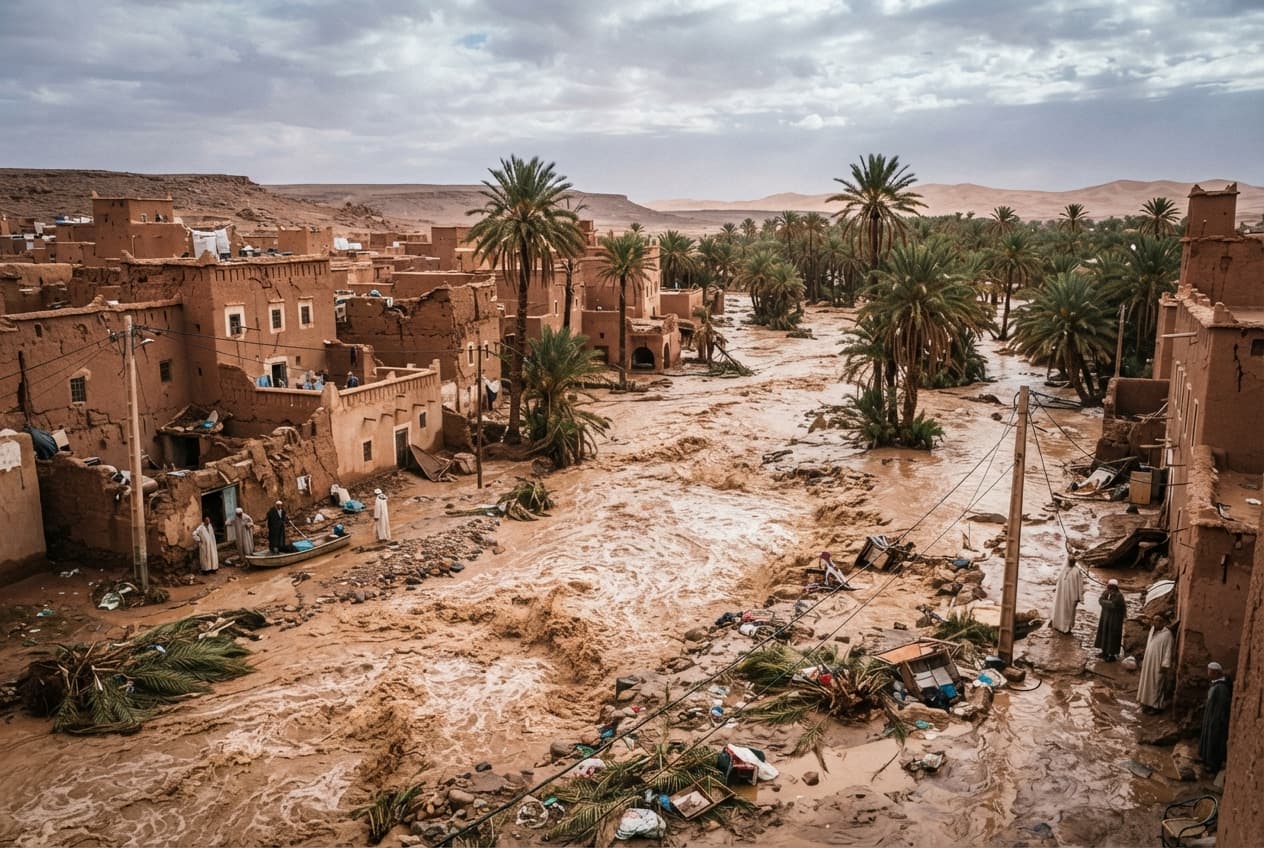
Algiers, Algeria—Unusual seasonal downpours triggered violent flash floods across southern desert oasis towns on Friday, transforming dry wadis into raging torrents. The sudden precipitation overwhelmed ancient drainage paths and protective earthen dikes surrounding vulnerable palm groves and residential quarters. Local civil protection authorities confirmed that three residents died after being swept away by fast-moving mud currents that engulfed local streets. Emergency dispatch lines logged hundreds of distress calls as water levels rose rapidly inside mud-brick residential compounds. Rescue squads deployed specialized all-terrain vehicles to reach neighborhoods cut off by deep standing water and heavy silt deposits.
Municipal utility crews worked urgently to shut off electrical substations threatened by rising inundation levels to prevent widespread short circuits. Desert transport corridors suffered significant disruption as asphalt roadways cracked and washed out under intense hydraulic pressure from surrounding dunes. Local health clinics treated dozens of individuals for minor injuries, exhaustion, and acute shock sustained during the sudden deluge. Regional governors coordinated with national disaster response agencies to dispatch heavy pumping equipment and clean water tankers to the affected towns. Agricultural cooperatives reported severe damage to date palm plantations as stagnant floodwaters pooled across low-lying farming tracts.
Relief logistics teams established distribution centers inside local administrative buildings to supply blankets and food rations to displaced families. Environmental engineering units surveyed damaged infrastructure to assess the structural integrity of historical water management channels. Residents gathered in elevated public plazas, watching anxiously as emergency teams cleared debris blocking municipal drainage culverts. National meteorological services noted that arid regional climates frequently intensify runoff impacts when rare high-volume storms occur. Federal disaster administrators pledged emergency reconstruction funds to repair damaged housing and restore baseline municipal services.
Pumping operations continued late into the evening to clear trapped water from residential basements and commercial storefronts. Heavy transport routes reopened to restricted single-lane traffic as road repair crews laid temporary gravel stabilization blankets. Local authorities maintained public safety advisories cautioning citizens against approaching swollen wadi channels and damaged infrastructure lines. Medical monitoring teams distributed preventative sanitation supplies to prevent waterborne contamination across densely populated neighborhoods. Emergency management committees remained stationed at regional command centers to monitor shifting radar advisories across the Sahara margin.
Published by Banx Network. This article is part of the Banx decentralized media programme, powered by the BXE token on the XRP Ledger.