Key Highlights
- Epstein's death ruled a suicide by hanging in August 2019.
- Forensic pathologist Dr. Michael Baden argues evidence suggests homicide.
- Ongoing public debate fueled by discrepancies in the investigation.
The death of Jeffrey Epstein, a controversial figure whose life was marked by secrecy and powerful connections, has continued to spark debate since it was ruled a suicide by hanging in August 2019. The New York City medical examiner's office concluded that Epstein took his own life in a federal jail cell, but many—including Epstein's brother—have questioned this finding. The photographs and forensic evidence surrounding his death have become focal points in the ongoing discourse.
Dr. Michael Baden, a forensic pathologist who observed Epstein's autopsy on behalf of the family, has publicly stated that his analysis of the autopsy photos indicates the possibility of homicide rather than suicide. Baden, who has a long history of involvement in high-profile forensic cases, claims that the injuries observed on Epstein's neck, particularly fractures to the hyoid bone and thyroid cartilage, are more consistent with strangulation than hanging. He has noted that the furrow on Epstein's neck is indicative of strangulation from behind, a detail he believes is crucial to understanding the circumstances of Epstein's death.
Baden's assertions are not new; he first expressed doubts about the official ruling in a 2020 interview with "60 Minutes." However, recent discussions have brought renewed attention to his analysis, which includes images from the autopsy that he argues support his claims. Compounding the mystery, Baden has pointed out that the guards assigned to monitor Epstein failed to check on him for approximately eight hours before he was discovered, despite official records indicating that checks were supposed to occur every thirty minutes. Furthermore, he has criticized the preservation of the scene, stating that it was not handled properly, complicating any future investigations.
Despite Baden's claims, the official stance remains unchanged. The New York City medical examiner's office continues to assert that Epstein's death was a suicide, and federal investigations have upheld this conclusion. Baden's role was limited to that of an observer hired by Epstein's family, and his conclusions have faced skepticism from other forensic experts. No legal authority has adopted his perspective, and the photographs he analyzed do not constitute new evidence in a legal sense.
The enduring interest in Epstein's death transcends the legal questions surrounding it. His life was characterized by a web of secrecy and connections to influential individuals, and his death in custody—marked by malfunctioning cameras and lapses in guard duties—has only fueled speculation. Baden's analysis has provided a vocabulary for the suspicions that existed prior to any forensic examination, framing the discussion in technical terms that invite further scrutiny.
The distinction between forensic opinion and legal verdict is critical in this case. Baden's analysis represents one expert's interpretation of the available evidence, but it does not alter the official ruling. The Justice Department previously investigated Epstein's death and found no evidence of foul play, and the medical examiner's office has consistently supported its conclusion. These facts anchor the official narrative.
However, for those who have followed Epstein's case closely, the questions raised by Baden are not easily dismissed. The fractures, the neck furrow, the missed checks, and the malfunctioning cameras all contribute to a narrative that invites further inquiry rather than resolution. Baden has suggested that the evidence was manipulated to appear as a suicide, a claim that adds another layer of complexity to the ongoing debate.
As the discourse surrounding Jeffrey Epstein's death continues, it is clear that the official finding of suicide and the forensic pathologist's claims of homicide coexist without reconciling the tension between them. The photographs and records remain, serving as a testament to the unresolved questions that linger in the public consciousness.
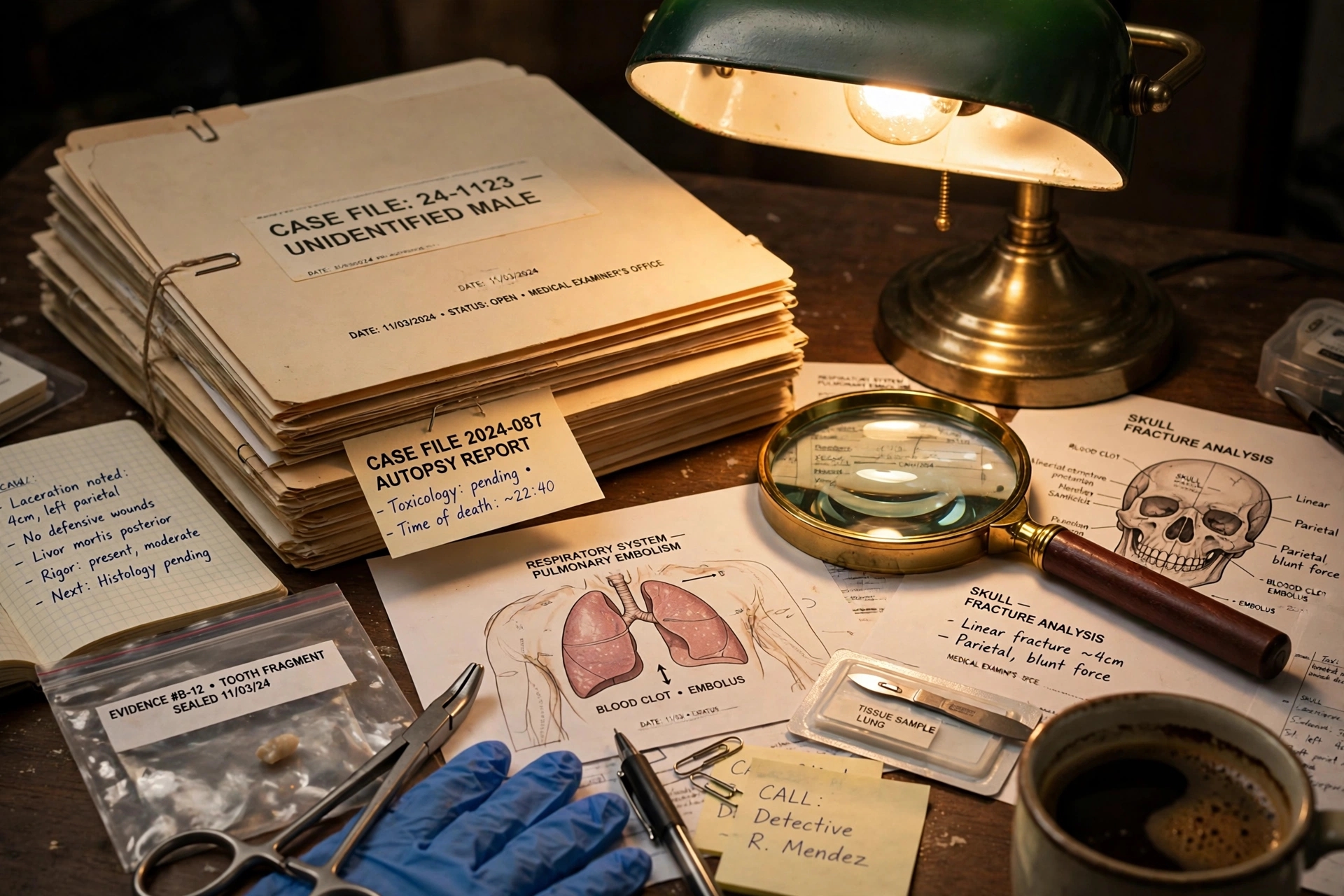
AI Image Disclaimer: The visuals associated with this article are generated by artificial intelligence and are not actual photographs from the autopsy or related materials.
Published by Banx Network. This article is part of the Banx decentralized media programme, powered by the BXE token on the XRP Ledger.