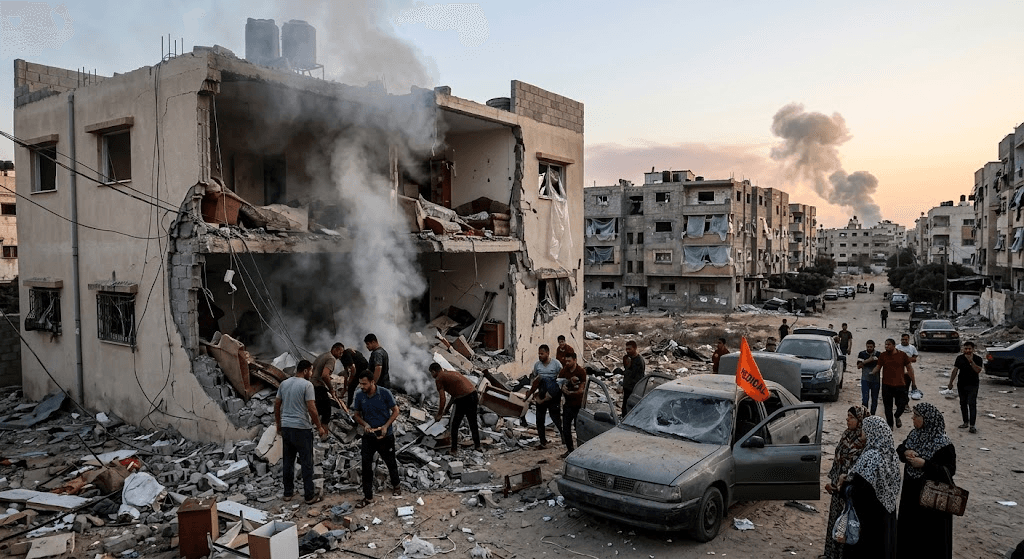
GAZA CITY, GAZA STRIP — Fresh Israeli military strikes across the Gaza Strip have killed at least three Palestinians and wounded several others.
The latest casualties come amid fragile security conditions as health officials and emergency teams report hits on multiple residential and urban target areas across the enclave.
According to local medical personnel and hospital officials, emergency teams scrambled to transport victims following sudden artillery and aerial bombardments.
At least three individuals were pronounced dead upon arrival at local medical facilities, while several wounded civilians—including some in critical condition—received emergency care for shrapnel injuries and blast trauma. Structural damage was reported near residential zones, sending shockwaves through surrounding neighborhoods as rescue crews searched for survivors trapped under debris.
"The explosions were deafening and occurred without warning," reported local paramedics operating on the ground. "We are operating at maximum capacity to triage the incoming wounded."
The Israeli military maintains that its operational targets focus on militant infrastructure and operational threat points. However, local human rights groups and health authorities continue to emphasize the severe toll on local populations and civilian infrastructure across the Strip.
International diplomats and humanitarian organizations continue to call for an immediate reduction in hostilities to prevent further loss of life and to secure stable aid access across the territory.
The renewed bombardment further exacerbates a deteriorating humanitarian crisis across Gaza, where local medical facilities are facing critical shortages of basic medical supplies, fuel, and clean water. Hospital administrators have warned that the influx of severe blast injuries is overwhelming already exhausted trauma wards, leaving healthcare workers struggling to treat critical patients.
With ceasefire discussions remaining stalled, community leaders and relief agencies warn that continued exchanges will displace more civilian families and worsen the ongoing aid bottleneck. International observers stress that without sustained pause in conflict and guaranteed safe corridors, delivering essential relief items to affected neighborhoods will remain extremely dangerous for frontline workers.
Published by Banx Network. This article is part of the Banx decentralized media programme, powered by the BXE token on the XRP Ledger.