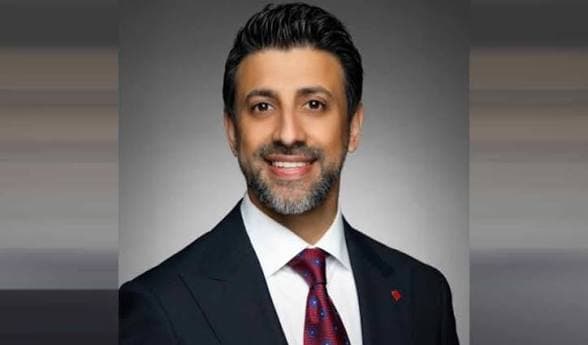
Davos is famous for grand speeches. In 2026, it became a place for clear positioning. Brad Garlinghouse, CEO of Ripple, used the World Economic Forum not for vague future visions, but for a strategic statement: European regulation is not a brake on innovation—it is the operating system of the next financial era.
Garlinghouse did not appear as a techno-evangelist. He spoke like the CEO of a company that has already shifted its growth axis.
Europe as the Regulatory Anchor Referring to MiCA, Garlinghouse described Europe’s role in unusually pragmatic terms. While other regions are still debating definitions, Europe has delivered something rare: a functional framework.
MiCA, in his framing, is not a political compromise but market infrastructure. For Ripple, this changes Europe’s role fundamentally—from a regional market to the regulatory foundation for global expansion. In Davos language: less ideology, more execution.
RLUSD, the Euro, and Institutional Reality Garlinghouse was particularly explicit on stablecoins. Ripple’s RLUSD is positioned as a “compliance-first” product—a phrase that resonates strongly in Davos corridors.
According to Garlinghouse, European banks are not chasing speculative upside. They are searching for regulated, stable bridges between euro liquidity and digital assets. In this context, stablecoins are not seen as a threat to the banking system, but as its logical extension. Less Wild West, more high-speed rail.
A Transatlantic Contrast Speaking at the margins of the “Ripple House,” Garlinghouse drew a sharp contrast with the United States. While central bankers and policymakers in Davos discuss efficiency, settlement, and interoperability, innovation in the U.S. is still being shaped through court rulings.
The subtext is unmistakable: legal uncertainty does not create safety—it creates paralysis. From Ripple’s perspective, Europe offers what markets need to mature: predictability. And in institutional finance, predictability is more valuable than any visionary white paper.
XRP Ledger and Real-World Assets On the technology side, Garlinghouse struck a notably grounded tone. The focus of the XRP Ledger is shifting away from speculative narratives toward tangible utility. Tokenization of real-world assets—particularly European sovereign bonds—is no longer theoretical, but part of active discussions.
Davos 2026 marks less a breakthrough than a change in mindset. Skepticism has given way to questions of efficiency. The debate is no longer “if,” but “how fast.”
Central Banks, CBDCs, and the Highway Metaphor Perhaps most strategic was Garlinghouse’s positioning of Ripple in relation to central banks. Ripple, he emphasized, is not building competitors to central bank digital currencies. It is building the infrastructure on which they can operate interoperably.
The highway metaphor is more than marketing language. It describes an architecture where sovereign money, banks, and tokenized assets scale together rather than in isolation. Interoperability emerged in Davos 2026 as the key concept—suggesting that fragmented systems are finally being recognized for what they are: inefficient.
Takeaway Garlinghouse used Davos 2026 not to explain crypto, but to reposition Ripple. The company presented itself as mature, regulation-ready, and institutionally aligned. The implicit message was clear: while the U.S. remains stuck in regulatory ambiguity, Ripple is already operational in Europe.
Davos thrives on big visions. In 2026, Ripple brought something more unusual—a roadmap, with Europe firmly at the center.
Published by Banx Network. This article is part of the Banx decentralized media programme, powered by the BXE token on the XRP Ledger.