At the heart of our Milky Way lies a monster, a supermassive black hole known as Sagittarius A*. Around it, stars dance in tight, rapid orbits, subjected to gravitational forces unlike any other in the galaxy. One such star, S2, has become a cosmic laboratory, testing the predictions of Einstein’s general theory of relativity in extreme conditions. Its journey offers a profound validation of our understanding of gravity, reminding us that even the most abstract theories can be proven by the movements of distant suns.
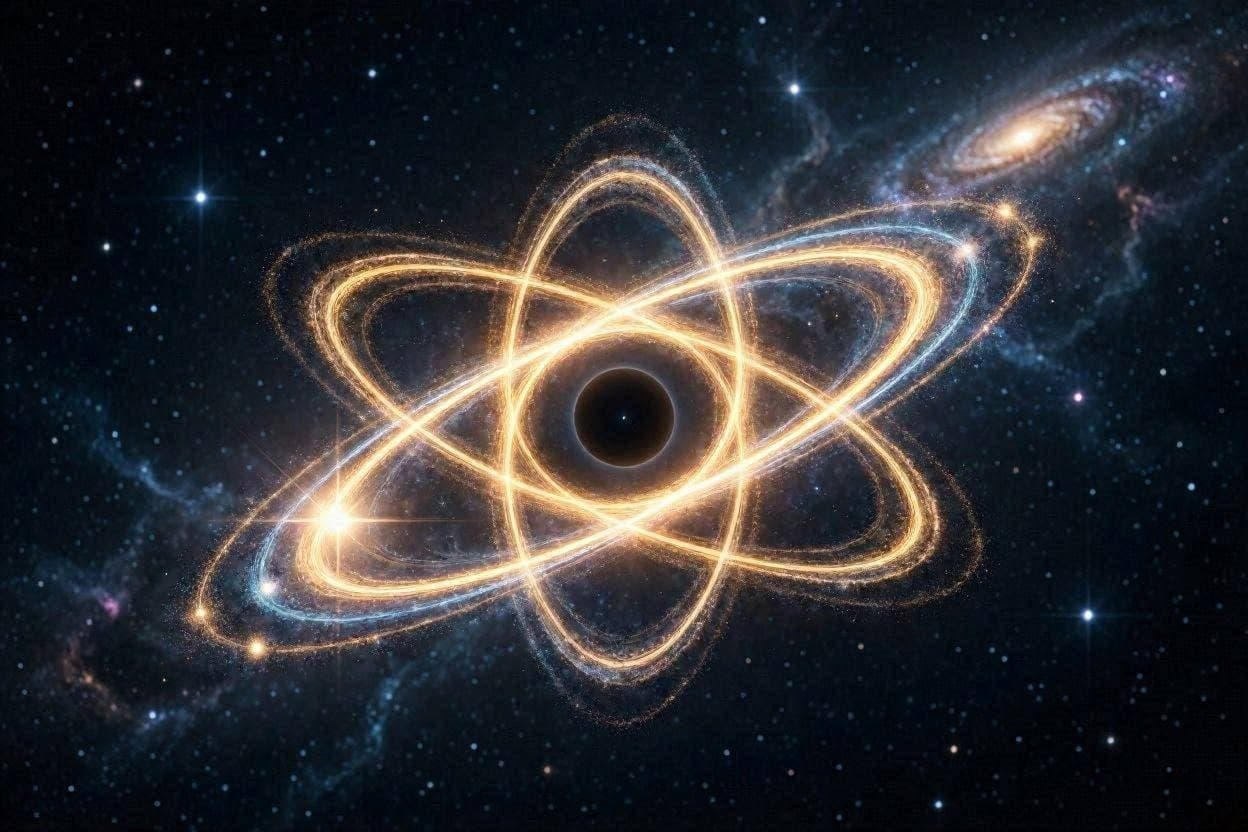
S2 is a bright, young star that completes an orbit around Sagittarius A* every 16 years. At its closest approach, it comes within just 17 light-hours of the black hole, moving at speeds of up to 7,650 kilometers per second. This proximity allows astronomers to observe effects that are negligible in weaker gravitational fields, such as the precession of its orbit. Instead of a fixed ellipse, S2’s path traces a rosette shape, shifting slightly with each turn.
This phenomenon, known as Schwarzschild precession, was predicted by Einstein over a century ago. Recent observations using the Very Large Telescope (VLT) in Chile have confirmed that S2’s orbit matches these predictions with remarkable precision. The data, collected over nearly three decades, provides the strongest test yet of general relativity in the vicinity of a supermassive black hole. It is a triumph of long-term scientific dedication.
The significance of this finding extends beyond confirming a theory. It helps astronomers understand the nature of Sagittarius A* itself. By studying how stars move around it, they can estimate its mass and spin, properties that are difficult to measure directly. S2 acts as a probe, revealing the hidden characteristics of the black hole through its gravitational influence.
Moreover, the success of these observations highlights the power of international collaboration. The VLT is part of the European Southern Observatory, involving scientists from many countries. Their combined expertise and technological innovation have made it possible to track a single star across the vast distance to the galactic center. It is a testament to what humanity can achieve when working together.
The implications for future research are substantial. As instruments become more sensitive, astronomers hope to observe even closer stars, such as S0-2, to test relativistic effects further. They may also detect deviations from Einstein’s theory, which could point to new physics. For now, however, relativity holds firm, standing strong against the pull of the black hole.
For the public, the story of S2 is a reminder of the elegance of the universe. It shows that the same laws governing falling apples on Earth also govern stars dancing around black holes. This unity of physics is both comforting and awe-inspiring, connecting our daily experience to the grandest scales of cosmos.
As S2 continues its eternal dance, it carries with it the proof of human intellect. The star’s orbit is a beacon of knowledge, guiding us toward a deeper understanding of gravity and space. In the heart of the galaxy, Einstein’s legacy shines bright.
AI Image Disclaimer: Images included here are AI-generated visualizations of stellar orbits and black hole environments, designed to represent the scientific concepts discussed.
Sources: Max Planck Institute for Extraterrestrial Physics ESO Nature Astronomy Universe Today
Published by Banx Network. This article is part of the Banx decentralized media programme, powered by the BXE token on the XRP Ledger.