
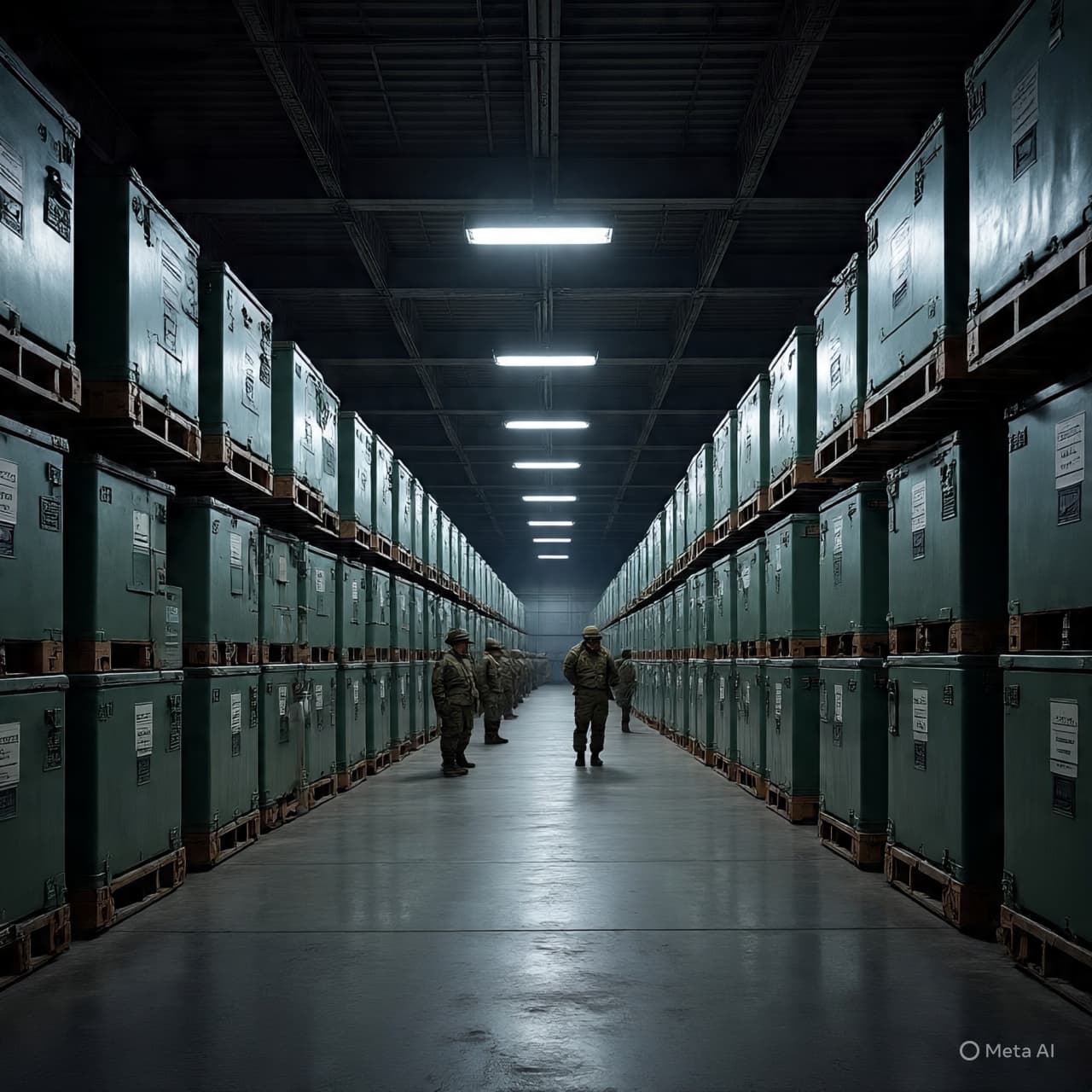
War, even when conducted from a distance, is measured not only in territory or rhetoric, but in inventory. Behind every launch sequence lies a chain of factories, contracts, shipments, and stockpiles. The image of precision-guided missiles arcing across the night sky often obscures the quieter arithmetic unfolding in defense departments: how many remain, how quickly they can be replaced, and what their absence might mean.
Amid continued military pressure on , reports have surfaced suggesting that the United States is beginning to feel strain on certain missile supplies. The campaigns, described by officials as calibrated responses to security threats, rely heavily on precision munitions designed to minimize collateral damage while striking strategic targets. Yet such weapons are neither limitless nor easily replenished.
The has, in recent years, faced growing scrutiny over stockpile levels, particularly as global commitments expand. Supporting allies in multiple regions while maintaining deterrence in the Indo-Pacific and Middle East requires sustained logistical depth. Precision-guided munitions, including cruise missiles and air-to-surface systems, are complex to manufacture and depend on specialized components and supply chains.
Defense analysts note that modern conflicts consume high-end munitions at rates that can outpace peacetime production capacity. Even in the absence of a formally declared war, sustained operations place tangible demands on inventory. Factories can increase output, but scaling production often requires months—sometimes years—of investment, workforce training, and materials procurement.
Officials have publicly emphasized that operational readiness remains intact. At the same time, congressional hearings and budget discussions have highlighted broader concerns about replenishment cycles and industrial capacity. The conversation is not solely about a single theater of operation but about balancing current engagements with long-term deterrence.
Iran, for its part, has long invested in asymmetric strategies, including missile development and regional partnerships, framing them as tools of defense and leverage. The dynamic between Washington and Tehran has historically oscillated between direct confrontation and indirect signaling. In such an environment, missile stockpiles become both practical instruments and symbolic indicators of resolve.
Strategists caution that perceptions matter as much as quantities. A narrative of dwindling supply, whether fully substantiated or not, can influence diplomatic calculations and military postures. Conversely, transparency about replenishment efforts may serve to reassure allies while signaling sustained capability to adversaries.
The broader issue touches on the structure of the global defense industry. Decades of efficiency-driven consolidation have streamlined production but reduced redundancy. When demand surges unexpectedly, the system can strain. Policymakers now face the dual task of maintaining immediate readiness while investing in expanded industrial resilience.
For now, U.S. defense officials continue to assert that operations proceed as planned and that mitigation strategies are underway to address supply pressures. Budget proposals and procurement adjustments are expected to reflect lessons drawn from recent operational tempo.
As events continue to unfold, the emphasis remains on verification and measured response. The United States has not publicly indicated any halt to its strategic posture, and diplomatic channels remain active alongside military considerations.
In the calculus of modern conflict, missiles are both instruments and numbers. The coming months may reveal how Washington balances immediate demands with the long arc of preparedness, as discussions around supply, production, and policy continue to move from closed briefings into broader public awareness.
AI Image Disclaimer Graphics are AI-generated and intended for representation, not reality.
Source Check Credible mainstream international sources covering this topic include:
Reuters The New York Times The Washington Post BBC News Al Jazeera
Published by Banx Network. This article is part of the Banx decentralized media programme, powered by the BXE token on the XRP Ledger.
.jpg&w=3840&q=75 "US Declares Drought Disaster for Parts of Puerto Rico as Dry Conditions Persist")

